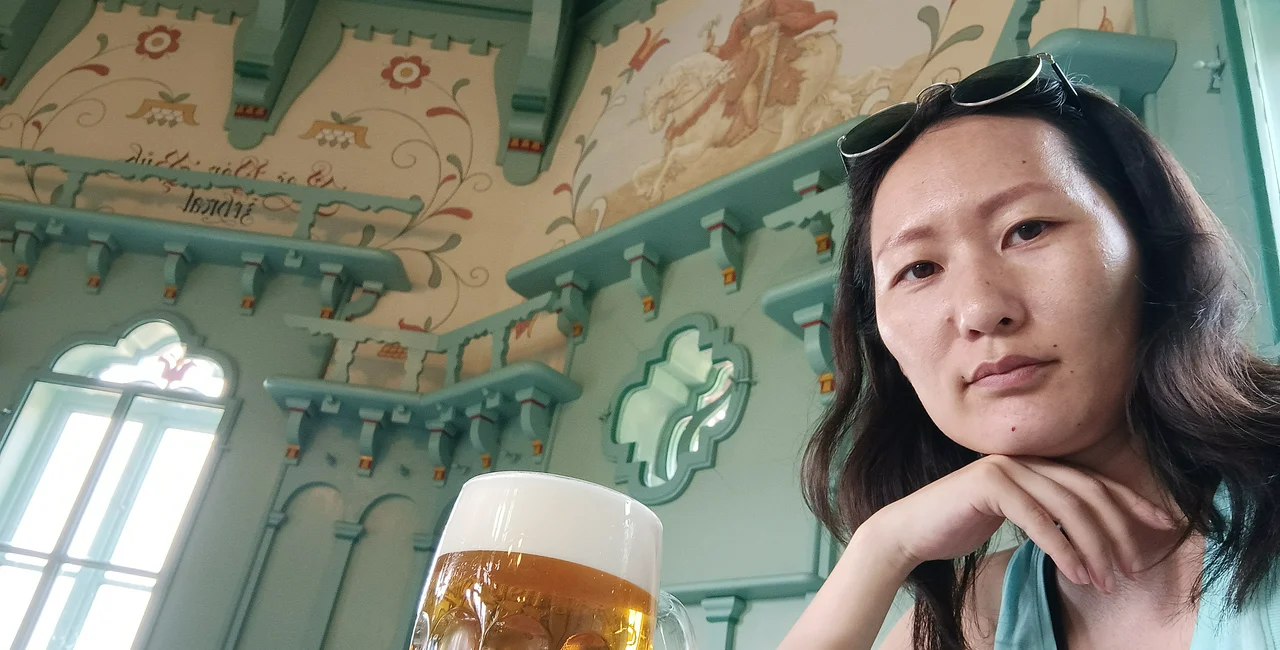
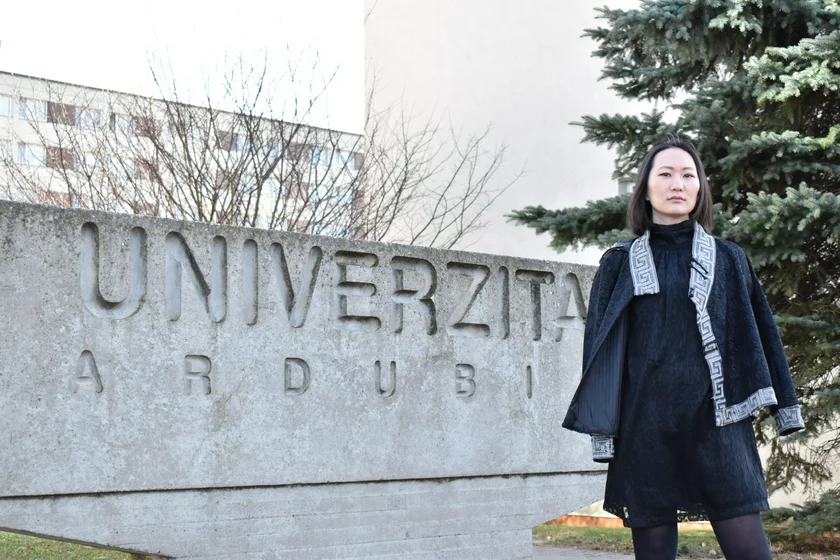
The first thing that struck Narmandakh Boldbaatar about Prague wasn't the architecture, it was actually the bus.
Minutes after landing at Václav Havel Airport in September 2017, she boarded public transport into the city. It arrived on time. It pulled perfectly flush with the curb. When a passenger in a wheelchair needed help boarding, the driver stepped out without hesitation.
"That was just amazing for me," she recalls. "I really felt envious."
Coming from Ulaanbaatar, where daily life often requires a bit more improvisation and patience, she was struck by how a system that worked seemed ordinary to everyone around her.
Narmandakh (known as Naraa) had arrived in Czechia on a Czech Government Scholarship with a simple plan: earn a master's degree in informatics and gain professional experience, staying for two, maybe three, years.
"Life in Czechia was meant to be just a couple chapters of my whole life," she says. "But it extended to more."
A small act of usefulness became something bigger
Naraa never expected to feel so at home in Czechia. But she soon began to understand what she describes as the Czech temperament: reserved, practical, and sometimes skeptical of unnecessary displays of emotion.
“My own personality is quite similar to a typical Czech personality,” she says. She learned that the Czech reserve does not mean people are unfriendly; it often means trust has to be earned.
Despite this, there were still challenges. From 2019 to 2023, she lived in Pardubice, where she knew few people. Her health kept her from traveling. In early 2020, as the first wave of Covid swept across Czechia, she found herself hospitalized.
Far from home and isolated from normal life, she had little to do. But she noticed Mongolians living in Czechia were struggling to understand the rapidly changing pandemic restrictions. She started translating and sharing updates in Mongolian.
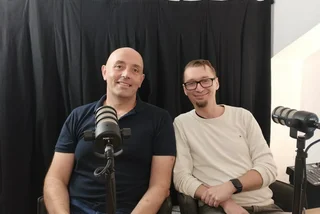
She also started a podcast."The main reason I started podcasting was loneliness. I needed an excuse to talk to somebody once a week."
What began as a small act of usefulness has become something bigger, evolving into Soninoos (the Mongolian word for "news"), a YouTube channel and social media platform that now serves the roughly 15,000 Mongolians living in Czechia.
The Mongolian community in Czechia is large and predominantly working-class. Many came for employment, and many have children here. Their questions are often practical.
She covers Czech labor law because they need it. She covers the best places to live in Czechia because, she says, she's learned from that's what people actually read.
"I don't always choose topics based on what interests me," she says. "I choose based on what helps people."
Once you show respect, they show their smile
Her own experiences living in Czechia have helped Naraa shape her approach to Soninoos. She understands her audience because she is a part of it. But settling in wasn't always easy.
Naraa's health struggles in Czechia were serious. At one point, she came close to death. She credits two Prague hospitals, UVN and NEMPK, with saving her life.
Her only complaint about the care she received was a small one. She longed for meals built around buckwheat, pearl barley, whole-grain bread, vegetables, and quality beef and mutton. Czech hospital food, by contrast, gave her digestive trouble during both of her hospital stays.
She also didn't expect the Czech language to be so difficult. She attempted two university programs taught in Czech before eventually switching to English.
Naraa partly blames her introverted personality.
"That's why whenever I meet someone learning Czech, I encourage them to try talking to Czech people as much as possible."
She remembers watching a video of a Japanese man living in Czechia who approached strangers to practice his Czech. Instead of dismissing him, people responded with patience and encouragement.
“Once you show you respect their country, culture, and law, once you show your effort of learning the Czech language, they definitely show their smile,” she says.
Naraa speaks well enough to accurately translate text for her Soninoos audience. She says translation tools have improved dramatically, but they are still no substitute for human judgment.
“Some things always get lost in translation,” she says.
Mongolia's deep connection to livestock means some concepts simply don't have direct equivalents in other languages. Likewise, Czech historical events with biblical or pagan roots often require additional context for Mongolian readers unfamiliar with them.
Building a community far from home
Outside Soninoos, the community she covers has built a rich parallel life in Czechia. According to Czech Ministry of Internal Affairs data, 14,908 Mongolians hold long-term or permanent residence in Czechia, making them the country's eighth-largest foreign population.
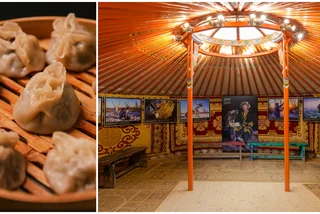
There are cultural centers for children, horsehead fiddle schools, Easter sports festivals, summer Naadam celebrations, and a growing network of Mongolian restaurants, tailors, butcher shops, and cocktail bars in Prague.
Naraa has organized community events for years. She rarely feels homesick, except when the weather turns grey.
Mongolia is one of the sunniest countries in the world, even during winters when temperatures can fall below -40 degrees Celsius. Prague's long stretches of cloudy weather remain one of the few things she still struggles to adapt to.
But in many ways, Czechia remains comfortingly familiar.
After arriving, she and another student were mistakenly sent to the language school branch in Mariánské Lázně instead of Poděbrady. The detour turned out to be a pleasant surprise.
“It was a very beautiful, kinda posh-looking little city, and both of us loved it at first sight,” she recalls. When they went to register at the school the next day, the staff realized they had been sent to the wrong place.
We have a saying in Mongolia: If you drink their water, follow their custom.
“I thought, ‘Oh, their government officials can get a bit sloppy too, like ours,’” she says.
In Poděbrady, the familiarity was a little closer to home: her dormitory was a Soviet-era style building with brown-tiled corridors and 1970s or 1980s furniture that reminded her of older buildings back home.
But the language school itself was housed in Poděbrady Castle, a setting that immediately won her over. “Oh, that delighted me,” she says.
Nearly a decade later, after building a life, a community, and a news platform in Czechia, she still returns to a saying she learned growing up in Mongolia: If you drink their water, follow their custom.
“That’s why Mongolians adapt to different situations pretty quickly,” she says.
“While we always try to maintain who we are as Mongols, we don’t try to change other people’s culture. We are taught to respect other cultures as much as we would like our own culture to be respected and to coexist harmoniously.”
Want to see more from us? Select Expats.cz as a
preferred source on Google.

 Summary for: She found her voice in Prague. Now thousands rely on her for news about life in Czechia








 Reading time: 5 minutes