 Reading time: 4 minutes

 Summary for: Public donations power Prague’s Korzo Národní after ministry funding snub
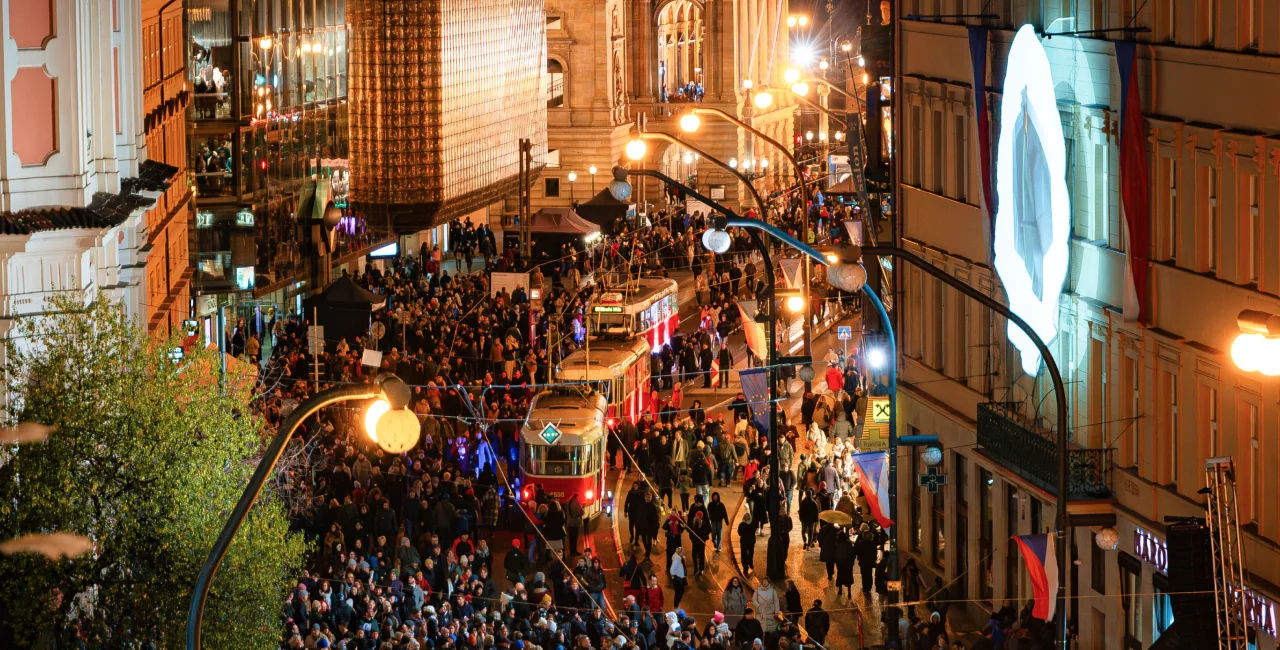
Prague’s annual celebration of freedom and democracy will go ahead in full this November after a public fundraising campaign brought in millions of crowns following the Culture Ministry’s decision not to award the festival a grant.
By Oct. 30, donations to Korzo Národní had reached approximately CZK 9.5 million. That is more than three times the ministry’s combined contributions over the previous three years—and enough to provide support well beyond this year’s event.
PARTNER ARTICLE

On Tuesday, Nov. 17, Národní třída and nearby venues will host exhibitions, discussions, music and theater under the motto “Don’t stand aside. Democracy depends on each of us.” A new performance staged from the windows of Palác Metro will lead into the traditional Prayer for Marta at 5:11 p.m.
How donors filled the funding gap
The ministry’s decision marked the first year Korzo Národní received no funding from the department. According to figures the ministry supplied, its grants totaled CZK 2.7 million between 2023 and 2025: CZK 500,000, CZK 1.5 million and CZK 700,000, respectively.
Culture Minister Oto Klempíř, representing the Motorists, said the relevant grant program covered milestone anniversaries counted in whole decades. This year marks 37 years since the events of November 1989.
The ministry said the application failed to meet the specific call’s conditions, describing the rejection as a matter of applying established rules rather than a political decision or a judgment on the importance of Nov. 17.
The response to the Darujme.cz campaign nevertheless transformed the festival’s financial position. Contributions came from individuals, organizations and local governments. Earlier campaigns on the platform had raised approximately CZK 93,000 in 2023, CZK 129,000 in 2024 and CZK 281,000 in 2025, according to ČTK.
Organizers Díky, že můžem describe the response as evidence of a functioning civil society. They have also stressed that one successful appeal does not resolve the broader pressures facing cultural organizations.
Importantly, the donations will not all be spent on a larger festival this year. In their published funding explanation, organizers put anticipated 2026 costs at CZK 5.5 million and say the program will retain its originally planned scale.
They expect money from the online appeal to cover approximately one-third of this year’s costs, with the unused balance reserved exclusively for future editions. Other income includes partners, foundations, public institutions and contributions collected during the festival itself. A complete accounting is promised by Jan. 17, 2027.
The distinction matters: public donations have helped replace the missing ministry grant and create a reserve, rather than becoming the festival’s sole source of funding.
What to see—and how to plan your visit
The new centerpiece, Dům všech (“House of Everyone”), begins at 5 p.m. at Palác Metro. The window-based theatrical performance explores freedom, democracy and personal responsibility, incorporating Prayer for Marta from the balcony at 5:11 p.m. The singer had not been announced in the organizers’ Oct. 30 update.
Across approximately 20 exhibitions and installations, the festival also looks at how political history intersects with everyday life.
Karolína Schulzová’s light installation Za co neseš odpovědnost (“What Are You Responsible For?”) draws on Václav Havel’s 1995 Hiroshima speech about shared responsibility. A participatory installation, Budoucnost naděje (“The Future of Hope”), invites visitors to contribute their own messages.
Mléčný bar recreates the atmosphere of the socialist-era milk bar, once part of the everyday landscape of quick meals and refreshments. Mozaika příběhů (“Mosaic of Stories”) explores the experiences of people who left Czechoslovakia between 1968 and 1989, examining what emigration meant beyond the decision to cross a border.

The program marks three anniversaries: 90 years since Havel’s birth, 70 years since the arrival of the Vietnamese community in Czechoslovakia, and 10 years since gymnast Věra Čáslavská’s death.
For international visitors, the official program identifies English-friendly activities. These include “The Czech Republic – The international perspective on Europe,” from 12:15–1:15 p.m. at Zažijte Evropu, and Amnesty International’s letter-writing marathon at Divadlo X10, 11:15 a.m.–7 p.m. Many other discussions are listed in Czech, so check individual descriptions before choosing a session.
Families can seek out Tahák, an illustrated introduction to modern Czechoslovak history, alongside creative and educational activities at Signal Space in the Old Town Market Hall.


The practical essentials:
- When: Nov. 17. Outdoor exhibitions are accessible from 8 a.m.; the main program runs 10 a.m.–8 p.m., with the Signal Festival installation continuing until 10 p.m.
- Admission: Most programming is free. The Velvet Brunch and Rock Café afterparty require tickets; some other activities need reservations.
- Getting there: Organizers advise using Můstek or Národní třída metro stations. Národní will close to cars and trams, with tram restrictions also affecting Legií Bridge; check current routes before traveling.
- Avoiding the tightest crowds: Arrive in the morning, particularly with children or a stroller. Expect the area around Palác Metro to become especially busy before 5:11 p.m.
- Remembering quietly: Candles can be lit at the memorial plaque on Kaňkův House or at Havel’s Heart on Václav Havel Square beside the National Theatre.
For those who want time to read the installations and explore the street, a morning visit offers a different experience from the late-afternoon gathering. Both reflect this year’s central invitation: to take part.