



 Reading time: 3 minutes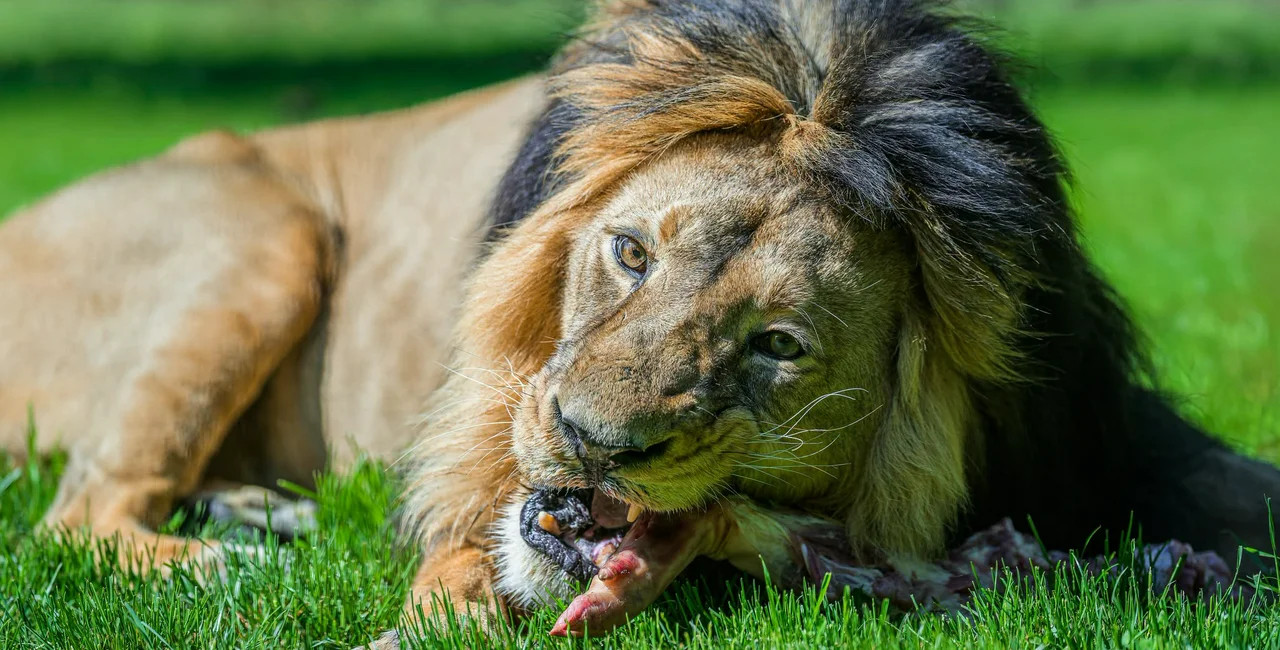

 Summary for: Prague Zoo turns 95: Step into the 1930s for its anniversary on Sept. 28
Prague Zoo will turn back the clock Monday, Sept. 28, celebrating its 95th anniversary with swing music, vintage fashion, historic vehicles and encounters with animals connected to its earliest years.
The Czech Statehood Day program will transform parts of the Troja grounds into a scene from the 1930s. Visitors can receive a free period-style hairstyle, join a swing-dance workshop or arrive in vintage-inspired clothing to receive a small gift.

The celebration also looks beyond nostalgia. Prague Zoo will mark 15 years of its flagship Return of the Wild Horses program, which has moved Przewalski’s horses from European breeding programs to protected areas in Mongolia and Kazakhstan.
Swing, vintage fashion and historic animals
The main celebration begins at 11 a.m. at the zoo’s Education Center, where Prague city representatives will join zoo officials to open the anniversary program and present news about the institution’s future.
The Education Center terrace will host the Sunny Swing Orchestra, a vintage fashion show by Aristokrat Vintage and a performance by singer Ema Papšová. ZIG-ZAG Tap & Swing Dance Studio will lead a 1930s dance workshop from 10:10 a.m.
Costumed newsboys will distribute vintage newspapers around the grounds, while historic cars and a motorcycle carrying a period advertisement will add to the early-20th-century atmosphere. A photo corner will operate from 10 a.m. to 4 p.m.
The photography exhibition 95 Years of Prague Zoo opens at 2 p.m. following interviews with people who remember the zoo in earlier decades. The display will trace milestones in its transformation from a small, unfinished attraction into a major conservation and breeding institution.

Animals represented during the zoo’s formative years will also receive special attention. The schedule includes talks on birds of prey at 10 a.m., Przewalski’s horses at 10:30 a.m. and elephants at 12:30 p.m.
Jamvan, the zoo’s male lion, will be fed at 3 p.m., followed by wolf feeding at 3:30 p.m. The zoo will also stage its popular fur seal training demonstrations.
A limited anniversary souvenir will be available exclusively during Monday’s celebration.
From an unfinished zoo to a Prague institution
The campaign to establish a Prague zoo began considerably earlier than its 1931 opening. Count Sweerts-Sporck publicly called for a zoological garden in 1881, but successive proposals for sites including Stromovka, Kinský Garden and Štvanice failed to materialize.
Progress accelerated after landowner Alois Svoboda donated property in Troja in 1922 on the condition that it include a zoological garden. Professor Jiří Janda was placed in charge of preparations the following year.
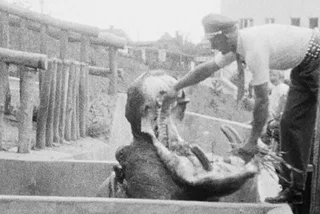

Prague Zoo finally opened Sept. 28, 1931, even though construction remained incomplete. Lotta the wolf became its first resident, while Przewalski’s horses Minka and Ali arrived during the opening year. Tigers followed in 1932, with an elephant, hippopotamus and rhinoceros arriving in 1933.
The institution recorded several notable breeding achievements in its early decades. It became the first zoo to successfully breed an Andean condor in captivity in 1937 and the first to hand-rear a polar bear cub in 1942.
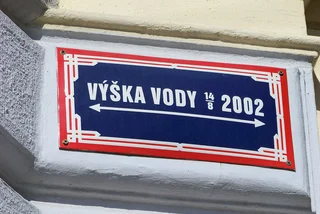
Its history has also included major setbacks. Flooding affected almost half of the zoo in August 2002, damaging enclosures and forcing extensive reconstruction. The lower grounds were flooded again in 2013.
In more recent years, Prague Zoo became the first European institution to successfully breed a Chinese pangolin in 2023. It has also opened major new spaces including Elephant Valley, the Dja Reserve for gorillas and Central African wildlife, and the Gobi exhibit.
Prague’s long connection to the world’s last wild horse
Przewalski’s horses provide the strongest link between the zoo’s beginnings and its modern conservation role. Prague began breeding the species in 1932 and has maintained its international studbook since 1959.
The horse disappeared from the wild during the 1960s but survived in human care. Prague Zoo later became the only zoo to organize its own intercontinental transports returning the animals to their native range, working with the Czech Air Force.
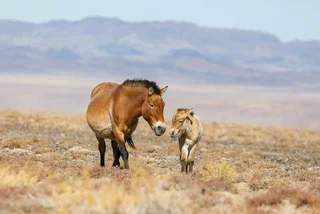
Between 2011 and 2019, nine Czech-organized transports carried 34 horses to western Mongolia. The zoo expanded the program to Kazakhstan in 2024, returning Przewalski’s horses to the country’s Golden Steppe after an absence of roughly two centuries.
Monday’s anniversary program at the Gobi exhibit begins with Mongolian music at 12:45 p.m. The ambassadors of Mongolia and Kazakhstan, Czech Army representatives and zoo officials will then discuss the project and its future.
The presentation carries added symbolism in 2026, the Chinese zodiac’s Year of the Fire Horse. It also underlines how far Prague Zoo has traveled in 95 years: from an unfinished eight-hectare attraction to an institution returning endangered animals to landscapes thousands of kilometers from Troja.