




 Reading time: 2 minutes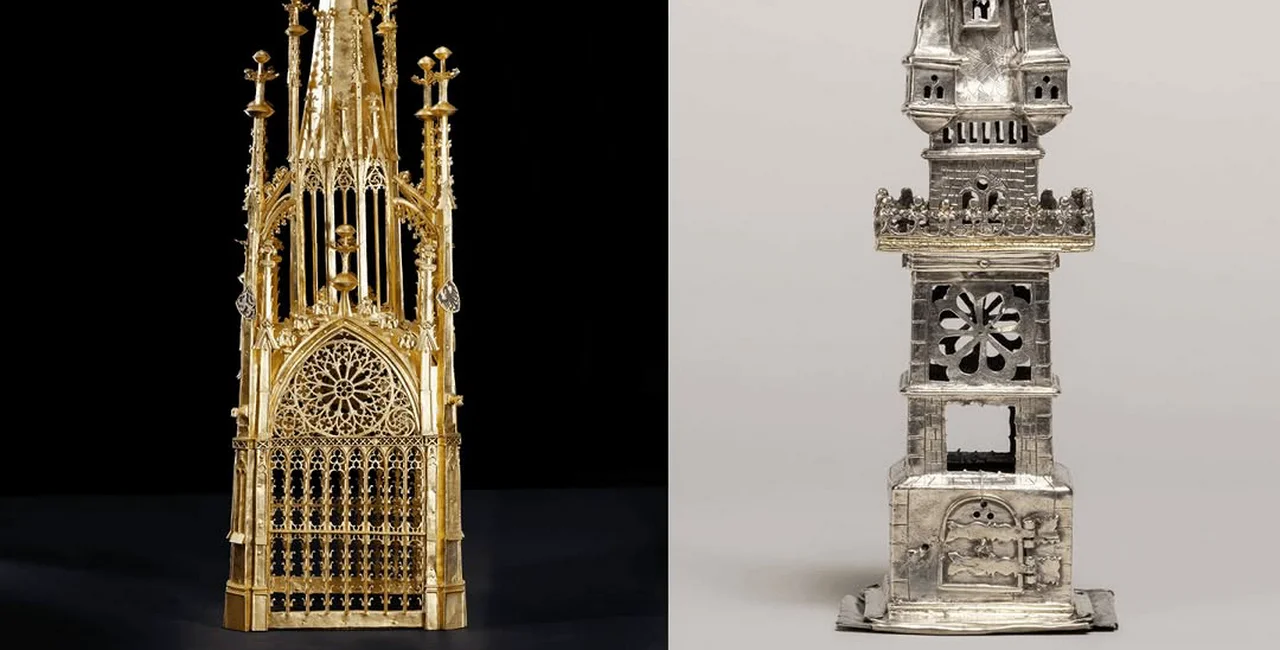

 Summary for: Prague's St. Vitus treasures make historic journey for New York exhibition
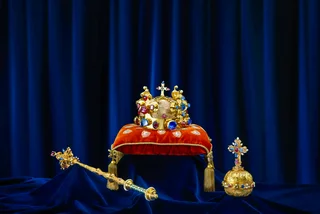
Dozens of centuries-old treasures from Prague's St. Vitus Cathedral have crossed the Atlantic for a major new exhibition opening in New York today, in the largest presentation of the cathedral's treasury ever staged outside Europe.
Around 70 objects have traveled from Prague for Sacred Splendor: Jewish Ritual Art and Christian Treasures from St. Vitus Cathedral in Prague, which runs at the Jewish Museum in New York from Sept. 18 through Feb. 7, 2027.

They form part of an exhibition of more than 160 objects exploring how Jewish and Christian communities lived, worshipped and produced art alongside one another in Central Europe from the Middle Ages through the 17th century.
Rare Christian reliquaries from St. Vitus will be displayed alongside Jewish ceremonial objects, manuscripts, metalwork and artifacts that remained hidden for centuries after being buried during periods of persecution.
Medieval Prague takes center stage
Prague provides the historical anchor for the exhibition, reflecting the city's importance as both a political and religious center at the crossroads of medieval European trade routes.
Under King Charles IV, St. Vitus Cathedral was transformed into the Gothic landmark that dominates Prague Castle today. Charles endowed the cathedral with important relics and commissioned elaborate containers to house them, helping establish what would become the St. Vitus Treasury.
At the same time, Prague already had a well-established Jewish community living in close proximity to its Christian neighbors.

The exhibition explores how those communities developed distinct religious traditions within a shared artistic environment. Because Jewish craftsmen were barred from joining professional guilds, Christian artisans frequently produced works for both Jewish and Christian clients.
Among the examples highlighted in New York are Prague's Old-New Synagogue and the nearby Convent of St. Agnes, which were built by the same Christian masons.
Another centerpiece reunites two works from the workshop of late 15th-century Bohemian illuminator Valentine Noh: a Christian prayer book and an illustrated Hebrew Bible. The two will be exhibited together for the first time.
Shared culture amid persecution
The exhibition does not present medieval coexistence as harmonious. Jewish communities faced legal restrictions, expulsions, pogroms and other forms of persecution even while artistic ideas crossed religious boundaries.
That contrast is particularly visible in a selection of medieval Jewish-owned objects buried during periods of violence and subsequently hidden for centuries.
When the Black Death swept through Europe in the 14th century, Jewish communities were falsely accused of poisoning wells and causing the plague. Facing attacks and expulsions, some families concealed silver, coins and jewelry underground.
The exhibition places those recovered hoards alongside Christian reliquaries that churches were able to preserve continuously for hundreds of years.
The final section moves into the 16th and 17th centuries, when Jewish religious and cultural life in Prague flourished through new synagogues, communal organizations and a growing Hebrew printing industry.
Curator Jiří Fajt, who also organized earlier Fragments of Memory exhibitions in Dresden and Prague, told Novinky.cz that the subject has particular relevance at a time when societies are again confronting tensions between religious cultures.
Alongside the historical objects, Sacred Splendor includes contemporary works engaging with themes of memory, exile and religious identity, including tehillim by British artist Edmund de Waal.
The exhibition runs at the Jewish Museum in New York through Feb. 7, 2027. More information about the exhibit can be found at the Jewish Museum website.