



 Reading time: 4 minutes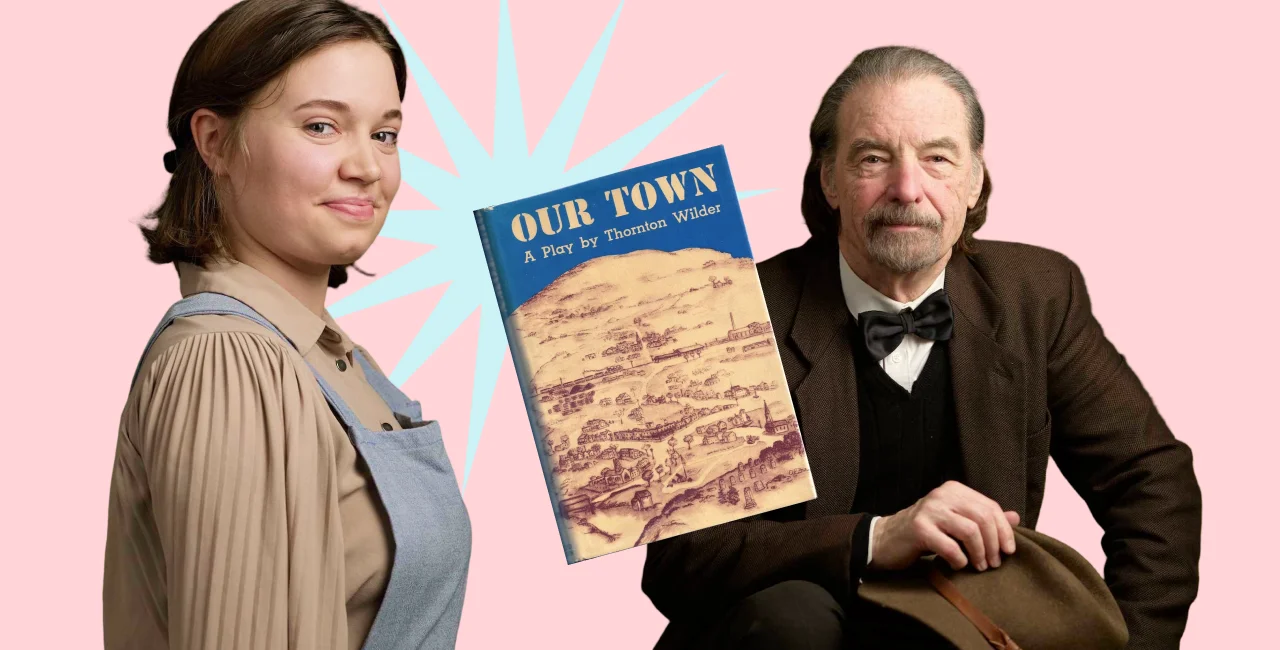

 Summary for: 'Our Town premiere': International cast brings American masterpiece to Prague
Bringing the quintessential American play about small-town New Hampshire life in the early 1900s to a European capital at a moment when American cultural exports carry complicated weight feels a bit risky.
But for the cast of expats and local actors staging Thornton Wilder's masterpiece Our Town in Prague this month, the choice feels less like cultural imposition than recognition of something deeper.
How does a play with minimal props, where actors mime everything and the audience becomes a character, translate across cultures? We spoke with the multinational cast and crew bringing Grover's Corners to life.
'The greatest American classic'
The production was born from collaboration between Bob Boudreaux, who co-produces and plays the Stage Manager, and Guy Roberts, Artistic Director of the Prague Shakespeare Company. The two have worked together on Man of La Mancha, The Crucible, Clue, and King Lear. When Roberts suggested Wilder's masterpiece, Boudreaux needed little convincing.
"I studied with Edward Albee, a three-time Pulitzer winner who called this 'the greatest American classic,'" Boudreaux recalls. "That was good enough for me."
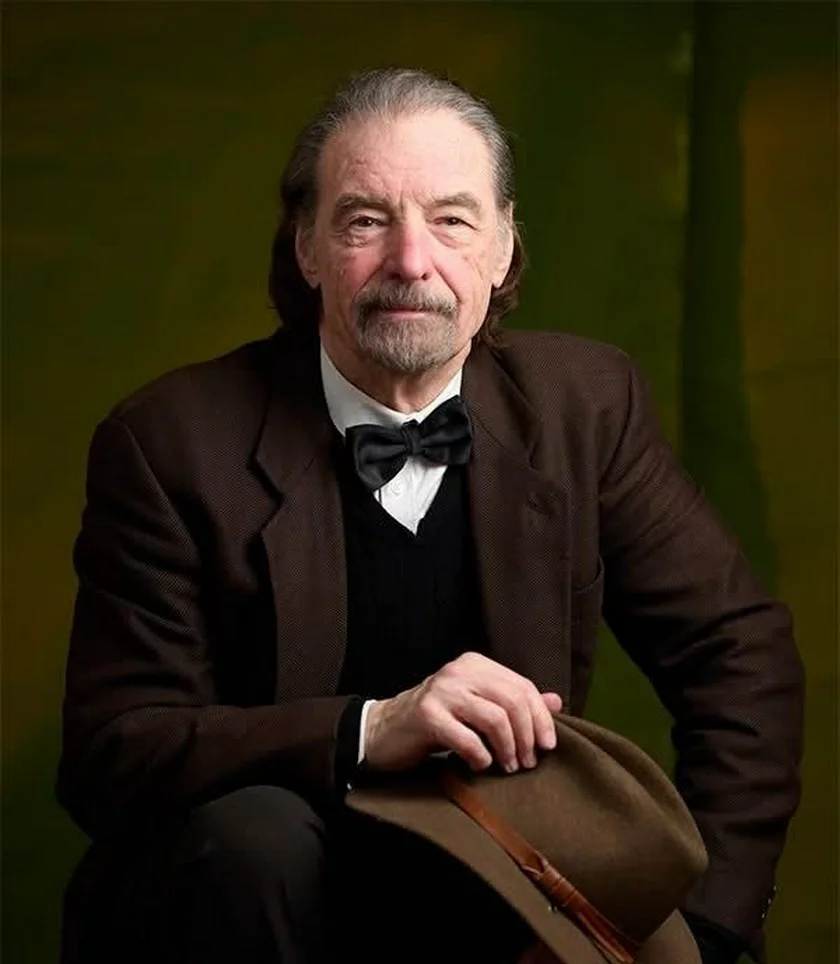
Boudreaux's introduction to Our Town was through his New England hometown high school production—the exact kind of place Wilder was writing about. "I auditioned and got rejected," he says. Decades later, he's finally landed the part.
The play has been revived on Broadway three times since 2003, most recently in 2024 with Jim Parsons. A Welsh National Theatre revival of Our Town, starring Michael Sheen as The Stage Manager hits London later this month. But Our Town has international history too including several Czech productions by the National Theater dating back to the 1980s.

"While Our Town is traditionally a reflection of small-town America, the play speaks to small communities as a whole," director Ash Visker says.
A majority of our cast are expats living in Prague. We share stories about our jobs, our lives, the weather. It's easy to see theatre collaborators as a small community—we were interested in exploring how all of us, from different places, made up our own sort of 'town.'"
Multi-national casting alchemy
Finding English-speaking actors in Prague presented challenges. The play requires specific ages, performers who can play older or younger, children, and availability for the full rehearsal period. Several cast shifts were necessary before the final ensemble came together.
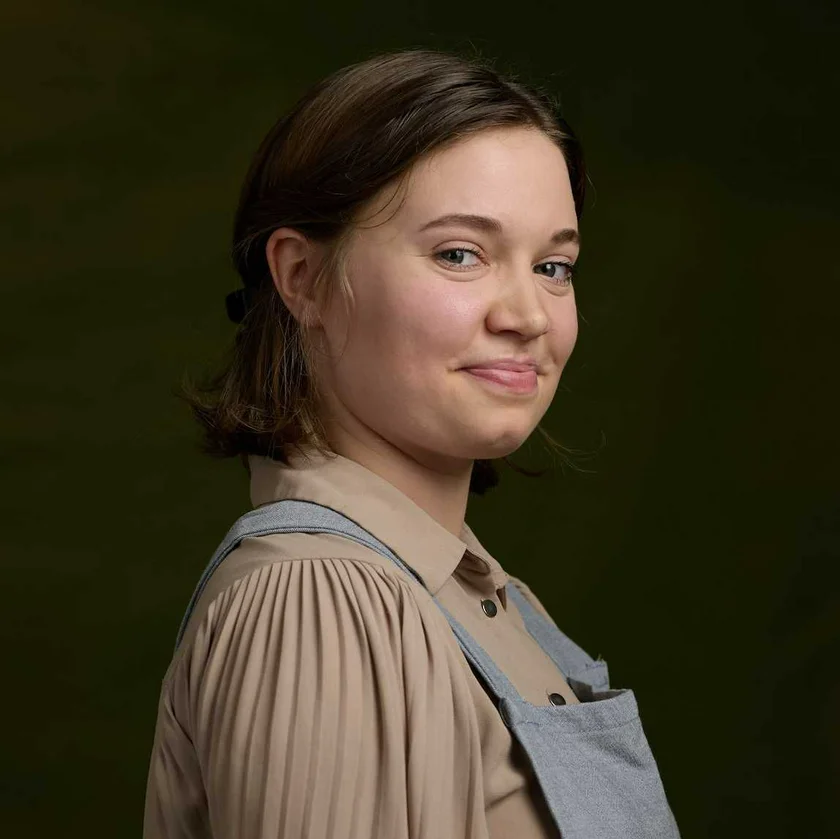
Now it includes Ruby Brandon making her debut as Emily; Stanislav Callas, a veteran of Vikings Valhalla, as George; and a multinational mix: American expats alongside Turkish actor Begum Burian and Czech performers Pavel Caldr, Marko Adetunji, and Kristi Voskova.
Getting the cast right is just part of bringing Grover's Corners to life. The minimal staging, just lights and chairs, requires what Boudreaux calls "great specificity in miming moments to avoid cartoonish exaggerations."

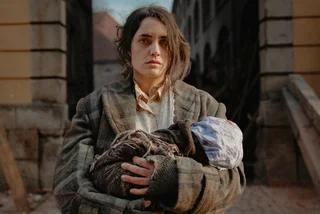
"We've asked ourselves 'what could this be?' while staring at a chair or a wall," says Visker. "It's been wonderful to see every actor rise to the challenge of miming props, opening invisible doors, and connecting with the text."
The Prague Shakespeare Company sees the miming, the minimalism, and even The Stage Manager's direct address to the audience, Wilder's famous fourth-wall breaks, as natural territory.
"The fourth-wall breaks in Our Town are much like Shakespeare's asides," Visker notes. "In both, characters speak directly to the audience and confess thoughts that go unknown to other characters onstage."
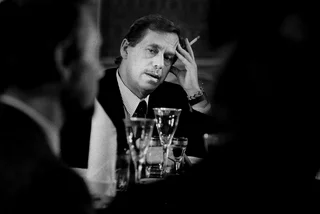
Boudreaux points out local audiences aren't entirely unfamiliar with the device: playwright and, later president, Václav Havel used it. "I know Czechs love two things dearly: ice hockey and theatre," he says. "I hope theatregoers who've never experienced the fourth wall disappearing will be as excited as an overtime goal for the Czech national team."
But what will resonate with Prague audiences isn't the staging, it's the mystery of the human experience at the play's core.
"The shared life experiences of family, school, falling in love, community support, grieving, that's universal regardless of town size," Boudreaux says.

Visker agrees: "The characters have concerns and loved ones. Our Town explores broad experiences—falling in love, celebrating joy, coping with grief. Though we're set in early 1900s America, the experiences are anyone's. There's town gossip, family dynamics, school crushes."
Perhaps that's why the play endures, and why it feels right for Prague in 2026. As Wilder wrote it, Grover's Corners was never really about New Hampshire. The Stage Manager himself points out the town sits at specific cosmic coordinates, part of something much larger.
In a city of expats sharing stories about jobs and lives and weather, in a world where national identities feel both more fraught and more fluid than ever, maybe that's the town we're all looking for.
As the Stage Manager says: "It's a nice town, you know what I mean?"
Thorton Wilder's Our Town comes to Divadlo Na Prádle for a four-night run February 20, 26, 27 & 28. Buy tickets here. In English with Czech surtitles.