
 Reading time: 3 minutes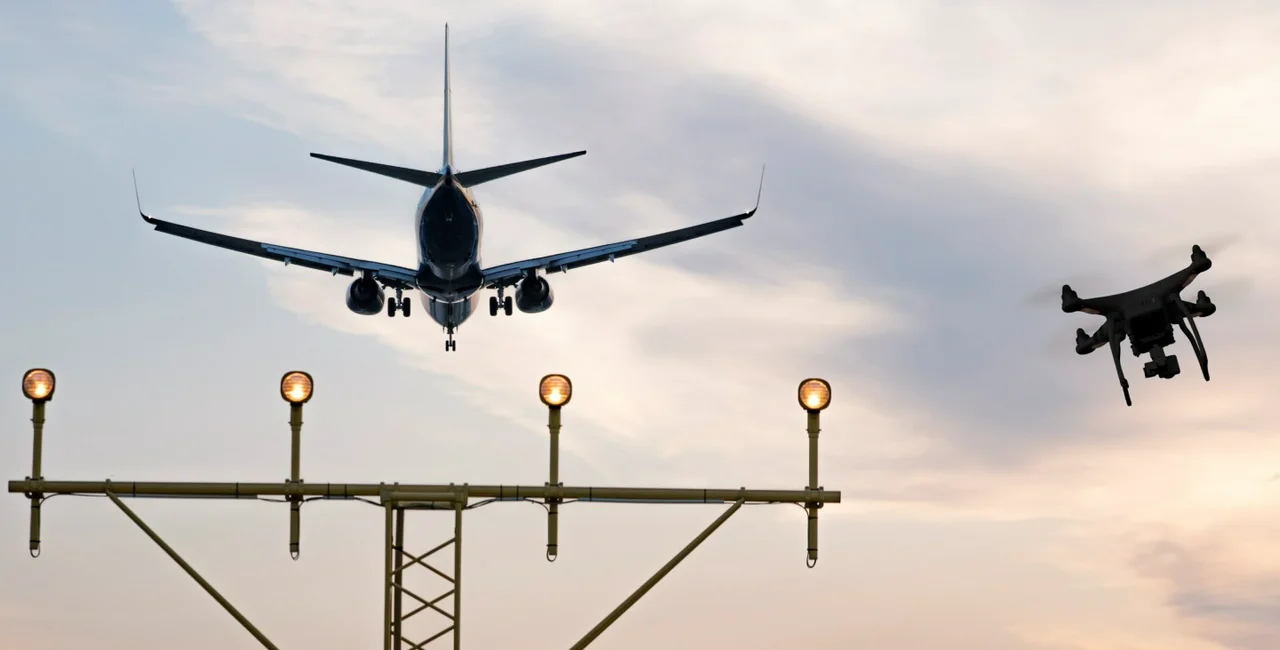

 Summary for: Drone scare in Germany prompts Prague Airport security review
Prague Airport is reviewing its security procedures following a drone incident at Germany's Leipzig/Halle Airport, while the Czech government says it will strengthen security at the country's airports in response.
Airport spokesperson Denisa Hejtmánková said Prague Airport is analyzing the circumstances of the incident together with security agencies and evaluating any recommendations that emerge from the German investigation.

"Prague Airport, in cooperation with the relevant security agencies, has long been addressing the issue of protecting the airport against unauthorized drone operations," she said.
"We are thoroughly analyzing the recent incident at Leipzig Airport and evaluating all relevant information."
Reakce k situaci na letiÅ¡ti v Lipsku: Problematice ochrany letiÅ¡tÄ› pÅ™ed neoprávnÄ›ným provozem dronů se LetiÅ¡tÄ› Praha ve spolupráci s pÅ™ÃsluÅ¡nými bezpeÄnostnÃmi složkami vÄ›nuje dlouhodobÄ›. Aktuálnà incident na letiÅ¡ti v Lipsku spoleÄnÄ› podrobnÄ› analyzujeme a průběžnÄ› vyhodnocujeme…
— Prague Airport (@PragueAirport) August 6, 2026
She added that the airport continues to follow established security procedures designed to protect passengers, employees and flight operations.
Prime Minister Andrej Babiš told Deník N that Czechia would strengthen airport security in response to the incident, while police said the country is already operating under an elevated terrorist threat alert and is prepared to respond to violations of airport no-fly zones by unmanned aircraft.
Testing Europe
The statements follow two security incidents at Leipzig/Halle Airport on Tuesday night. German authorities confirmed that a DHL cargo aircraft struck an unidentified flying object before making an emergency landing in Hanover.

According to Bild, the object was a drone. Earlier, airport staff discovered another drone carrying an explosive device near a Ukrainian Antonov cargo aircraft loaded with military supplies. The detonator reportedly failed, preventing an explosion.
Security experts say the incident reflects a broader shift in the threat environment facing European airports.
"This scenario from Leipzig is straight out of the Russian playbook for hybrid threats, which have been escalating regularly in Europe over the past few months," said Michal Beneš of the Association for International Affairs.
What happens if a drone enters airport airspace?
The Leipzig incident has renewed questions about how airports respond when an unauthorised drone appears near aircraft.
According to Beneš, Czechia and other European countries have contingency plans for drone incursions, with responsibility shared between police and airport authorities.
The immediate priority is protecting aircraft rather than trying to destroy the drone. Air traffic controllers may suspend departures, reroute aircraft or temporarily restrict operations while police attempt to locate the drone and its operator.


"The biggest weakness in our protection against drones, therefore, is that we are more limited in how we can neutralize them, and consequently in our response time," Beneš told ČTK.
Unlike in a military conflict, authorities cannot simply shoot down a drone near a civilian airport because falling debris could endanger passengers, aircraft and people on the ground.
Beneš said drones can be launched from a backpack or a nearby parked vehicle and controlled from distances of up to 10 kilometers, making them difficult to stop before they disrupt airport operations.
Prague has already experienced disruptions
The threat is not theoretical. In May, a civilian drone entered restricted airspace near Prague's Václav Havel Airport, forcing one aircraft to divert to Vienna and delaying several other flights before police located the suspected operator and seized the drone.
Prague Airport does not publicly disclose whether it uses dedicated drone-detection or counter-drone systems. Instead, it says it works closely with police and other security agencies while enforcing strict no-fly zones around the airport.

Czech authorities also require drone operators to use the national DroneMap system, which identifies restricted airspace and flight conditions.
New legislation could expand counter-drone powers
The Leipzig incident comes as the Czech government considers giving operators of critical infrastructure new powers to respond to rogue drones.
In July, the Interior and Transport ministries submitted draft legislation that would allow designated employees at critical infrastructure sites to disable or destroy unauthorised drones under specific conditions. Operators would also decide whether to establish no-fly zones over their facilities.
Currently, only police officers and the military have legal authority to neutralize unmanned aircraft.
"The incident at Leipzig Airport confirms that the threats posed by unmanned aerial vehicles are no longer just a theory, but a reality," Interior Minister Lubomír Metnar wrote on X.

Incident na letiÅ¡ti v Lipsku znovu potvrzuje, že hrozby spojené s bezpilotnÃmi prostÅ™edky už nejsou teoriÃ, ale realitou.
— LubomÃr Metnar (@metnarl) August 6, 2026
Právě na obdobná rizika v podobě neoprávněného provozu dronů reaguje námi předložený návrh zákona o protidronové ochraně kritické infrastruktury. 👇… pic.twitter.com/DNk389aHHa
According to the ministries, the proposal aims to create a clear legal framework for responding quickly and proportionately to drones that threaten airports and other critical infrastructure.
Drone manufacturer Primoco UAV founder Ladislav Semetkovský said the Leipzig incident illustrates how rapidly the threat is evolving.
"There is no single solution for such protection; there are partial solutions, but no comprehensive ones," he said. "And building such protection will be very challenging."