



 Reading time: 3 minutes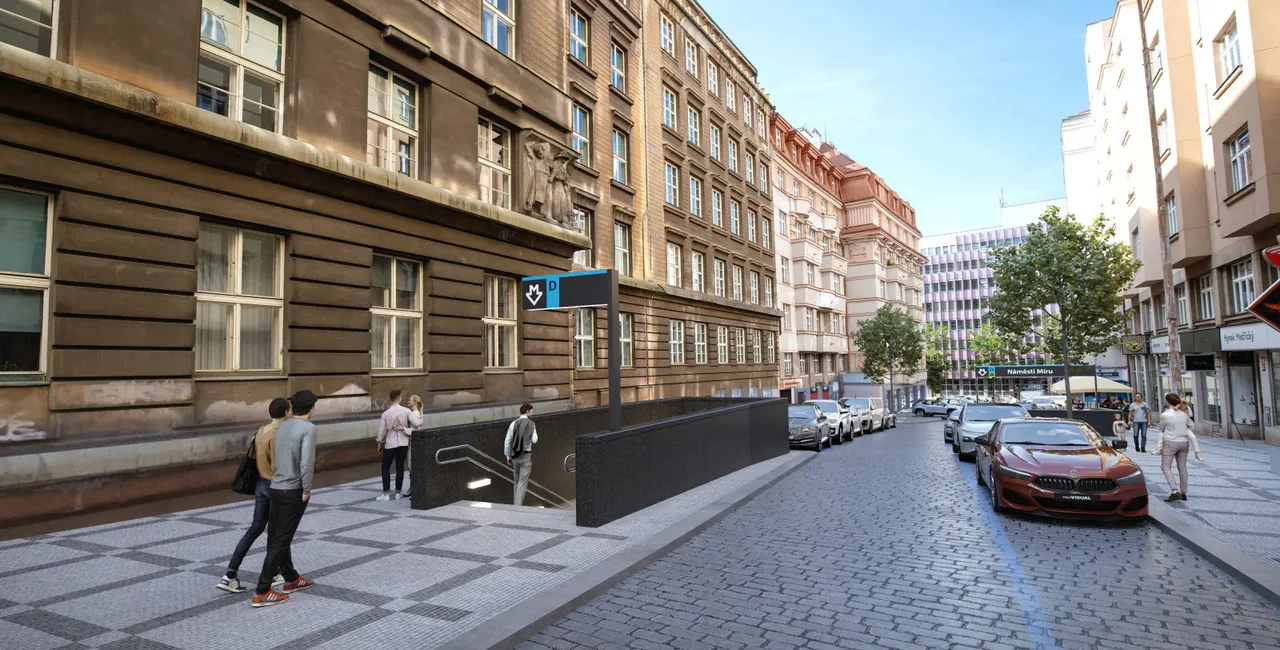

 Summary for: PHOTOS: How Prague's Metro D will change the face of Náměstí Míru
One of Prague's best-known squares is set for a major change when the city's new Metro D eventually reaches Náměstí Míru. Newly released visualizations offer a closer look at how the station will fit into the streets of Vinohrady, both above and below ground.
Prague Public Transit Company (DPP) has published new images showing the planned platforms, vestibules and street-level entrances for the future station, which will sit about 40 meters beneath Sázavská Street.

Passengers will be able to emerge near three of the area's major tram corridors (Vinohradská, Francouzská and Korunní) while a new ventilation structure is planned for nearby Riegrovy sady.
The images, prepared by Metroprojekt Praha, show the station's current technical design rather than its final appearance. An architectural competition will determine its eventual interiors, lighting, furnishings and artistic elements.
New entrances and a direct link to Metro A
Náměstí Míru will be one of the deepest stations on the Prague metro network, with its platform around 40 meters underground.
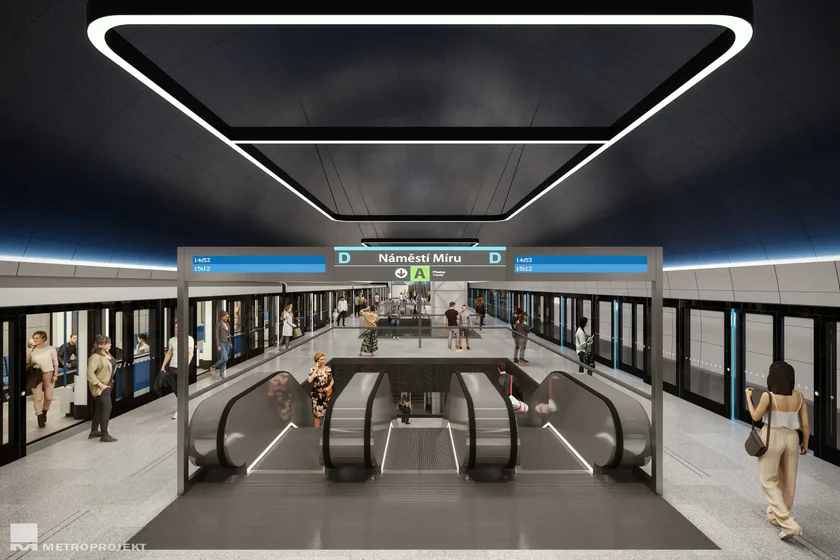
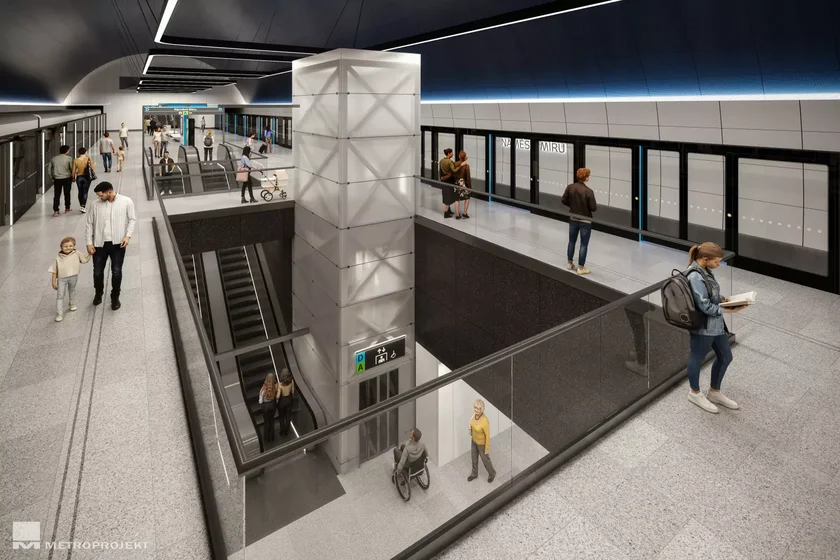
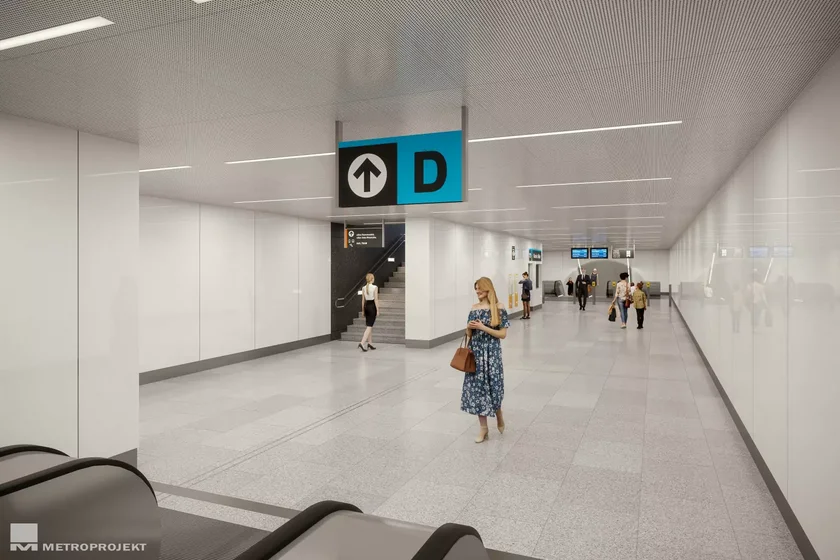
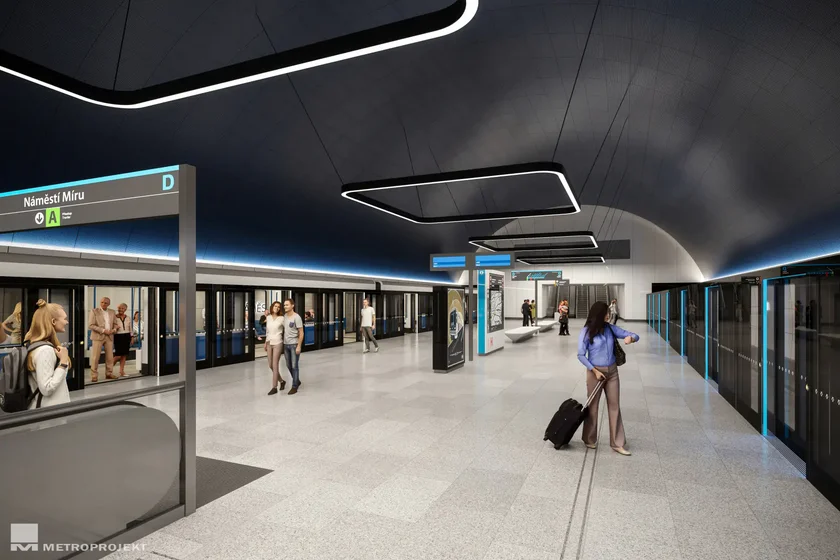
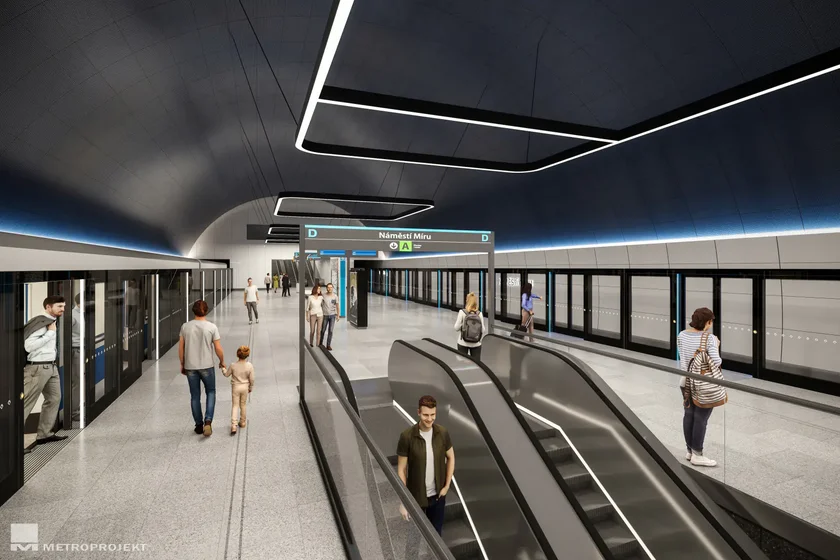
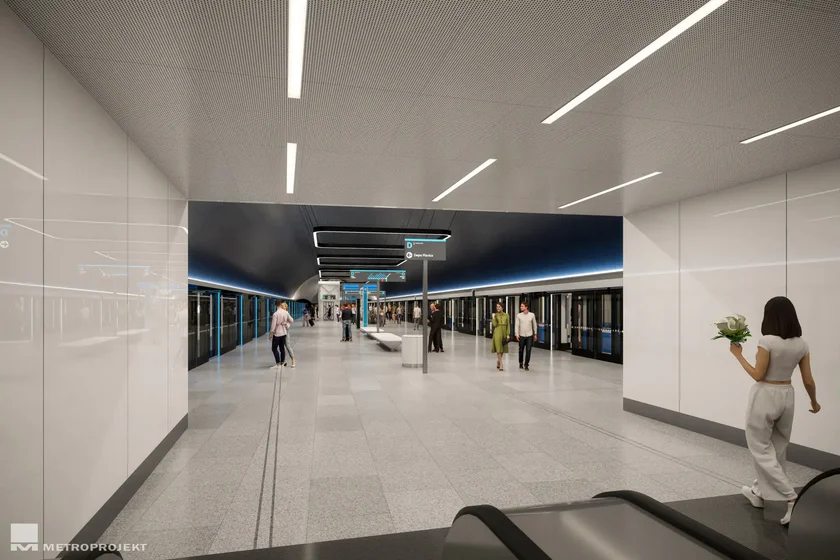
Unusually, however, the new Line D station will sit above the existing Line A station of the same name. The two lines will cross beneath Vinohrady, with the new station constructed under Sázavská Street.
A direct barrier-free interchange between Lines A and D is planned in the middle of the new platform, potentially making Náměstí Míru an important transfer point for passengers traveling between the city center and southern Prague.
The station will have two escalator vestibules and a separate elevator entrance.
At either end of the platform, passengers will be directed toward the area's main streets. Entrances will provide access toward Vinohradská and Francouzská, while elevators will emerge on Korunní.
That arrangement is designed to connect Metro D directly with three major tram routes rather than funneling all passengers onto Náměstí Míru itself.
Fitting the new infrastructure into the dense historic neighborhood presents its own challenges. DPP says the underground vestibules are heavily constrained by the surrounding buildings, which will require particular care during construction.
Street-level structures are therefore intended to be as unobtrusive as possible. On Korunní, the elevators will be incorporated inside an existing corner building rather than housed in a large new standalone entrance.
What will change above ground?
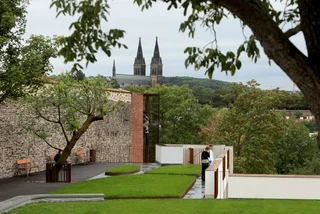
Metroprojekt's plans include a ventilation structure in Riegrovy sady, while construction sites and other infrastructure will be required around the future station. Behind the platform, tracks will also be built to allow Metro D trains to turn around and be stored.

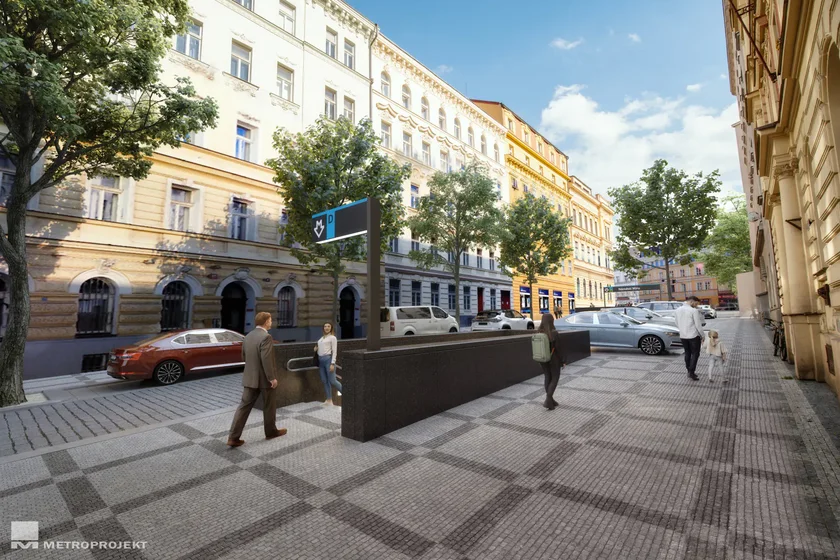
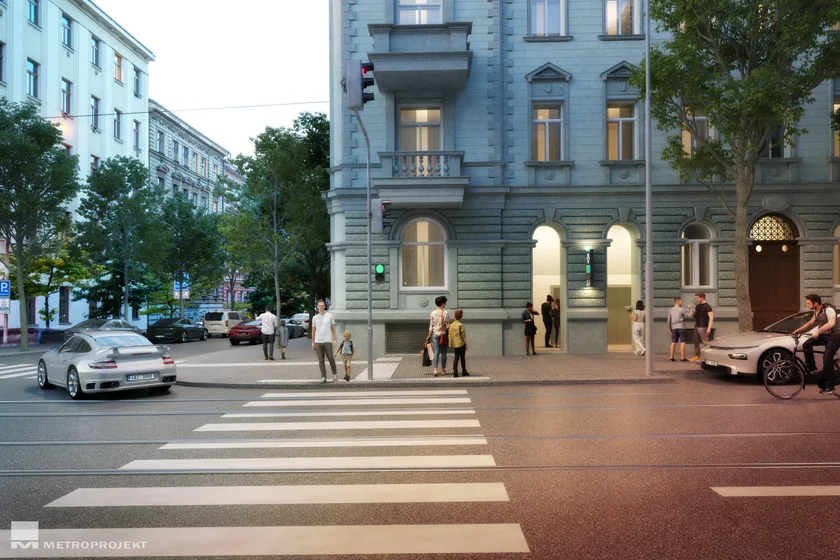
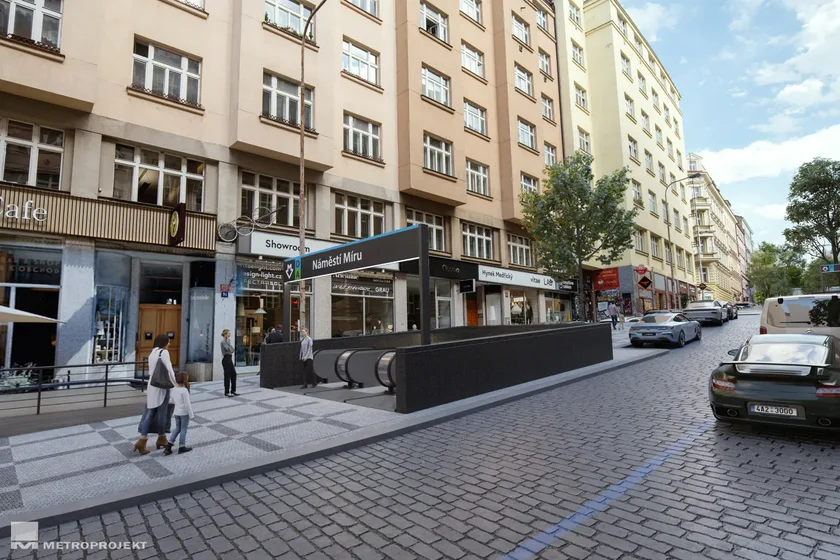
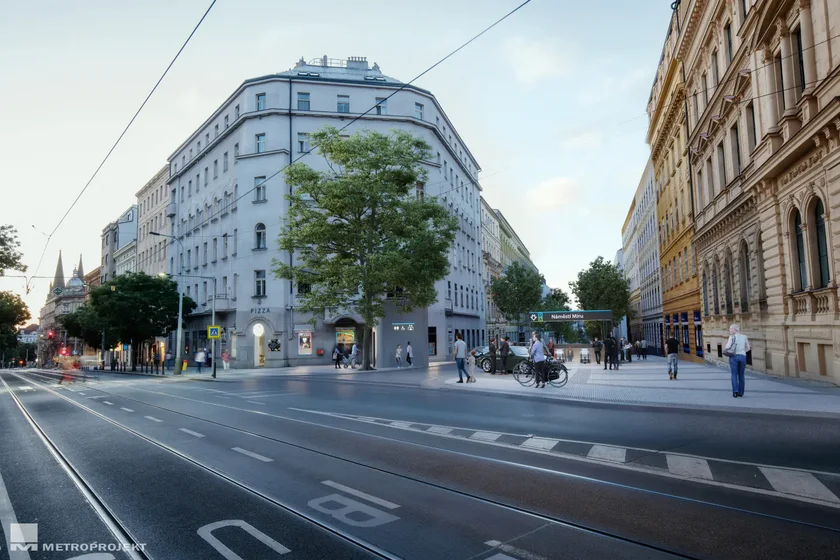
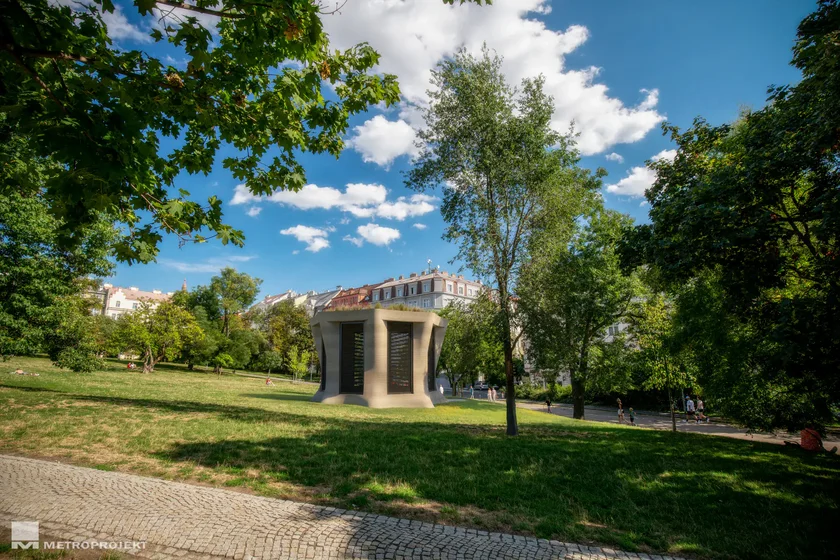
The newly released images provide the clearest indication yet of how these technical elements could fit into the neighborhood, but the finished station may look considerably different.
DPP is preparing an open, two-round architectural and artistic competition for Náměstí Míru and the planned Nusle station. The process will focus on elements passengers actually see: station interiors, ceilings, lighting, furniture and distinctive artworks, as well as potentially some immediately adjacent public spaces.
The station's basic footprint, tunnel dimensions, platforms, escalators and construction method are already largely fixed and will not be redesigned through the competition.
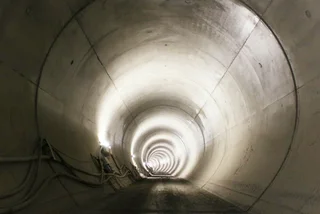
Náměstí Míru and Nusle form part of the planned extension of Metro D north from Pankrác toward the wider city center.

Once completed, the Náměstí Míru interchange will give passengers on the new line direct access to Metro A as well as tram connections along Vinohradská, Korunní and Francouzská — while adding an entirely new layer of transport infrastructure beneath the streets of Vinohrady.