
 Reading time: 2 minutes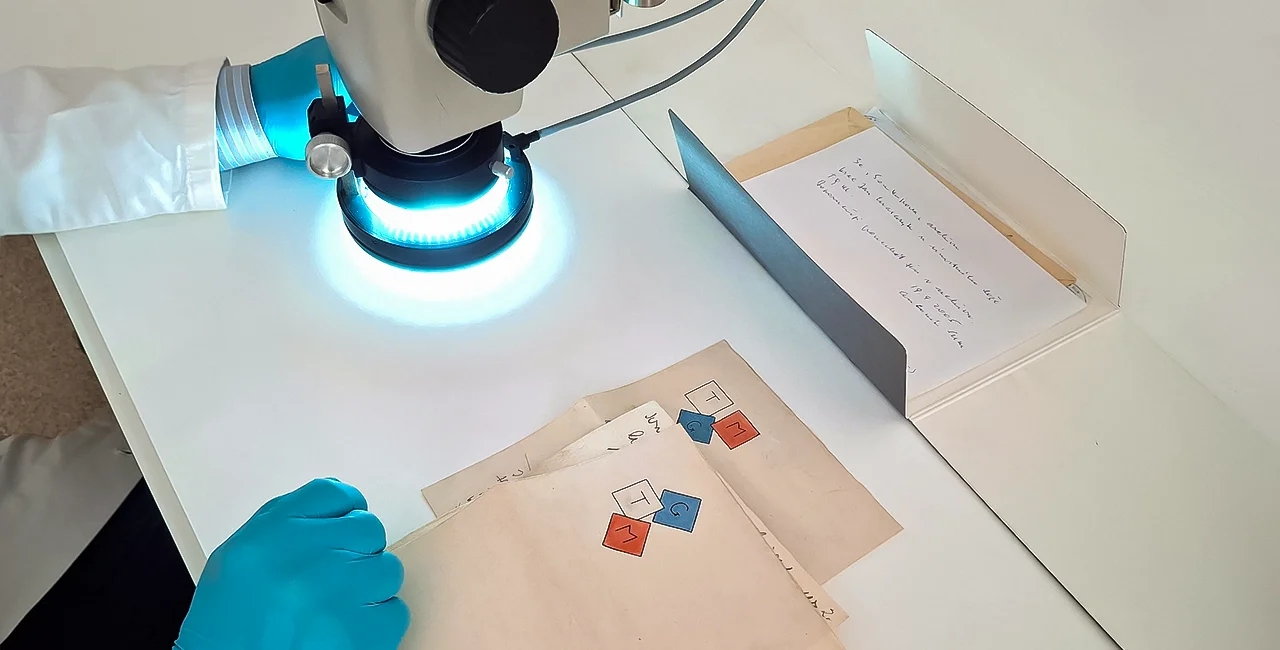

 Summary for: New study of Czechoslovak statesman's last English words uncover his final days
A document long thought to contain the final words of Czechoslovakia’s first president, Tomáš Garrigue Masaryk, has been confirmed as a transcript of his remarks to then–foreign minister Edvard Beneš in August 1934, archivists announced Wednesday.
Notably, the document is almost entirely in English; a reflection of Masaryk’s family background and international-facing outlook. Czechia’s National Archives will exhibit the original from Oct. 21-24 at its Prague 4 building, open to the public free of charge from 10 a.m. to 6 p.m.
Experts said the finding clarifies the origin and content of one of the National Archives’ most discussed holdings. The analysis, based on linguistic and contextual comparison, determined that the text records a conversation at Masaryk’s residence in Lány rather than a message dictated near his death in 1937.
According to the National Archives, the handwritten record was made by Masaryk’s son, Jan Masaryk, and later rewritten with minor adjustments.
The clean copy is dated Aug. 31, 1934, and signed by Jan Masaryk with the note: “The president said in my presence to Dr. Beneš.”
Milan Vojáček, director of the National Archives, told Czech Radio that the document shows Masaryk was a critically thinking and morally grounded person. When he thought he was dying, he showed how much he cared about the state and its future, Vojáček noted.
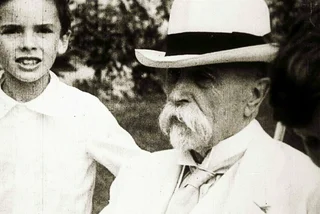
The letter was unsealed in late September at Lány chateau after being held in the archives for two decades. It had been handed over on Sept. 19, 2005, by Antonín Šum, secretary to Jan Masaryk, with instructions that it remain unopened for 20 years.

The three-page document addresses national and educational issues in Czechoslovakia and contains remarks on ethnic coexistence. Historian Dagmar Hájková from the Masaryk Institute and Archives of the Academy of Sciences said the text includes Masaryk’s statement that “it is not possible to do much if people are uneducated and stupid.”
In late August 1934, the ex-president suffered a severe health crisis when doctors diagnosed worsening brain disorders. According to his physician, he was fully aware of the seriousness of his condition, and during this time, he reflected deeply on death.
His health improved in September, but he knew he was no longer fit to serve. He abdicated in December 1935 and spent his remaining years in seclusion at Lány.
The National Archives says the public do not need to register ahead of viewing the original letter.