




 Reading time: 2 minutes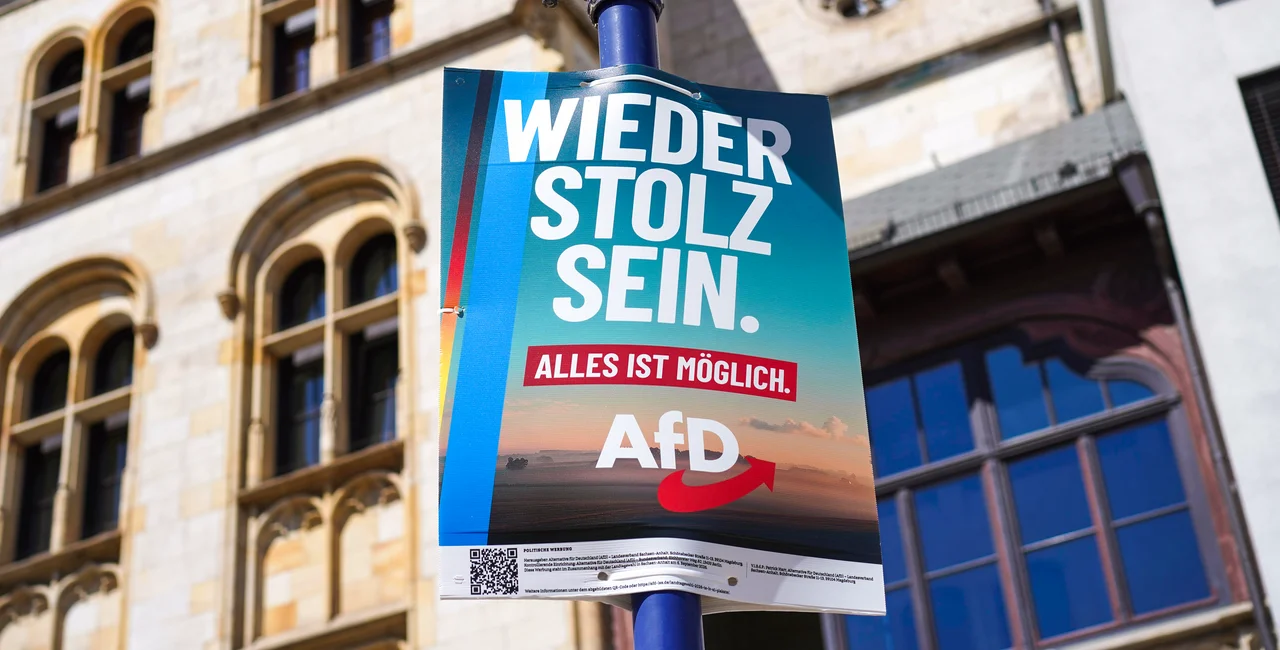

 Summary for: Impact beyond Germany? AfD’s historic victory rattles Czech politics
The Alternative for Germany (AfD) won Sunday’s Saxony-Anhalt election with 43.8 percent, taking 39 of 83 seats in its strongest-ever state result. It fell three seats short of a majority, leaving the party facing a difficult path to government as mainstream parties continue to rule out cooperation.
The result also exposed a sharp divide in Czech politics over what the AfD’s rise means for Germany and for Czechia.
Okamura: The voters have spoken
Czech Chamber Speaker Tomio Okamura, leader of the junior ruling SPD, congratulated the AfD and said he hoped it would join the new state government. He argued that the result showed voters rejecting the policies of Germany’s mainstream parties.
“It is the result of the bad policies of the current liberal, pro-EU parties, and people in former East Germany have made it clear that they no longer want a continuation of this policy.”
Okamura also said that forming a coalition specifically to keep the AfD out of government would disregard the voters’ decision.
Former Czech PM: It's a warning
Former Prime Minister and ODS leader Petr Fiala offered the opposite assessment, calling the AfD's political platform frightening and saying Czech politicians should take the result as a warning.
“The offer of the AfD, which won with a mixture of nationalism, unrealistic promises, nostalgia, fear of the future and pro-Russian sentiments, is frightening.”

STAN leader Vít Rakušan focused on the lesson for Czech politics, warning that mainstream parties risk losing voters if they leave issues such as migration and social policy to populist parties.
“The victory of the AfD in Saxony-Anhalt shows how dangerous it is when democrats leave such important issues as migration or pressing social questions to populists.”
Rakušan said Czech politicians need to offer “realistic and sustainable solutions” so that Czechia does not “end up like the Saxons.”
Expert weighs in on impact
Political scientist Jakub Eberle of Charles University’s Institute of International Studies said the result was driven primarily by dissatisfaction with Chancellor Friedrich Merz’s federal government, rather than being solely a reflection of support for the AfD itself.
“The result can have a significant impact on all-German politics and further shake the government of Chancellor Friedrich Merz.”

Eberle said the result could therefore have consequences beyond Saxony-Anhalt, as the AfD’s breakthrough puts additional pressure on Germany’s mainstream parties and Merz’s government.

Foreign Minister Petr Macinka said the next steps by the AfD and the CDU would have “considerable symbolic significance for Germany’s future direction,” including whether political tensions begin to ease or become more pronounced.
The Czech reaction mirrors a wider European debate over how mainstream parties should respond as the AfD gains ground.
For Czechia, the election has also become a proxy debate over whether parties should confront populists directly or compete with them on issues such as migration and economic concerns.