



 Reading time: 4 minutes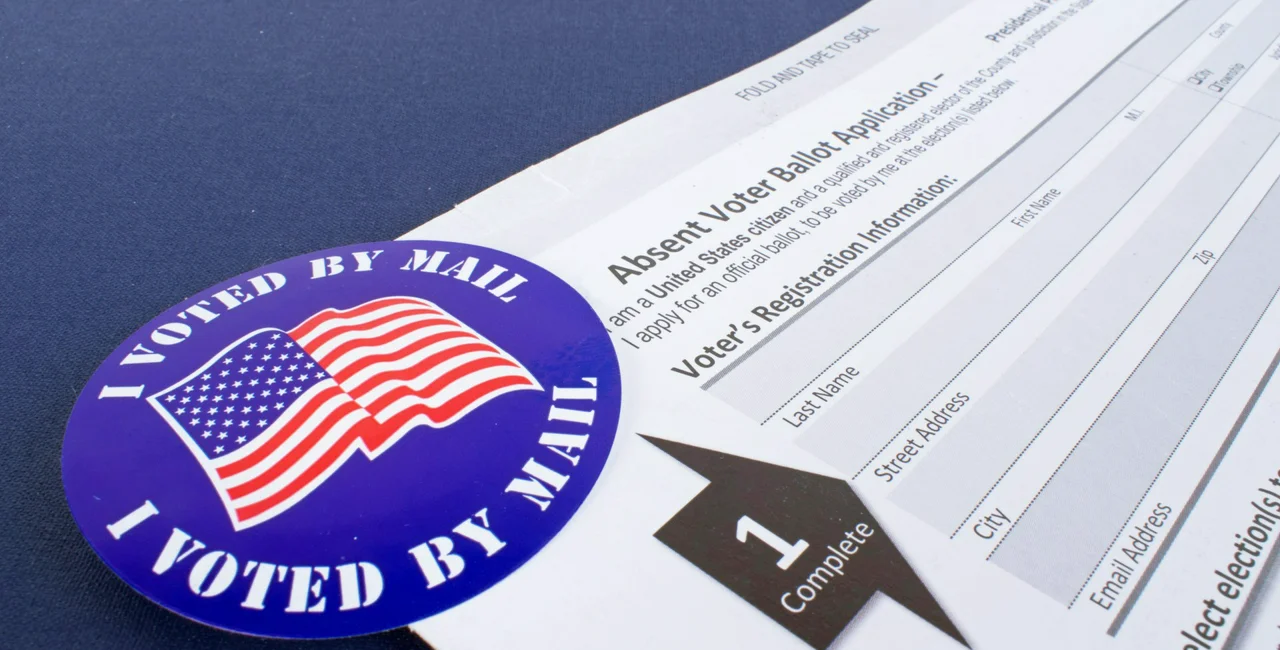

 Summary for: How Americans in Czechia can vote from abroad during a confusing election season
Americans living in Czechia who are unsure how to vote in November's U.S. midterm elections can get free, in-person assistance at Prague's Globe Bookstore and Café this month.
The sessions are being organized by Democrats Abroad Czech Republic, whose volunteers will help with voter registration, ballot-request forms, and questions about voting from overseas. The organization is affiliated with the Democratic Party, but says its voter-assistance services are available to Americans regardless of political affiliation or membership.
Sessions are scheduled for Saturdays in September from 10 a.m. to 2 p.m., with additional Sunday sessions. The Globe is the venue; Democrats Abroad is providing the voter assistance.

Voters who can't make it to the Globe can get started at VoteFromAbroad.org, which provides an online tool to help Americans abroad complete and submit the Federal Post Card Application (FPCA) and request their ballot.
Why voting from Czechia can be confusing
The U.S. voting system doesn't have one set of rules for Americans living abroad. Overseas voters register and request an absentee ballot through the state where they are eligible to vote, and states have different requirements for how they accept ballots.
All voters abroad can request email delivery of their ballot, meaning they don't have to wait for a physical ballot to travel from the U.S. through the international postal system.
Federal law requires states to provide overseas voters with an electronic method for receiving their blank ballot, although the specific method varies by state.


“Overseas voters have a special federal right that mail-in voters back home don't have: we can request that our ballots be sent to us by email, regardless of our state,” said Julia Bryan, chair of Democrats Abroad Czech Republic. “That's a huge advantage, and we want every American abroad to know about it and use it.”
That can be particularly useful for Americans voting from abroad, where international mail adds time to the process.
But getting the ballot by email doesn't necessarily mean it can be returned the same way. States have different rules for submitting completed overseas ballots, and some still require voters to return them by mail.
One Prague voter's experience
The U.S. government's Federal Voting Assistance Program (FVAP) recommends that overseas citizens start with the Federal Post Card Application, or FPCA, which can be used to register and request an absentee ballot.
But Noah, an American living in Czechia who had previously gone through the overseas voting process, said that this year he searched the U.S. Embassy, FVAP, and other government sources but couldn't find a clear way to request a ballot online.

He came away believing he would have to mail a physical request, wait for a ballot to arrive from the U.S., and then mail it back.
The experience was frustrating enough that he considered giving up. But he kept looking and eventually found VoteFromAbroad.org, where he completed the FPCA and requested electronic delivery. His local election authority subsequently confirmed receipt of his application, he said.
FVAP research has found that the reliability of international postal systems can affect whether overseas ballots are successfully counted. In one study, voters in countries with the most reliable postal systems were 65 percent more likely to have a vote recorded than those in countries with the least reliable systems.
Czechia's postal system performs slightly above its expected level on the Universal Postal Union's reliability measure, according to the UPU's latest analysis.
Misinformation adding to voter confusion
Bryan says a lot of the concern right now is being driven not only by uncertainty over how overseas voting works, but also by misinformation circulating online as voting rules are being challenged ahead of the Nov. 3 midterms.

The Trump administration is asking the U.S. Supreme Court to allow new U.S. Postal Service rules governing mail-in ballots to take effect. A federal judge has temporarily blocked the rules, which remain tied up in litigation.
That dispute has added to the noise around mail voting. For Americans overseas, however, the more immediate challenge is figuring out which rules apply to their state and allowing enough time for a ballot to be received and returned.
Election officials have also warned that inaccurate information, including AI-generated content, can mislead voters about deadlines, eligibility and other election procedures.
Noah finds it curious that electronic voting protocols were difficult to locate on government websites. And while we can't confirm that; one thing is clear: information for overseas voters is scattered across federal and state websites, making an already complicated process difficult to navigate.
Noah says the state election board has confirmed receipt of his request and told him he would receive his ballot by email, pending confirmation of eligibility. Even so, he says he remains uncertain that his vote will ultimately count.
“Even knowing this. Even knowing my vote may not even be counted, I must vote,” he wrote.
What overseas voters need to do
1. Complete the FPCA.
The Federal Post Card Application allows eligible Americans abroad to register to vote and request an absentee ballot.
2. Request electronic delivery if available.
This can avoid waiting for the ballot to travel from the U.S. to Czechia by international mail.
3. Check your state's return rules.
Some states allow electronic return, while others require completed ballots to be returned by mail or another specified method.
4. Confirm your application was received.
Check with your local election office rather than assuming the form went through.
5. Know about the backup ballot.
If an eligible overseas voter has requested a ballot but it doesn't arrive in time, the Federal Write-In Absentee Ballot (FWAB) can serve as a backup. Voters should follow their state's instructions for submitting it.