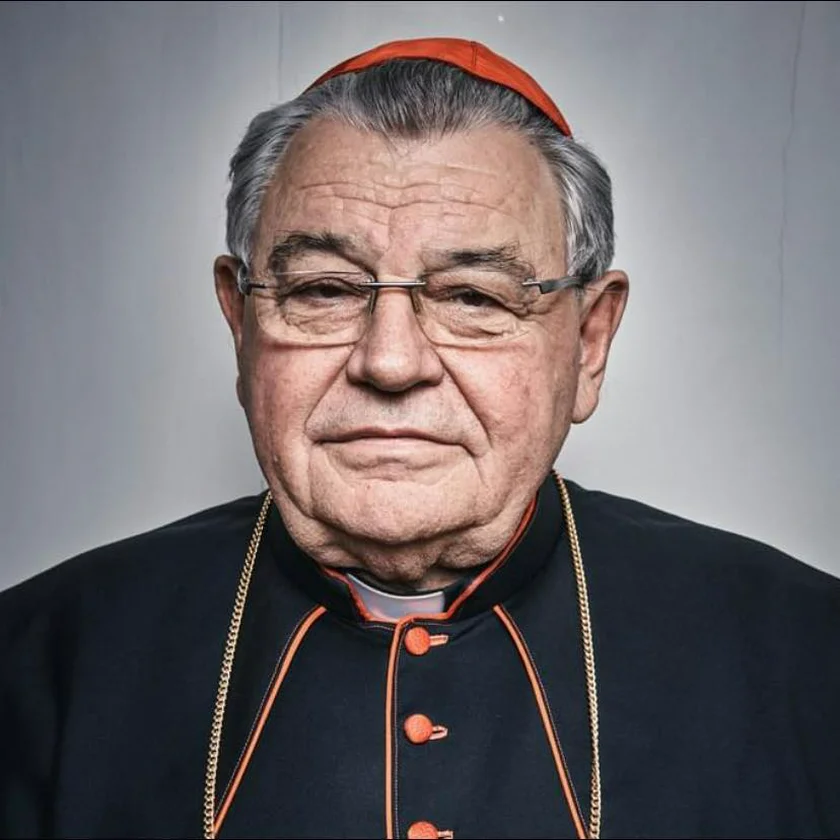
Cardinal Dominik Duka, who served as Prague's archbishop from 2010 to 2022 and was a prominent figure in Czechia's underground church during communist rule, died in a Prague hospital in the early hours of Monday. He was 82.
The Prague Archbishopric announced his death on Facebook. Duka had undergone emergency surgery at Prague Military Hospital on Oct. 6 and was discharged last week, but was readmitted on Saturday. He had recently said he came close to death at several points during his illness.
A requiem mass will be held at St. Vitus Cathedral at Prague Castle on Nov. 15, where Duka will be laid to rest in the archbishops' tomb. Members of the public can pay their respects at All Saints Church at Prague Castle on Nov. 13 and 14. A book of condolence will be available at the Archbishop's Palace from noon today.
Leading a church in one of Europe's most secular countries
Duka led the Catholic Church in a country where only 9.3 percent of the population identifies as Catholic, according to the 2021 census.
Nearly half of Czechs (47.8 percent) explicitly stated they have no religious belief, making the Czech Republic one of the most non-religious countries in the world, a stark contrast to neighboring Poland, where 71 percent identified as Catholic in the same 2021 census.
With Duka’s death, the Czech Catholic Church currently has no cardinal, a situation that has occurred several times since Czechoslovakia’s establishment, often reflecting the church’s marginalized status during periods of communist rule and societal secularization.
Underground priest and political prisoner
Born Jaroslav Duka on April 26, 1943, he took the name Dominik when he joined the Dominican Order in 1968. Ordained in 1970, he was stripped of his state approval to work as a priest just five years later and spent 15 years working at the Škoda Plzeň industrial company while secretly continuing his ministry.
From 1981 to 1982, he was imprisoned in Plzeň-Bory, where he met fellow dissident and future president Václav Havel. Despite persecution, Duka became head of the Dominican Order in 1986, a position he held until his appointment as bishop of Hradec Králové in 1998.
He became Archbishop of Prague in April 2010 and was elevated to cardinal by Pope Benedict XVI in 2012. He retired in 2022, replaced by Jan Graubner.
Church restitution and billion-crown settlement
As head of the Czech Catholic Church after the fall of communism, Duka played a key role in negotiating property restitution. Under the 2012 settlement law, the Roman Catholic Church received real estate worth billions of crowns and has been gradually receiving CZK 47.2 billion (EUR 2.2 billion) for property confiscated by the communist regime that could not be returned.
The settlement proved controversial in a largely secular country, with critics questioning whether the church deserved such significant compensation.
A polarizing figure in later years
While celebrated by many for his anti-communist resistance, Duka became an increasingly controversial figure during his tenure as archbishop.
In 2019, he faced a criminal investigation after being accused of covering up sexual abuse in the Dominican Order in the 1990s. A victim alleged that Duka failed to take action when the abuse was reported to him. Duka also drew criticism from abuse survivors for claiming that only 10 percent of abuse accusations against priests are proven to be true.
Prominent Czech Catholic theologian Tomáš Halík criticized Duka for his close ties to controversial politicians, including President Miloš Zeman.
In 2018, Czech Catholic laymen wrote to Pope Francis expressing concerns about these political relationships.
Duka also made controversial statements about Muslim immigration, saying Muslims can only be considered a "safe presence" if they make up less than five percent of the population. He claimed the pope could not fully understand the refugee crisis because he is not from Europe.
Duka received the Order of the White Lion from President Miloš Zeman in 2016 and a medal of merit from President Václav Havel in 2001.
Want to see more from us? Select Expats.cz as a
preferred source on Google.






 Reading time: 3 minutes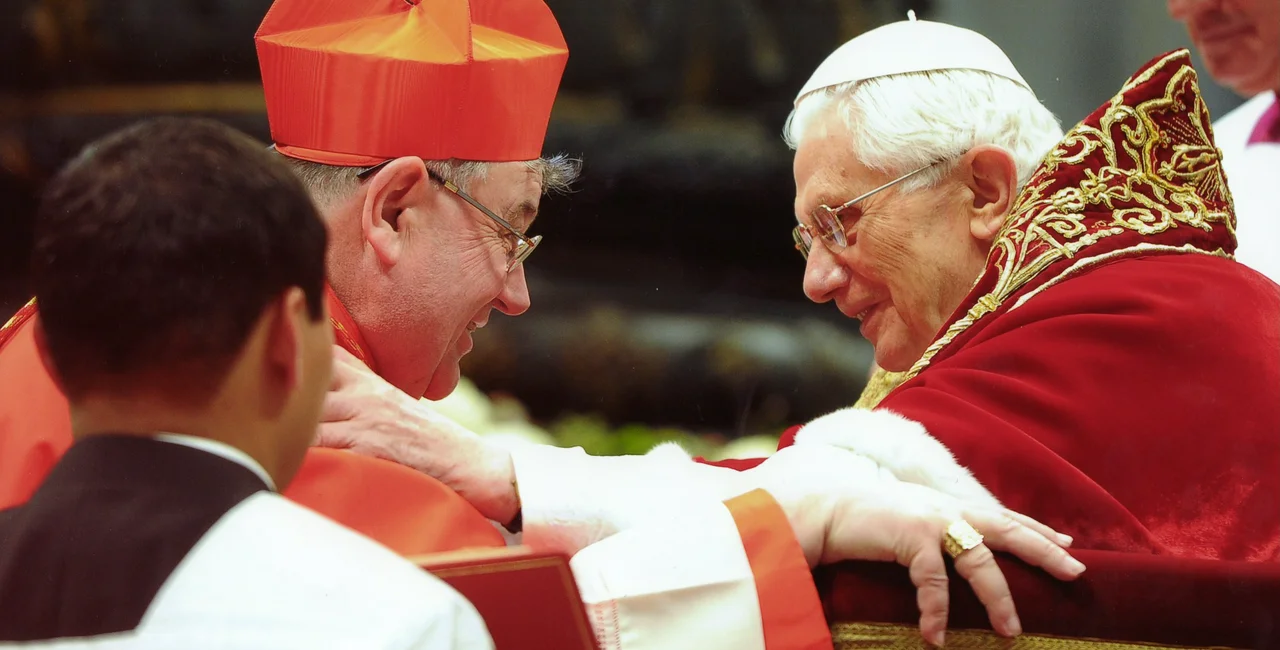

 Summary for: Former Prague archbishop and dissident Cardinal Dominik Duka dies at 82



 French
Prague • CZK 685,000
French
Prague • CZK 685,000 Italian
Remote work - Czechia • CZK 180
Italian
Remote work - Czechia • CZK 180 English
Prague • CZK 70,000
English
Prague • CZK 70,000