


 Reading time: 6 minutes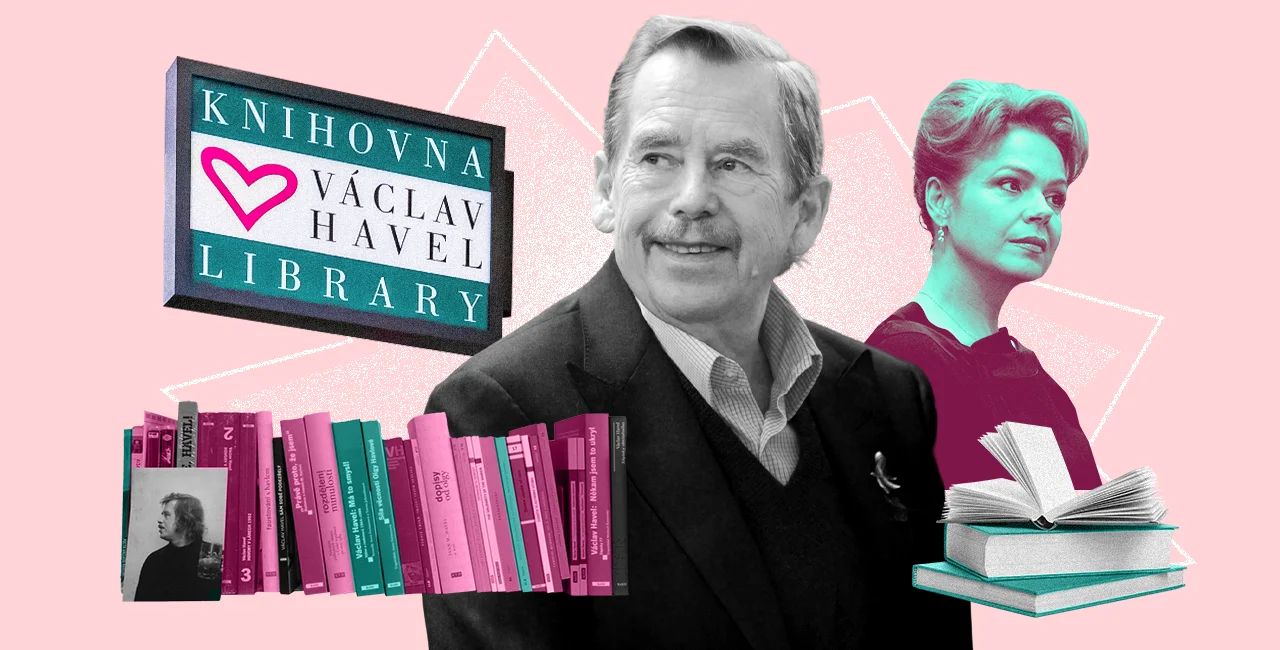

 Summary for: EXPLAINED: Why Prague’s Václav Havel Library is on the verge of collapse
Truth and love were supposed to prevail. At the institution built to keep that idea alive, something else happened.
On what would have been Václav Havel’s 90th birthday, the library bearing his name, and meant to safeguard his legacy, could soon be closing its doors amid infighting, finger-pointing and blame games.
In this week’s explainer, we unwrap the chaos unfolding at the Prague-based Václav Havel Library, and what this could mean for the former dissident-turned-president’s legacy.
A community hub for English speakers
The Václav Havel Library was founded in 2004, a year after Havel’s presidency ended, by his wife Dagmar Havlová, and two close collaborators: politican Karel Schwarzenberg and sociology professor Miloslav Petrusek.
Modeled after US presidential libraries and located on Ostrovní street in the center of Prague, the library houses a large archive, organizes talks and debates, political discussions, educational programs for schools, and a lineup of events for an English-speaking audience. It has had a branch in New York since 2012.
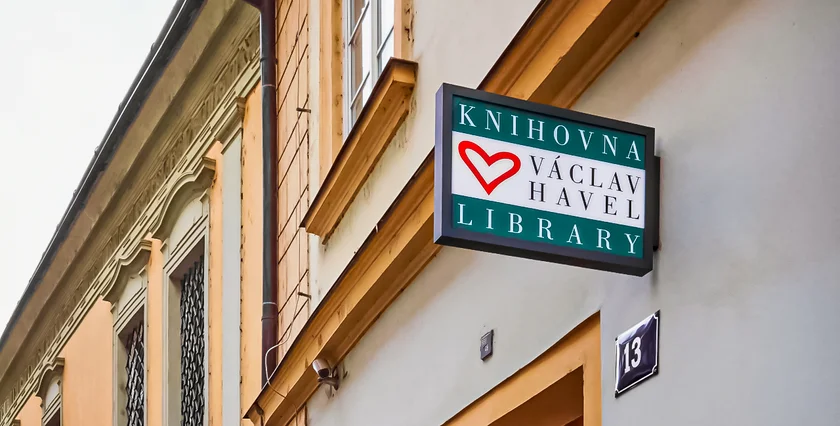
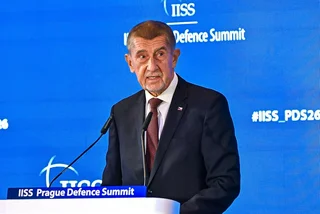
The current crisis has largely been blamed on lingering tensions between the library’s staff, its board members, and it current director Tomáš Sedláček, a well-known public figure and media commentator, economist and former advisor to Havel, who took office in March 2025.
Sedláček, a vocal critic of the “Prague café” scene he felt had monopolized the legacy of the playwright-statesman, had vowed to shake things up at the library by using AI tools to streamline operations and run the institution with a leaner staff, as well as launching a public, “Eurovision-style” competition for artists to design a new symbol of freedom.

Mickey Mouse and Prague cafés
In an interview given last December, Sedláček also prompted a backlash for his remarks paraphrasing Havel’s famous quote: “Havel found the answer to the meaning of life, the universe and everything: it is truth and love.” Some argued the new director – who incidentally has made no secret of his own wish to run for president in 2027 – was promoting a simplistic, kitschy and cult-like version of the first Czech president.
Many were not pleased, saying the new director was attempting to commercialize Havel and position himself as the sole interpreter of his legacy.
The library’s dramaturge, novelist Jachym Topol, slammed what he called Sedláček’s aim to turn Havel into a “monetizable item”, saying: “We all agree on this, we don’t imagine it like this. Like a sell-out version of Václav Havel, where I feel like he’s starting to turn into Mickey Mouse or something like that.”
What does “pražská kavárna” mean? The expression “pražská kavárna” (“Prague café”) refers, often pejoratively, to a vague group of Czechia’s urban intelligentsia supposedly detached from reality and from the lives of ordinary Czechs with petty bourgeois lifestyles and notions – themselves often linked to Havel’s ideas. It was popularized by former president Miloš Zeman to deride his 2013 opponent Karel Schwarzenberg and his followers, who often met and mingled in Prague cafés like Kavárna Mlýnská on Kampa island.
Exodus at Václav Havel Library
The collapse has been quick, precipitous and potentially unforgiving.

After weeks of simmering tensions, the entire 17-member staff of the Václav Havel Library – which includes many former friends and associates of the late president – resigned in May in protest against what they described as the chaotic management style of its director Sedláček, who took the post a little over a year ago.
Most members of the institution’s board of directors and supervisory board also left, and the library’s two main donors – billionaires Zdeněk Bakala and Karel Komarek – then withdrew their financial support, leaving the institution with no clear path to survival.
“The current way of managing and operating the library does not correspond to the agreements and principles of mutual cooperation,” the Bakala foundation – which provided the library with CZK 10 million annually – said in a statement, although it promised not to cancel funding already approved for 2026.
All eyes were then on Dagmar Havlová, widow of the president, co-founder of the library and legal holder of Havel’s personality rights.
In early June, Havlová too said she was withdrawing from the project “after a long and painful period of consideration,” although she promised to “continue, as I have always done, to commemorate his life and legacy.”

With apparently no staff, no stable funding and now shunned by Havel’s personality rights holder, many consider the fate of the library to be sealed.

“I am not saying that the library is finished [but] it certainly marks the end of the institution as we know it,” said David Dušek, the only board member who stayed on, grandson of Havel’s friend Zdeněk Urbánek and a deputy-mayor for Prague 5.
But promising he “will not resign under any circumstances,” Sedláček has described the current chaos and string of resignations as “a new beginning” and said he wanted to make the organization more profitable and financially independent in order “not to take money from donations or polish the handles of billionaires.”
What this means for Havel’s legacy
The fate of the Václav Havel Library is now up in the air, with some hints that it may yet survive the current situation, whose roots may go back deeper to long-standing tensions between Havlová, “who had a decisive say in practically everything [and] donors acting on the board of directors only as suppliers of operating capital.”
Those still involved in the project suggested that new donors had been approached, while employees-on-leave wrote to Havlová a few days ago offering to revoke their resignation and come back to work on the condition that both Sedláček and Dušek be dismissed. Just yesterday, new members were appointed to the library’s supervisory and management boards.
A lot hangs on whether the former First Lady will allow the library to continue using Havel’s name and personality rights to pursue its activities, and under what conditions.

For many, the crisis speaks to deeper issues about Havel’s legacy today.
Ian Willoughby, an Irish journalist for Radio Prague International and long-standing translator and collaborator with the library, describes his “very positive” experience working with the institution for 15 years. “Working on a freelance basis for an organization preserving and spreading [Havel’s] legacy was a great honor for me,” he says.
Ian Willoughby Journalist for Radio Prague International“For me it is sad and bitterly ironic that the library has collapsed in a historical moment when it feels like Havel’s firm-on-Russia, progressive and ultimately optimistic worldview is needed more than ever.”
The library had in recent years also become a kind of hub for English speakers in Prague.
“I don’t think the collapse will be actively damaging to Havel’s legacy,” says Willoughby. “What it does mean is that the great work library staff have done to bring Havel’s story and philosophy to new generations through its educational programs in particular will no longer happen.”
The In Conversation With... with Leon JakimiÄ of Lasvit planned for this Thursday June 11 is CANCELLED, I'm sorry to report.
— Ian Willoughby (@Ian_Willoughby) June 8, 2026
This brings my long association with @KnihovnaVH/ Vaclav Hável Library (I've been translating for them for about 15) to an end. pic.twitter.com/Neu0tdkJE7
He adds: “For me it is sad and bitterly ironic that the library has collapsed in a historical moment when it feels like Havel’s firm-on-Russia, progressive and ultimately optimistic worldview is needed more than ever.”

Some try to find a silver lining to the whole drama. “Tomáš Sedláček succeeded in one thing: to reopen a public debate on the topic of Havel’s legacy,” wrote journalist and philosopher Petr Fischer, including on the question of whether the library bearing his name was upholding and promoting it the right way.
But Fischer warns that “we have ceased to be sensitive at all to what Havel says,” he adds: “Havel’s contradictions are more interesting than the effort to create a consensual figure in the historical dimension of some kind of European Gandhi.”