



 Reading time: 2 minutes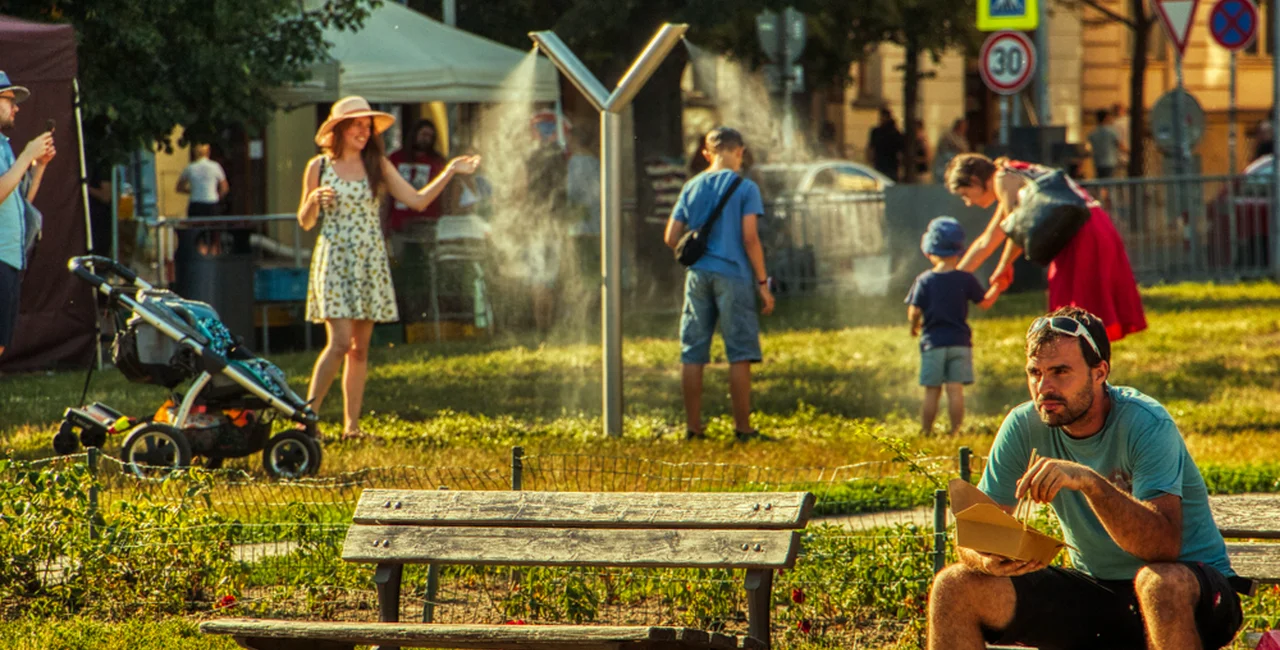

 Summary for: As Europe becomes a climate hotspot, how is Czechia bracing for impact?
As scorching temperatures grip Central Europe, Czechia is bracing for a stretch of extreme heat, with forecasts predicting highs of up to 34 degrees Celsius and violent thunderstorms later today and this weekend.
Across the continent, the impact is proving deadly, with two deaths reported in Paris and experts warning that Europe is warming at twice the global rate. So, how is Czechia responding to climate change, and what steps is it taking to make life easier for its residents?
The current situation
Czechia is facing a spike in temperatures this week. A warning for high temperatures and strong to very strong thunderstorms remains in effect for most of the country: mass floods in September 2024 more broadly underline the severity of Czechia's climate change.
Meteorologists expect storms to develop Thursday afternoon around Central Bohemia and move eastward, bringing the risk of hail, torrential rain totaling around 40 millimeters, and wind gusts reaching 90 kilometers per hour. Localized flooding and flash floods are possible in storm-hit areas.
A brief cooldown is expected Friday, with rain and cloud cover in many regions. However, temperatures will rise again over the weekend, potentially exceeding a scorching 35 degrees Celsius by early next week.
☀ï¸DneÅ¡nà brzké ráno doprovázà jasná až polojasná obloha a pestré teploty, zatÃmco v pražském Klementinu nebo na PÅ™imdÄ› je 20 °C, v TeplicÃch nad Metujà nebo SvÄ›tlé HoÅ™e je 10 °C, v tradiÄnÃm chladných horských lokalitách klesla v noci teplota jeÅ¡tÄ› nÞ, ale nikde nemrzlo.
— ÄŒeský hydrometeorologický ústav (ÄŒHMÚ) (@CHMUCHMI) June 26, 2025
🥵… pic.twitter.com/EP3KK9MUyp
How Czechia is dealing with heatwaves
European Perspective, an editorial collaboration between various European public media, outlines how Czechia is dealing with climate change. It describes how Prague has recently deployed a combination of methods to fight the heat.

In recent years, the focus has shifted away from fogging—the practice of vehicles spraying high volumes into the air—due to its high costs (over CZK 1 million per day).
Prague Fountains is a useful and frequently updated resource that provides a comprehensive overview of the city’s fountains, misting spots, and cast-iron water pumps and includes conveniently marked maps.
Instead, the city is investing in planting trees and installing misting machines. This is where people can stand near a gentle mist of water. You can find some of them on a Google map by searching for the word "mlžítko." Other cities like Liberec and České Budějovice carry out fogging daily and also have misting stations.
The law in Czechia sets minimum and maximum temperatures for offices and other workspaces. For office workers, the maximum is 27 degrees Celsius, and for people sitting and doing light work, including driving a car and being a cashier at a store, it is 26 degrees.
The rest of Europe
In Europe, the impact of the heat is proving deadly. The Telegraph reported that two people, including a child, died in France this week as climate change-driven storms struck the city, causing felled trees and damage.

A new report from the Copernicus Climate Change Service and the UN warns that Europe is warming twice as fast as the global average, and heat-related deaths have increased by at least 30 percent over the past two decades.
Last summer saw temperatures in parts of southern Europe reach 43 degrees Celsius or higher, straining public health systems. Cities across the continent are now scrambling to provide residents with access to air conditioning and reliable electricity.
On a more hopeful note, 2023 marked the second consecutive year that Europe generated more electricity from renewable sources than from fossil fuels.