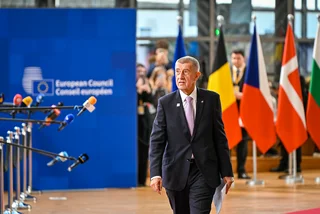
The Czech government will discuss a contingency plan on Monday to reduce energy costs for households and self-employed people if prices continue to rise, Industry and Trade Minister Karel Havlíček said.
The proposal would combine cuts to the regulated component of customers’ bills with price caps at the producer level. However, cabinet approval would not mean either measure takes effect immediately.
FOR OUR MEMBERS
Speaking on Czech Television’s Sunday debate program, Havlíček said the government would activate the plan if energy prices exceeded an agreed threshold. He did not specify what that threshold would be.
Relief would depend on further price increases
Gas and electricity prices have risen by tens of percent since March amid the conflict in the Middle East, with Czech suppliers gradually passing those increases into their offers.
Havlíček said the proposed response would address both the final prices paid by customers and prices charged by producers.
“We will move to reduce final prices for households and self-employed people through the regulated component. Alongside that, we will also introduce price caps for producers,” he said.
The regulated component covers charges set separately from the supplier’s commercial energy price. Reducing it would provide a route to lowering bills without directly capping the entire price charged to households.
Havlíček said the aim was to prepare a framework that could be activated quickly if conditions deteriorated.
“It will be designed universally so that we can react immediately when a critical situation arises and final prices exceed a certain level,” he said.
He will present the plan to ministers on Nov. 9.
Fuel controls already in place; further taxes under discussion
The government has already intervened in the fuel market. Since October, the Finance Ministry has set daily maximum prices for petrol and diesel, while the cabinet has capped retailers’ margins and reduced diesel excise duty.
A separate proposal approved by the government in September would introduce an extraordinary tax on increased refinery margins for 2026 and 2027. That legislation remains before the Chamber of Deputies.
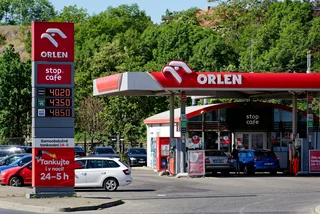
The proposed tax would charge 50 percent of the increase in gross margins compared with 2025. It would apply to companies meeting specified revenue thresholds, principally affecting Orlen Unipetrol.
Havlíček also said the coalition would discuss the possibility of another sector-specific tax, potentially at Monday’s coalition council meeting. He offered no details, saying all options were being considered.
The pressure comes as European wholesale gas prices recently briefly reached €100 per megawatt-hour, their highest level since December 2022, compared with around €30 at the start of this year.
Gas-fired generation also helps determine electricity prices in Central Europe, allowing higher gas costs to feed through into the power market.