Czech army falls short on 70% of NATO defense targets, report warns

A new military strategy reveals major gaps in staffing, equipment, and air defenses, raising questions about Czechia's ability to meet its NATO commitments

Expats.cz Staff

Written by Expats.cz Staff Published on 05.11.2026 10:00:00 (updated on 05.11.2026) Reading time: 3 minutes
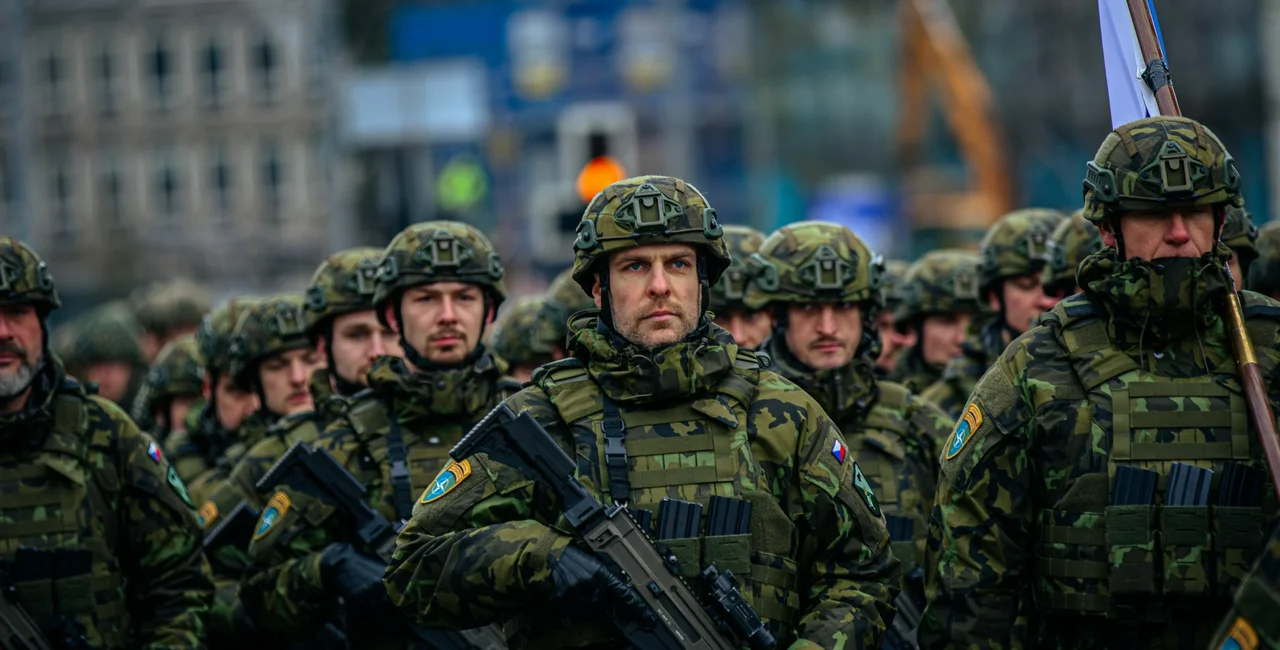
Czechia is failing to fully meet 70 percent of its NATO military capability targets, with some of the country's most resource-intensive defense requirements running five to ten years behind schedule, according to a newly approved army development strategy.

The findings, published this week, highlight significant shortages of military personnel and equipment at a time when European governments are reassessing their security priorities in response to Russia's war in Ukraine.

The strategy approved by the Czech government on Nov. 2 outlines how the armed forces should develop through 2040. It warns that existing shortcomings are limiting the army's ability to fulfill its responsibilities under NATO's collective defense system.

The document also identifies an increasingly serious risk of Russian military aggression against NATO or European Union countries, underscoring the urgency of improving Czechia's defensive capabilities.

What is the Czech army missing?

The strategy identifies gaps in personnel, military equipment, air defense, and the ability to respond to emerging threats such as drones.

Speaking at a press conference following the strategy's approval, Chief of the General Staff Miroslav Hlaváč explained that approximately half of the NATO capability targets not being fully met are partially fulfilled, while the other half remain entirely unmet.

The distinction is important: the 70 percent figure refers to specific military capability requirements rather than the overall proportion of the Czech armed forces considered operational.

Hlaváč attributed the shortfalls partly to years of insufficient investment and partly to an increase in NATO's requirements, particularly for air defense systems.

The army currently has approximately 26,000 professional soldiers. Under the new strategy, that number should increase to at least 32,000 by 2030, alongside an expansion of the active reserves.

Other priorities include stronger defenses against aircraft and drones, modernized command systems, improved logistics, and greater use of emerging technologies.

However, Hlaváč cautioned that addressing the most serious shortcomings would take at least three to five years, even with sufficient resources.

Defense spending raises concerns

Funding remains one of the central challenges.

According to Reuters, the Czech government plans to keep defense spending at approximately 2 percent of gross domestic product between 2027 and 2029.

That approach comes after NATO members agreed in 2025 to work toward spending 3.5 percent of GDP on core defense requirements, plus another 1.5 percent on defense-related infrastructure and security, by 2035.

The Czech strategy anticipates gradually increasing core defense spending toward the higher target between 2030 and 2035.

In the meantime, much of the available funding is expected to support purchases already approved, including 24 F-35 fighter jets, Leopard tanks, and new air defense systems.

Those commitments could delay other priorities, including the development of a medium mechanized brigade and the expansion of unmanned and counter-drone capabilities.

The government argues that recruitment and improvements to air defense should take precedence.

Prime Minister Andrej Babiš said that accelerating the recruitment of soldiers and strengthening protection against aircraft and drones were among his most immediate priorities.

President Pavel questions the timeline

President Petr Pavel, a former NATO general, has expressed concern that the strategy does not go far enough to address the country's military obligations.

Speaking after the government's approval of the document, Pavel criticized the proposed pace of modernization, warning that the plan would not fully achieve its stated objectives even over its extended timeline.

His concerns reflect a broader debate about how quickly Czechia should increase defense spending and whether its current commitments are sufficient given the changing security environment in Europe.

Countries including Poland and the Baltic states have moved to expand their defense budgets significantly in recent years, placing additional pressure on other NATO members to demonstrate progress.

The new Czech strategy sets out a long-term vision for a more technologically advanced military capable of defending national territory and supporting allied operations.

For residents of Czechia, the findings do not signal an immediate change to everyday life or the introduction of new civilian obligations. Instead, they expose a longer-term question facing the government: whether its defense plans and budgets can close the gaps identified by the military before the country's security environment deteriorates further.

Did you like this article?

Czechia’s latest news

Read all the headlines
Want to see more from us? Select Expats.cz as a preferred source on Google.