 Reading time: 5 minutes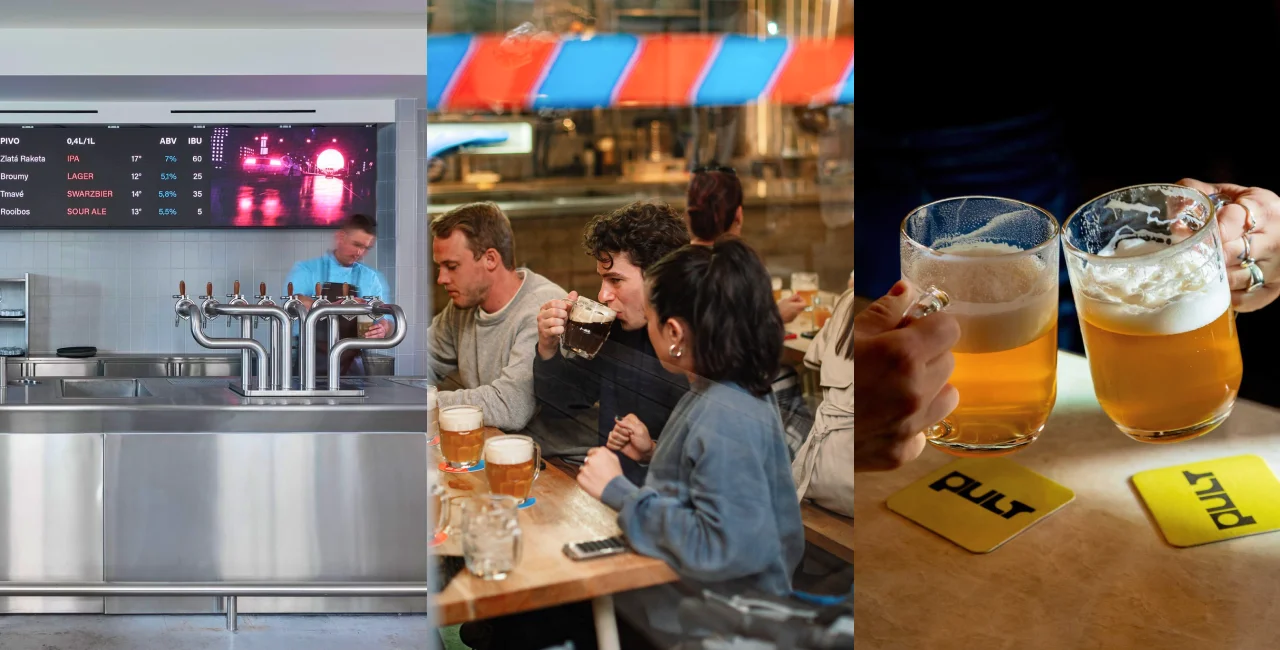

 Summary for: Beyond the hospoda: Prague’s new generation of beer culture
Prague is tapping into a craft beer moment with bottle shops, brewpubs, and bars redefining what it means to go for a beer in a country where the pub has been a civic institution for centuries.
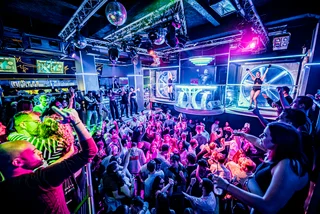
Somewhere between the dark wood paneling and the dusty historical ephemera, the service and philosophy of the Czech pub have started to evolve, targeting a customer just as comfortable in Copenhagen as in Karlín. (A weeknight visit to brewpub Dva Kohouti, in this very neighborhood, revealed as much – the place was packed with drinkers tucking into tacos as a DJ spun on a Wednesday night.)

And it's not just the high-design taps and architectural details; it's what's flowing from them: sours kissed with chili, ales laced with cabernet, and fruity IPAs in the land of lagers.
If these design-forward elements and amped up ales recall craft beer spots you know from abroad, that’s not a coincidence. They are earmarks of an old-school culture that’s gone global. But don't worry: Czech beer culture isn't abandoning its roots.

“This is Czechs plugging into the global craft beer zeitgeist, which is the same if you're in Romania, France, New Zealand, or North America,” says Prague-based beer expert and journalist Evan Rail, author of The Brewery in the Bohemian Forest.
“As people try to recreate craft beer experiences they found while traveling in Copenhagen or Brooklyn, and they come back to Prague and they want to open their version of that, they're still influenced by the local situation, which has these centuries of history,” explains Rail.
Design of the times
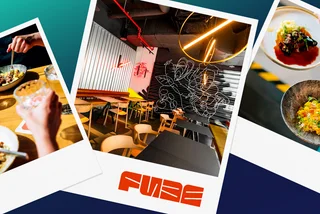
One example is FUZE, inside the Masaryčka building where brewing kettles meet exposed concrete, metallic arches, a jungle of plants, a digital beer list, and a stainless steel bar with red pipe taps reminiscent of Super Mario Bros.



Architectural studio Pizingers Mori says it designed the space “to ensure that guests across all three floors constantly feel like they're on a lively street.” The dark Belgian Kastel rouge, a cherry beer, pairs with a Czech-Asian fusion menu that's just as funky and flavorful as the decor.
Cross nearby Havlíčkova Street to Pult, and the design couldn't be further from a Czech pub interior, a long, rectangular space with a 12-meter stainless steel bar and bold, banana-yellow branding.
The design touch is also clear at the two branches of Automat Matuška (in Dejvice and the newly opened Vinohrady); its name is a nod to both artist Jakub Matuška and the vending-machine aesthetic architect Tereza Froňková built the space around.
"The interior deals with the classic theme of canteens and vending machines in a contemporary way," she told Czechdesign. That includes the stainless-steel bar and its exhaust-like pipes and playful wall art by Jakub Matuška.
English spoken and no table service
Prague's emerging beer spaces also tend to eschew the traditional table service of the hospoda, explains Tereza Pospíšilová, general manager of Pult. “In a hospoda, you are served at the table. Here, you have to go to the bar and order with the staff. So, it’s one huge difference.”
That so much of it is in English is telling, too, notes Rail. “Everyone has to make a beer with a title in English that is some kind of joke. You could make the same joke in Czech or Italian or French, but it has to be in English because English is the language of craft beer.”
Indeed, step into Sibeeria Tap Room in New Town and you may be served by a bartender from Atlanta happy to chit-chat, run down the beers on tap, offer tastes, and ask about personal preferences.
Long live the lager
The greatest distinction is what’s on tap. Call up the list at Bad Flash and find Bad Flash Cascade, an American pale ale; Bad Flash Fanatic, a New England IPA; and Bad Flash Mango and Chilli, a sour ale. At Sibeeria find The History, a wild ale; Nostalgie 80s, a Belgian Quadruple; and Zima 2024, a barleywine.
Even so, lagers still dominate the Czech beer scene, says Daniel Korcsmáros, operating manager and managing director of Automat Matuška. “The foundation is always lager. Trend waves and beer specials are great for variety and marketing, but in Czechia, and indeed around the world, lager is and will remain the core.”
Pult roots itself in lagers, with selections determined at its annual two-day Degustační rada each August, when about 20 brewers vie to pour from Pult’s taps for the year following. This year saw lagers by Černokostelecký Pivovar, Falkon, Dva kohouti, and Permon selected.
In many ways, the lager foundation also shows the power of Czech traditional beer culture, notes Rail, who sees the reflection in the National Theater’s slogan Národ sobě, or “a nation unto itself.”
It also injects nuance into the definition of “modern.” “What does ‘modern’ actually mean?” asks Korcsmáros. “At Automat, we combine tradition with inspiration from around the world. We pair traditional Czech beer styles with global beer styles, American BBQ, and the British pub style of ordering at the bar. Is that modern? I don't know.”
Trendy but grounded in tradition
Nevertheless, it’s attractive for brewers in Czechia to break out of these deep-rooted traditions and try something new. The appeal is particularly strong for an international clientele and young Czechs, says Rail.
“There are a lot of young Czech people who have an interest in being up to date and not behind the times. They see stuff on social media and they want to try the same thing. If a hazy IPA is popular, they want to drink a hazy. If a fruit IPA is popular, they want to drink that.”
These elements feed one more distinction between craft brew pub and hospoda, which tends to act as a neighborhood pub for people living or working in the immediate area.
Craft beer spaces have become destinations in themselves, with customers traveling distances to reach them. “There is one guy with his wife from the UK,” says Pospíšilová, “They come for the weekend, spend it here and go home.”
This is why Rail encourages anyone seeking a complete Czech beer experience to embrace the craft brewery, Czech pub, and everything in between.
“There's a lot of beauty in the traditional culture, and there's a lot of fun stuff and cool, interesting developments in the new culture, and beer drinkers will be well served to try them both.”