



 Reading time: 4 minutes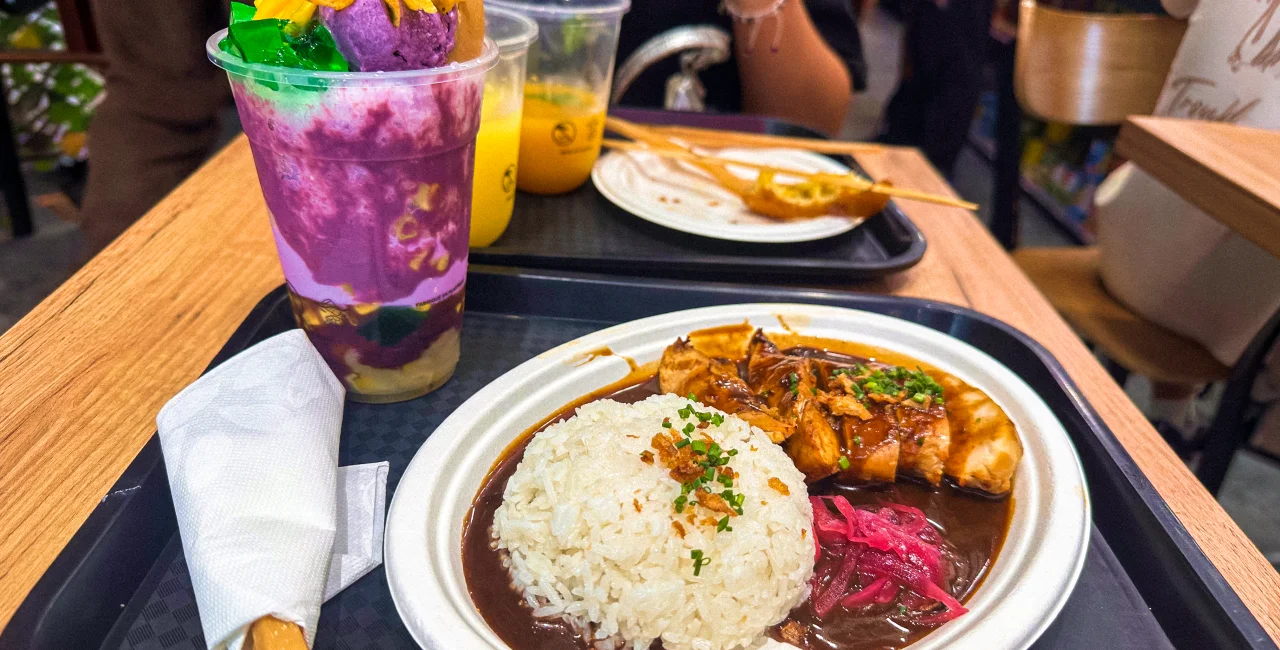

 Summary for: An unexpected Filipino kitchen comes to the heart of Wenceslas Square
If you happen to find yourself hungry on Wenceslas Square and can resist the siren song of Czechia's largest KFC, there is another kind of chicken waiting just around the corner.
At Pinoys Grocery and Bistro on Štěpánská Street, just before the entrance to the Lucerna passage, the chicken comes as adobo: slow-cooked and marinated in soy sauce and vinegar, with a generous side of rice.
Though the newish grocery and bistro has been open for less than a year, its selection already stands out among Prague's Asian shops for its clear focus on one geographic place.
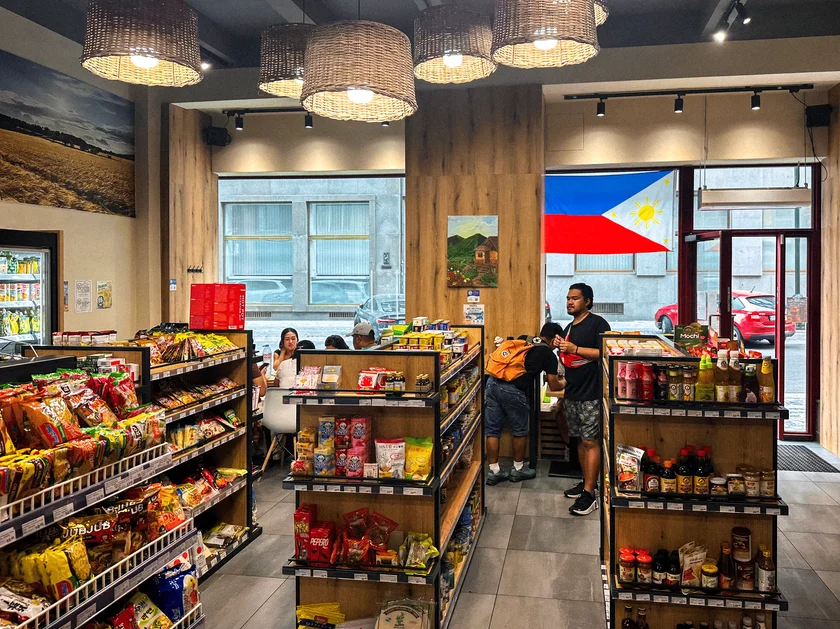
More than 70 percent of the products on its shelves are Filipino, says co-owner Crisjel Kuklovský. There are also products from Korea, Indonesia, and Thailand, but the emphasis is firmly on the Philippines.
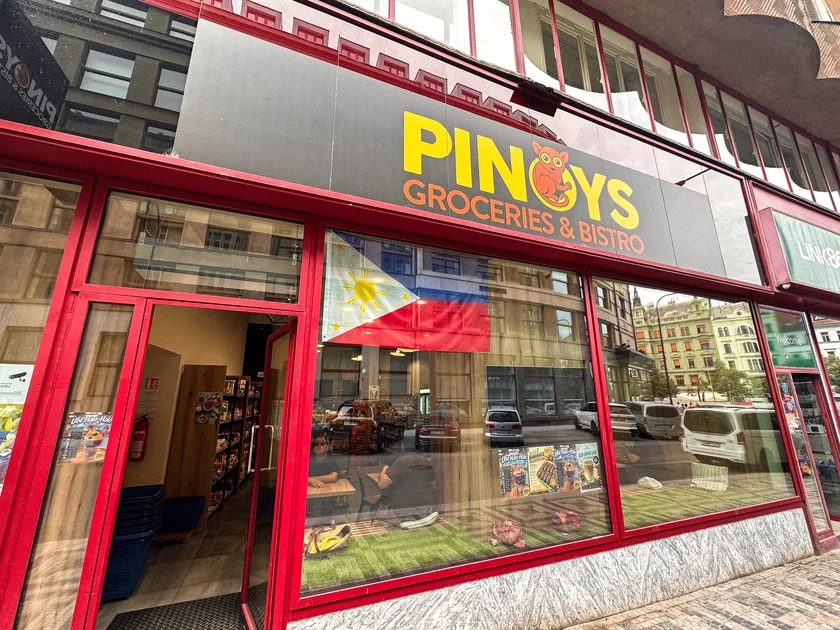
“People call us mini-Sapa,” Kuklovský says, referring to the sprawling Vietnamese market and shopping complex in Prague’s Libuš district.
Indeed, the shelves and freezer cases are stocked with staples from the Southeast Asian country: ube hotcake mixes, instant noodle soups, graham crackers, and sticky rice cocoa porridge. There are ample freezer cases of frozen okra and ube, lime leaves, and whole frozen bananas.
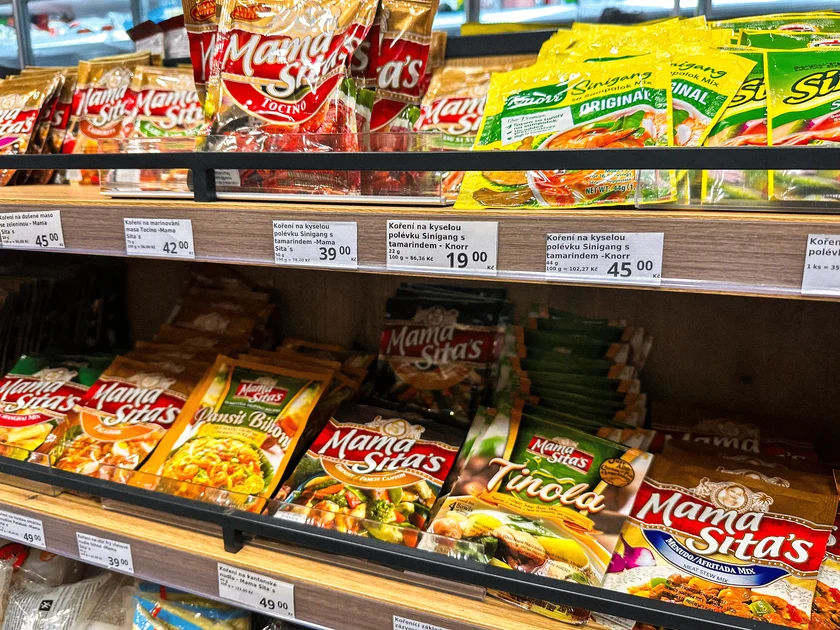
But the true flavors of the Philippines, sour and salty with hints of sweet, are to be found in the sauces and marinades, from fermented shrimp paste to banana sauce. If you want to learn how to make the house adobo marinade, Kuklovský points to Silver Swan soy sauce and Datu Puti cane vinegar.

A tiny kitchen for a big community
But Pinoys (the word is slang for a person of Filipino descent) is more than a grocery store. Tucked into the back is a tiny kitchen serving a rotating selection of Filipino dishes, canteen-style.
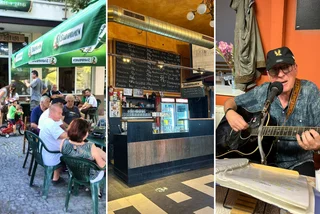
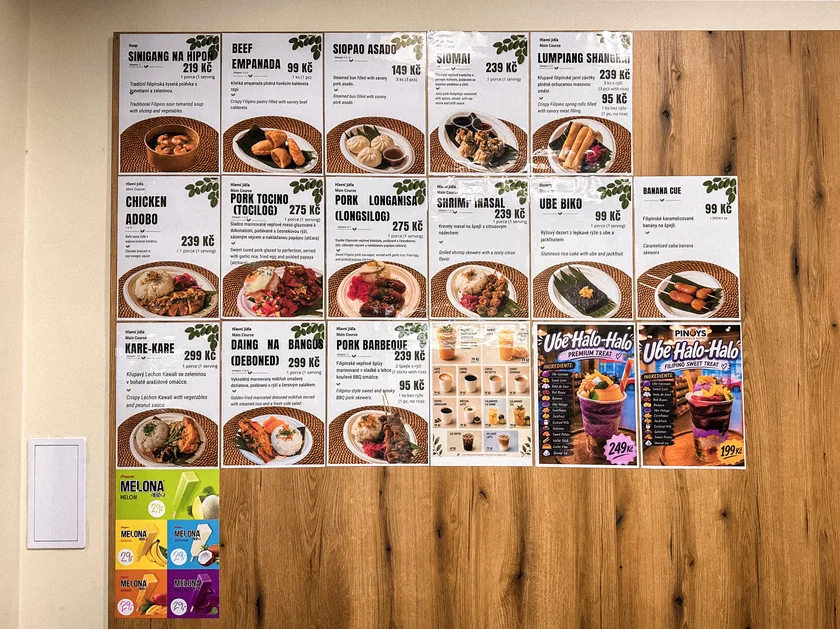
On a recent Saturday around lunchtime, the four window tables were occupied by a mix of Filipino locals and tourists, eating dishes ordered from the menu board and delivered directly to the table. (There was singing in Tagalog, too.)
“We can’t go a long time without rice,” Kuklovský tells me. “So we have a lot of tourists who come just for that.”
Kuklovský and her Czech husband also own a larger Filipino shop in Prague 8. Together, the two businesses offer a window into a community that has become increasingly visible in Prague.
That community is visible not only in shops, restaurants, and events such as the upcoming September Pinoy Festival, but also as a steadily growing workforce.
Czechia is now home to around 10,000 Filipinos, according to a 2026 Ministry of Labour and Social Affairs analysis, up from just 28 working Filipinos in 2005 to 6,530 in 2023, making them the country's 13th-largest foreign workforce.
Filipinos have long worked in Czechia as caregivers, but recruitment has since expanded into manufacturing, automotive production, and services. In 2024, Czechia more than doubled its annual quota for Filipino workers, from 5,500 to 10,300.
Halo, halo and more
The menu at Pinoys offers a useful introduction to Filipino food if your experience of the cuisine, like mine, begins and ends with adobo.
Sinigang, a sour, savory soup traditionally made with pork and a tamarind-based broth, with vegetables such as daikon, eggplant, string beans, and kangkong, is a good place to start.
For something more substantial, Kuklovský recommends kare-kare, a rich stew of meat and vegetables in a peanut-based sauce, traditionally served with bagoong, a fermented shrimp paste. Lechon kawali, meanwhile, is crispy fried pork belly.
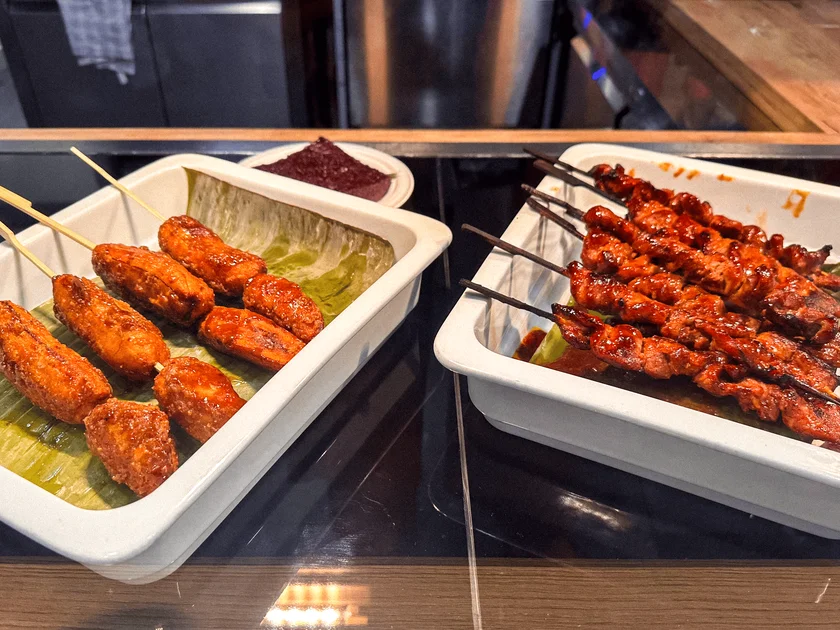
There are also Filipino breakfast staples such as bangus, or milkfish, alongside tocino and longganisa. Tocino is sweet, cured pork, while longganisa is a Filipino sausage that can range from sweet to garlicky. Both are commonly served with garlic fried rice and a fried egg.
In addition to adobo, we tried the Filipino empanadas, reflecting the country's colonial Spanish influence, and made with a slightly sweet wheat-flour pastry and filled with meat, potatoes, carrots, and onions. We also sampled banana cue, which takes bananas, coats them in caramelized brown sugar, and serves them on a stick.
There are barbecue skewers, too, and lumpia, the Filipino take on the spring roll. The most popular version, lumpiang Shanghai, is a thin, crispy roll filled with seasoned ground pork, carrots, onions and garlic.
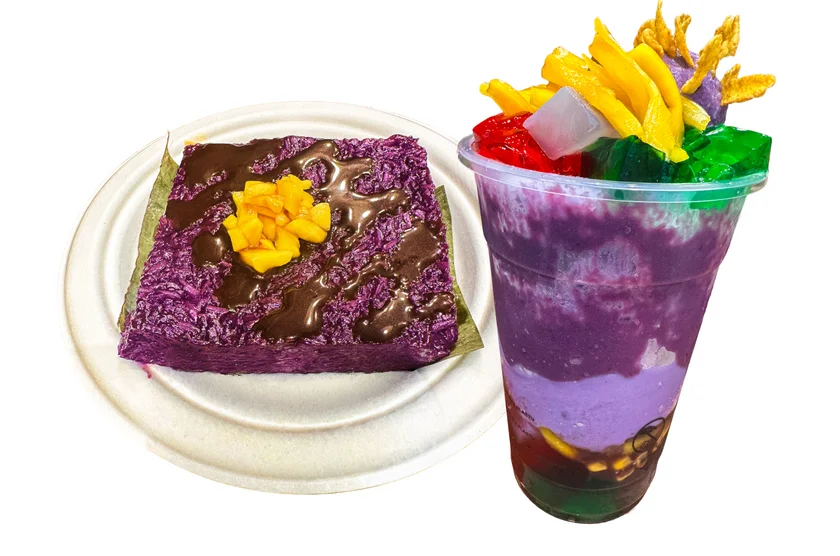
For something cold, there is mango juice and passion-fruit lemonade and, at least for anyone dining with an 11-year-old, halo-halo, one of the Philippines' most recognizable desserts.
The name means “mix-mix,” and the dessert is essentially an electric-hued pile-up of shaved ice and sweet ingredients and fruit, red beans, coconut jelly, sweet corn, jackfruit, topped with custard, milk, and ice cream (ours was ube-flavored).
The sticky rice cake made with glutinous rice and ube, and topped with mango, was last to come out.
When I asked Kuklovský for her thoughts on Czech food, she described it as "nice if you like something light." As we finished up our Filipino feast, I found I couldn't disagree. And while I could have used a moment to savor the experience longer, another hungry family was waiting for our table.