A major new exhibition at Prague’s Veletržní palác brings together 90 years of Czech and Czechoslovak surrealism, tracing the movement from its founding generation to artists working today.
Against the Current: The Surrealist Group, 1934–2024 opens Thursday, Nov. 26, and runs through April 25, 2027.
PARTNER ARTICLE
Organized by the National Gallery Prague, the exhibition offers its first comprehensive account of the continuity between successive surrealist groups and their longstanding connections with artists in Paris.
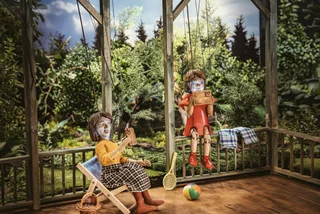
Works by Toyen, Jindřich Štýrský, Eva and Jan Švankmajer, and contemporary artists appear alongside rare independently circulated publications and loans from Paris collections.
An artistic friendship between Prague and Paris
The exhibition takes its title from Karel Teige’s 1938 text Surrealism Against the Current, in which he condemned Stalinist repression and defended freedom of expression.
“Surrealists have always stood on the side of imagination and in opposition to totalitarian power,” curator Anna Pravdová said.
The Czech surrealist group formed in 1934, a decade after André Breton published his Manifesto of Surrealism in Paris.
Breton and poet Paul Éluard visited Prague for an exhibition at Mánes in 1935. Pravdová described that encounter as the beginning of a friendship between the Paris and Prague groups that continues today.
War and political repression subsequently dispersed or silenced leading figures. Štýrský died during World War II, while Toyen—Marie Čermínová—and Jindřich Heisler settled in Paris.
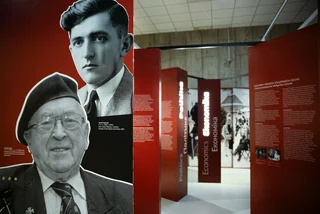
Teige faced condemnation by the postwar authorities. After his death in 1951, Vratislav Effenberger became the movement’s principal theorist in Czechoslovakia.
Dreams, invented creatures, and creative exchanges
Apart from a brief period of relative freedom in the 1960s, the group operated underground until 1989.
That isolation encouraged close exchanges between members, including portraits of one another and artistic responses that crossed generations.
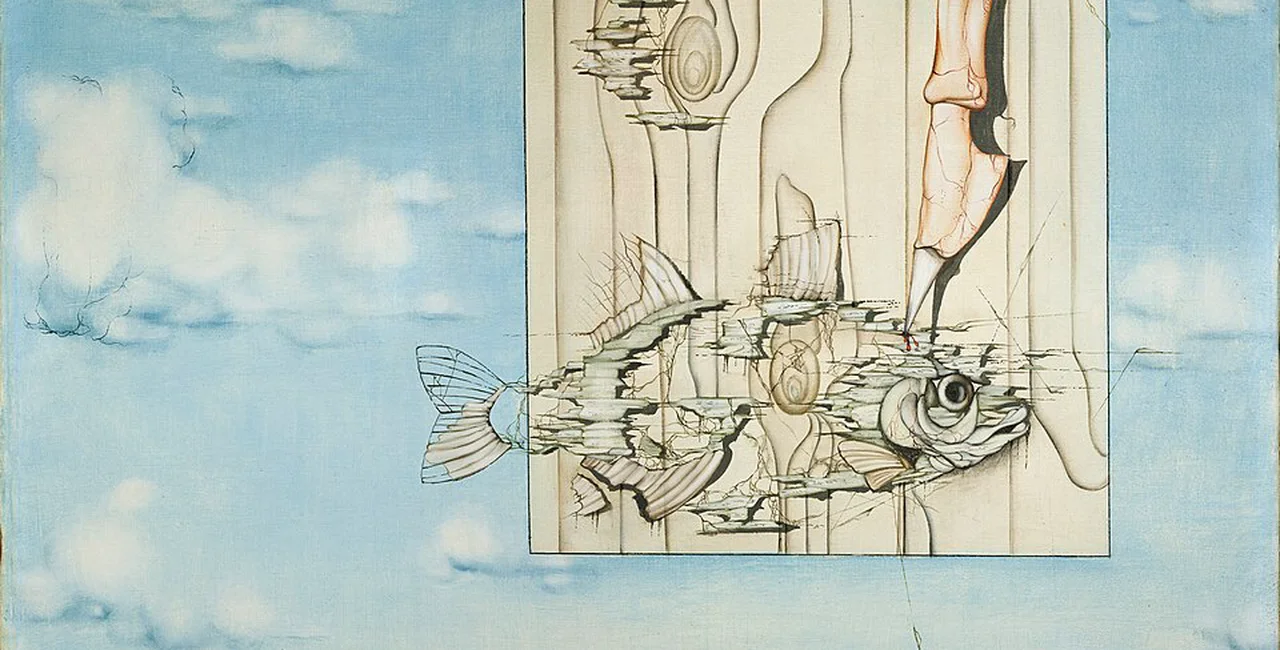
The exhibition explores those connections: Eva Švankmajerová’s paintings Before the War and After the War respond to Toyen’s War / Scarecrow, while Jan Švankmajer’s work enters into dialogue with Salvador Dalí.
Dreams, eroticism, nature, and esoteric ideas remained recurring subjects. Although surrealism developed as an urban movement, Pravdová said the imaginative possibilities of nature held a strong appeal.
Visitors can see Švankmajer’s invented species of insects and plants, contemporary works by Hynek Martinec, rare samizdat material from Effenberger’s estate, and Heisler works borrowed from Paris.
National Gallery head Olga Kotková described Czech surrealism as a continuing creative force rather than a closed chapter of art history.
The French Institute in Prague contributed to the exhibition. Ponrepo cinema is also joining the program with screenings of Švankmajer’s films.