Prague may be known for its extensive public transport network and walkable historic center, but a new European study suggests the Czech capital has considerable work to do when it comes to improving air quality.
The city ranked 31st out of 40 European cities in the latest Clean Cities ranking, receiving an E grade, the second-lowest possible rating.
Copenhagen, Stockholm, and Helsinki topped the ranking, while several of Prague’s Central European neighbors performed considerably better. Vienna placed ninth, Berlin 11th, and Bratislava 19th.
The study assessed cities based on current pollution levels, progress in reducing harmful emissions over the past decade, compliance with future EU air-quality standards, and the introduction of cleaner transport measures.
Prague struggles with sustainable transport
The Czech capital received an overall score of 40.3 percent, performing particularly poorly in the transport policy category, where it earned just one point out of a possible 10.
According to Zdopravy.cz, Prague's only point in this category came from introducing school streets, which restrict motor traffic near schools to create safer environments for children. However, these measures currently benefit only around 3 percent of Prague’s elementary schools.
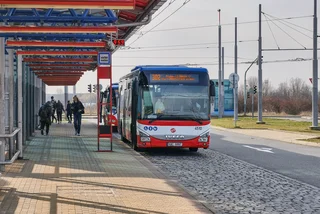
The capital also lacks a low-emission zone and has the lowest proportion of electric buses among the surveyed cities.
Protected cycling lanes cover approximately 9 percent of Prague’s main road network, compared with 31 percent in Vienna and 45 percent in Warsaw.
Cleaner air, but not clean enough
Despite its low ranking, Prague has made progress. Concentrations of nitrogen dioxide and fine particulate matter, pollutants associated with respiratory and cardiovascular health risks, have fallen by more than a quarter over the past decade.
However, most cities included in the study have achieved faster improvements.
Prague currently fails to meet all four of the stricter EU air-quality thresholds assessed by the study, which are due to take effect in 2030.
Only three of the 40 surveyed cities currently meet all four requirements.
What is Prague doing about it?
Local organizations AutoMat and Pěšky městem have called for faster improvements to transport infrastructure following the publication of the results.
Speaking to iDNES.cz, newly elected deputy mayor for transport Adam Scheinherr said the city's leadership plans to invest in new tram routes, electric buses, and trolleybuses.
The city also intends to address pollution through tighter emissions requirements for taxis.
With the 2030 deadline approaching, Prague faces increasing pressure to accelerate its transition toward cleaner transport and healthier streets for residents.