



 Reading time: 4 minutes

 Summary for: The ‘human edge’: A top Czech executive challenges the promise of effortless AI productivity
Work in Czechia is changing. As roles evolve and workers face shifting expectations in the age of artificial intelligence (AI), what skills will help people working in Czechia keep pace?
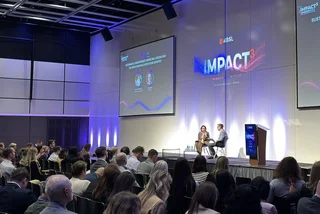
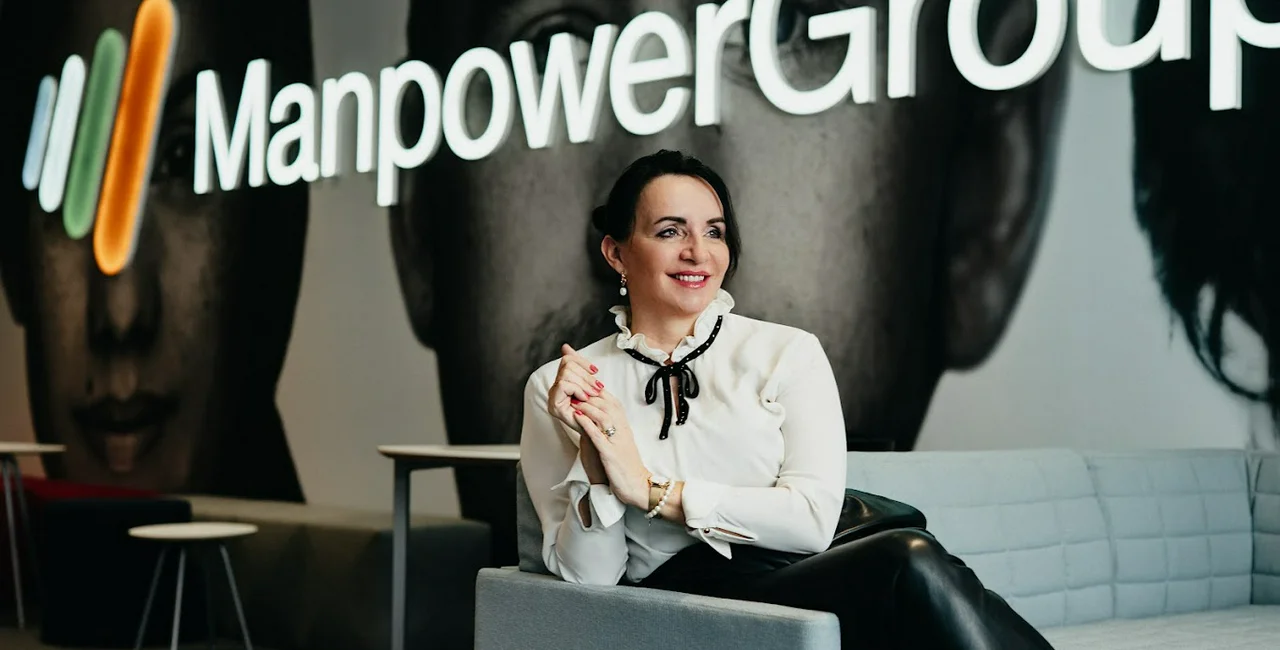
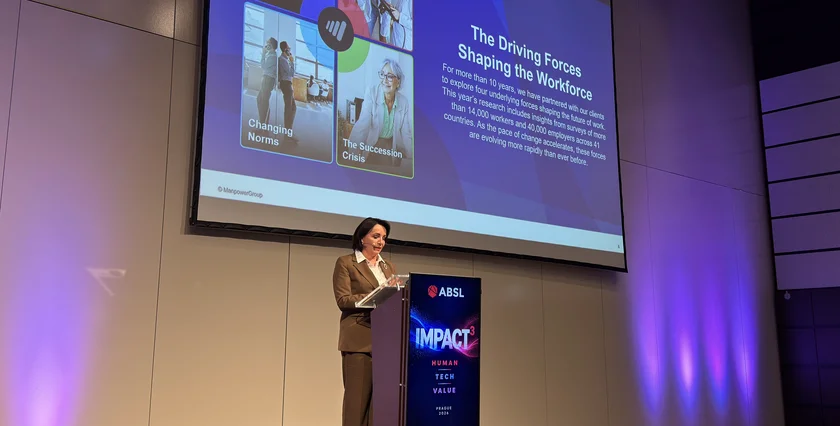
Speaking at this year’s Association of Business Services Leaders (ABSL) conference in Prague, ManpowerGroup Czech Republic Managing Director Jaroslava Rezlerová suggested an answer. She described how the “human edge” – finding the right balance between automated tasks and human responsibilities – is crucial to ensuring that companies add value while creating better, more interesting jobs for Czechs and foreigners alike.
How is AI changing Czech business services?
According to ManpowerGroup data, some of Czechia’s key industries and major expat-employing sectors, including tech, manufacturing and marketing, are among those most likely to change due to AI.
In this context, Rezlerová says business leaders are asking a crucial question: “what should AI do, what should a person do, and where should the two be connected?”
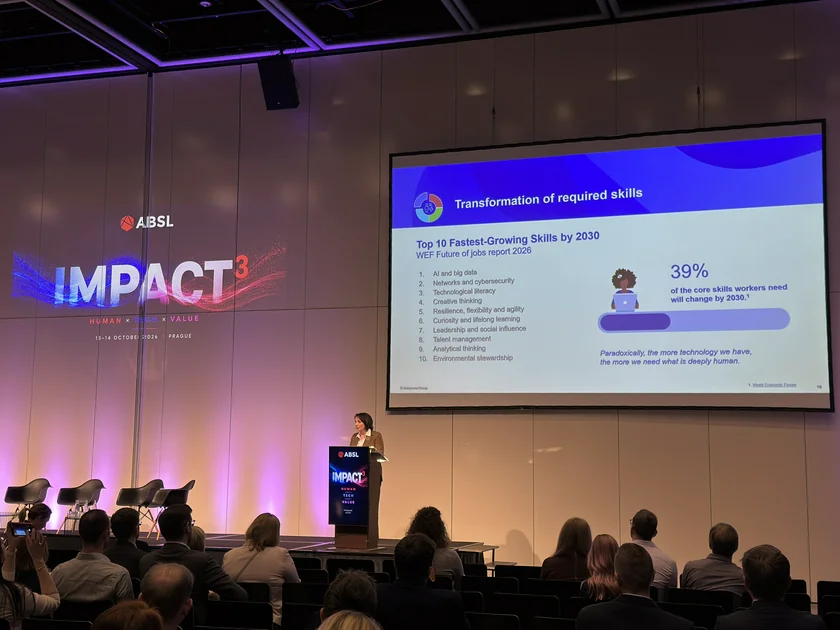
The World Economic Forum’s (WEF) Future of Jobs Report 2025 estimates that, on average, 39 percent of workers’ core skills will be “transformed or become outdated” by 2030 as technological, economic and other changes reshape work. This, according to Rezlerová, will mean “redesigning the content of individual jobs.”
“Finance, IT, analytics, HR and customer operations are all seeing work structures change. Routine jobs are being taken over by automated systems, while judgement, critical thinking, understanding context, communicating with stakeholders and the ability to learn quickly become more important,” she adds.
The nature of junior roles is an especially important topic for many foreigners looking for work with international companies in Czechia.
Jaroslava Rezlerová Managing Director, ManpowerGroup Czech Republic"We must redesign junior positions so that people learn through validating, solving exceptions, contact with clients and making gradually more complex decisions.”
Rezlerová explains the concerns.“If AI takes over responsibility for reporting, basic analysis or simple customer requests, companies will logically look for savings. But if we remove too many junior roles today, where will we find people for senior positions in five years’ time?”
What does this mean for popular expat jobs?
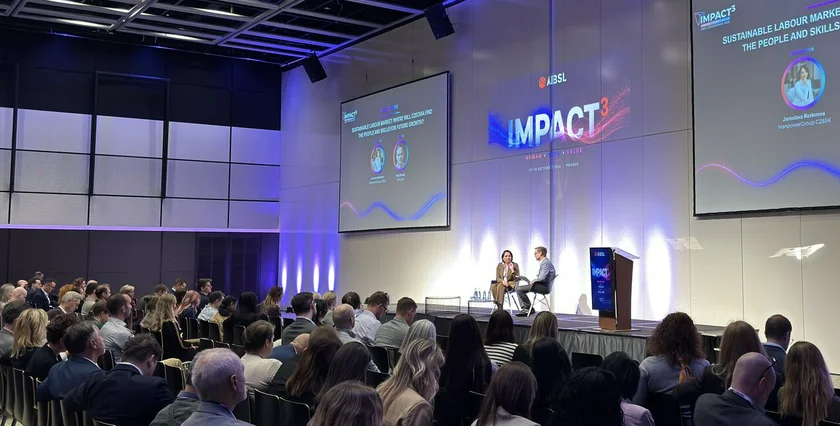
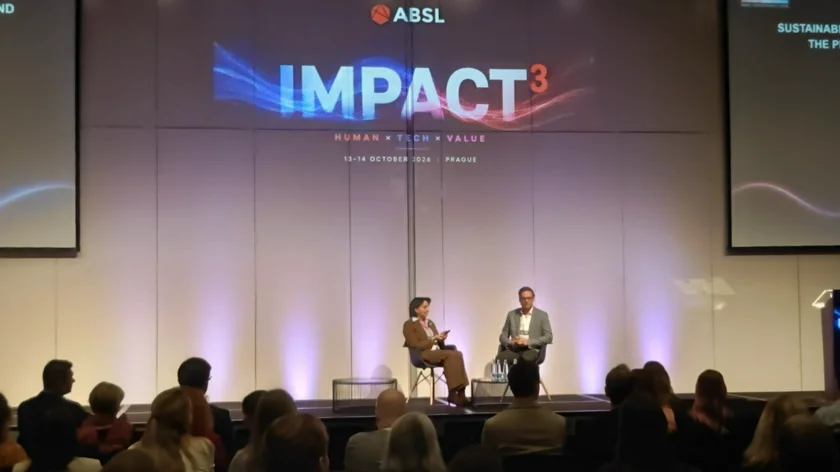
Speaking at the ABSL conference, Rezlerová provided examples of how AI is changing the nature of roles found across Czech business services and other sectors.
“In administration, work has traditionally involved recordkeeping, cost tracking, coordination and accuracy. The emphasis is shifting toward communication and understanding context.”
“In accounting, roles now involve recognizing important information, interpreting numbers, informing business decisions and engaging with clients. Human Resources is another major area of change, moving beyond an administrative function toward shaping organizations and working as strategic talent architects.”
“We see particularly substantial shifts in IT and financial technology. Narrow specialization is no longer enough. People need to understand how systems work and how tools and systems interact with people,” Rezlerová adds.
“In manufacturing, companies are investing heavily in automation. This is increasing demand for specific skills among workers operating advanced systems and machinery.”
When AI adds to the workload
One major problem facing companies is a disconnect between what employers expect from AI and what employees experience.
“We see a consistent pattern,” Rezlerová explains. “Senior management expects faster processes, greater efficiency and more cost savings. Meanwhile, employees and managers must do their regular jobs while also learning to use the new technology.”
“It can be exhausting and stressful, and the technology is changing so quickly that many employees worry they will struggle to keep up.”
A 2024 Upwork Research Institute study found that 47 percent of surveyed employees using AI did not know how to achieve the productivity gains their employers expected. Among surveyed employees using AI, 77 percent said the tools had decreased their productivity and added to their workload in at least one way.
As companies confront the practical challenges of using AI, the “wow” factor around AI has, according to Rezlerová, shifted to asking “how?”
“We have moved beyond the initial fascination. We’re now asking more important questions: how should we implement AI? What technology does a particular enterprise need? What organization and skills are necessary to make it successful?”
Asking such questions helps avoid “dangerous” expectations of “immediate productivity gains,” which can “have longer-term consequences for productivity, client relationships and customer experience.”
Where the ‘human edge’ matters
The solution to making AI work, according to Rezlerová, lies in decisions by both leaders and employees about how to use it.
Leaders must take responsibility for how roles will evolve. “They need to look at the tasks within each job and decide which can be handled by AI and which should remain human. This is difficult, but essential to long-term efficiency,” she says.
Leaders should also help employees gain the skills they need to work with AI effectively. According to ManpowerGroup’s Talent Barometer, less than half of global workers say they’ve received skills training in the past six months. “There’s considerable room for Czech companies to improve AI literacy, helping employees understand what AI is and what it does,” Rezlerová says.

The WEF report also identifies creative thinking, resilience, flexibility, curiosity and leadership among the skills expected to grow in importance by 2030. Developing these alongside AI literacy can help employees adapt as their responsibilities change.
After all, as Rezlerová points out, “the technology will be available to everyone, so the difference won’t be who uses or doesn’t use AI.”
“The difference will be who is able to make the right decisions about where technology should work, where a human should, and how to create systems using both that elevate productivity and value.”