



 Reading time: 2 minutes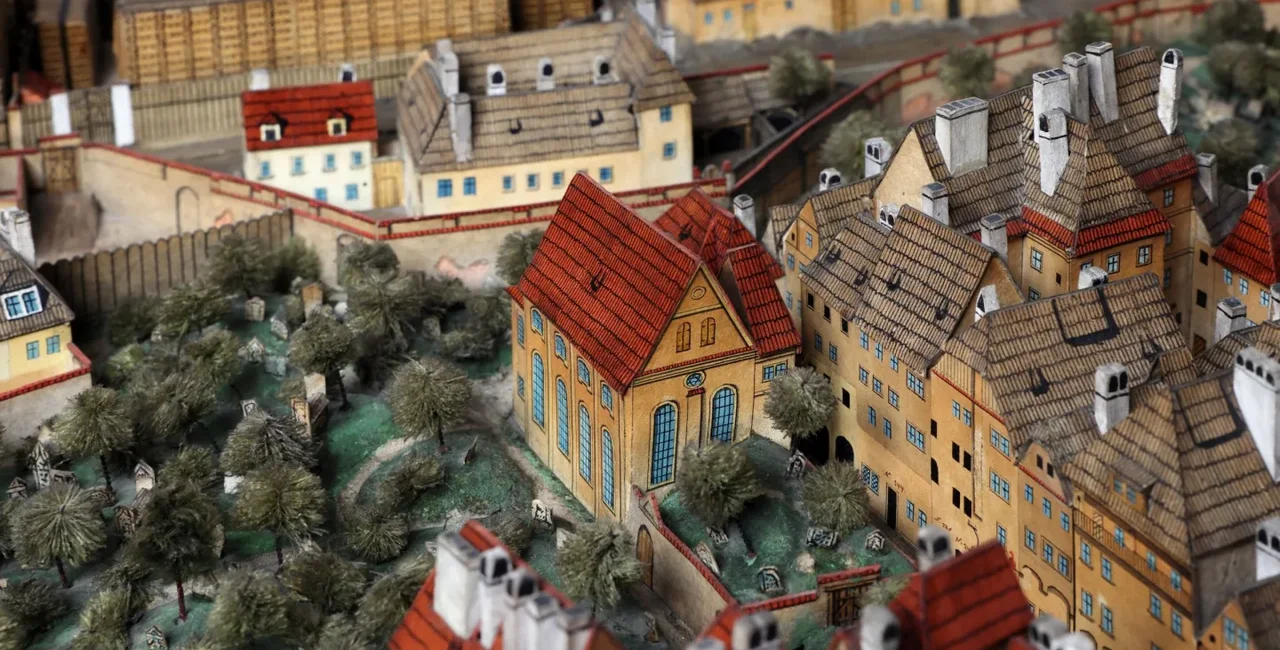

 Summary for: See the Prague that vanished: Langweil’s 19th century model goes online
What stood on your Prague street nearly 200 years ago? A new online viewer of Antonín Langweil’s model lets residents explore the city’s historic center, look closely at individual buildings and compare locations with their present-day appearance.
The Museum of Prague has made the interactive model available online for free. It works on computers and mobile devices, though the museum warns that the large amount of data may make it slow to load.

The digital viewer opens up details that are difficult to see in the original exhibit. Langweil’s paper model must be displayed behind glass in carefully controlled, dim lighting because the material is sensitive to light.
Check out the interactive map below, or open it in a new tab here.
A record of a changing city
Langweil began building the model in 1826 and worked on it until his death in 1837. On roughly 20 square meters, he recreated more than 2,000 buildings across the Old Town, Malá Strana, Prague Castle and the former Jewish Quarter at a scale of 1:480.
He included details of facades, courtyards and gardens, as well as smaller structures tucked behind street-facing buildings. For some historic properties that were later demolished, the model is the only surviving visual record of how they looked.
That makes the viewer particularly revealing in parts of the center transformed by redevelopment at the turn of the 20th century. Users can examine Langweil’s version of a location and then see how the same area appears now, putting familiar streets alongside buildings that have disappeared.
Langweil, who worked at Prague’s University Library, devoted his spare time and money to the project. He never secured a patron and left the work unfinished when he died. The model later entered the National Museum’s collection before being transferred to the Museum of Prague.
From research tool to public viewer
The new application builds on a digital model completed in 2009 for research and conservation work. Creating that version took two and a half years and involved more than 170 specialists, according to the Museum of Prague.
The museum worked with Prague’s Institute of Planning and Development and the Czech Technical University to make the model accessible to the public. The online version allows visitors to inspect places at their own pace while the fragile original remains protected.
For anyone curious about the history of their neighborhood, the viewer offers a way to explore Langweil’s Prague from home before seeing the paper model in person.