
 Reading time: 4 minutes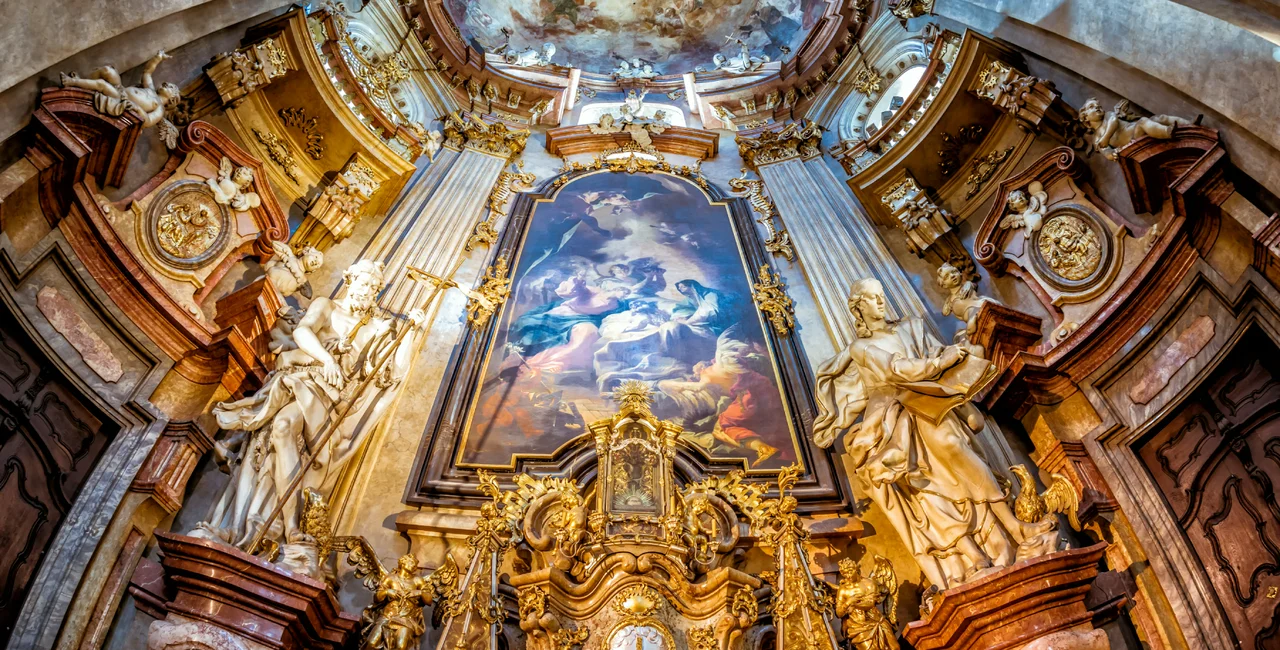

 Summary for: ‘Somethingism’ in Czechia: How a secular society is built on the ruins of organized religion
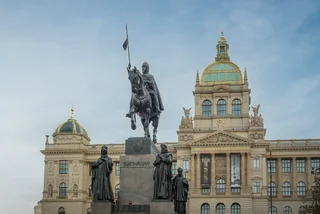
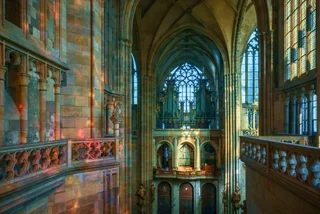
Every day, thousands of tourists file into Prague’s Gothic cathedrals, itching to get a picture with the churches that inspired Walt Disney’s fairy-tale castles themselves. The city is filled with Catholic influence, from centuries-old churches to evening concerts held inside cathedrals and religious statues lining its historic streets.
From a distance, it seems like the kind of city where faith would still shape everyday life. Instead, the Czech Republic is labeled one of the most secular nations in the world.
Debunking myths about Czech ‘atheism’
The common belief is that religion appeared, communism arrived, religion disappeared, and the Czech Republic became the atheist capital of Europe. But historians and Czech residents say that this narrative overlooks centuries of history and misunderstands what many Czechs mean when they describe themselves as “atheist.”
Daniel Raus, a Czech journalist, author and former editor in chief of Czech Radio Plus says that Czech secularism predates communism.
“When Czechs claim to be ‘atheists,’ they do not mean the philosophical concept,” Raus said. “They often just want to say that they don’t like the dark spots in the history of the church.”
The roots of Czech skepticism were planted in the early 15th century when Jan Hus, a Prague scholar and priest, mounted one of Europe’s earliest challenges to Catholic dominance. By criticizing clerical corruption and prioritizing scripture over church officials, Hus ignited a movement that inspired Martin Luther’s Protestant Reformation over a century later.
Tensions boiled over in 1618 when Protestant Czech nobles threw Catholic officials from a Prague Castle window, triggering the Thirty Years’ War. Following the crushing Protestant defeat at the Battle of White Mountain in 1620, the ruling Catholic Habsburg monarchy forced a brutal religious transformation across Bohemia. Protestant leaders were executed, freedoms were stripped away, and thousands fled into exile.

While Catholicism became the mandatory state religion, the campaign permanently backfired culturally: for generations of Czechs, the Church was no longer seen as a source of spirituality, but as the enforcement arm of foreign political oppression.
Renata Jakuševová“Czech people don’t agree on anything. We are headstrong. Bullheaded."
Czechs, God, and middlemen in robes
Raus also suggests that Czechs don’t necessarily hate the idea of a God; they just intensely dislike being told how to worship it by a middleman in a robe.
That distrust continued into the 19th century, when Czech nationalists began looking back at Jan Hus as more than a religious reformer. Hus became a symbol of Czech independence, resistance and the willingness to challenge powerful institutions.
When the nation of Czechoslovakia was founded in 1918, many people distanced themselves from the Catholic Church, which was associated with control. Religion became a matter of tradition rather than public identity.
Lifelong Prague resident, Renata Jakuševová, says that religion simply wasn’t part of her upbringing.

Though she was baptized as an infant at her Slovak grandmother’s request, neither of her parents cared for the institution of the church. She was raised with the cultural traditions of Christmas, but without formal religion.
“Czech people don’t agree on anything. We are headstrong. Bullheaded,” Jakuševová said.
This bullheaded mindset comes from generations of religious control. In 1948 the communist party viewed religion as a challenge to state authority. Churches were restricted, religious leaders were monitored, and atheism was promoted as part of communist ideology.
After the Velvet Revolution in 1989, religious freedom returned. Churches reopened, religious groups became active, and people were free to practice openly.
Finding faith in Prague
But unlike some other post-communist countries, Czechia did not experience a major religious revival. Instead, many Czechs developed a relationship with faith that was private, personal and difficult to define.

Brothers David and Richard Hlosta were raised in a small village a half hour away from Olomouc. The brothers both described their childhood as calm and relatively uneventful.
In typical Czech fashion, faith remains strictly personal; neighbors generally do not police or question who sits in the pews. “Even if everyone seems agnostic, Czech people are pessimists and complainers, so they may be religious, but they don’t make it visible enough,” Richard said.
David also highlights that he believes in “something”. “I am not an atheist. I believe that there is some reason that anything happens,” David said.
In a country often described as one of the most secular in the world, belief did not disappear; it changed shape. Czechs may not always believe in God, but many still leave room for inquiry. They carry a quiet curiosity about what cannot be explained or entirely dismissed.
Maybe that is how we could define “somethingism”: not a religion, but a recognition that life can hold more questions than answers. And in the streets of Prague, amongst saints and scientists, ghosts and astronomers, cathedrals and clockwork, uncertainty has become its own kind of faith.