A church congregation that never moves. A chandelier assembled from human bones. A castle supposedly built to keep something underground. Czechia has plenty of places where the setting alone could inspire a horror movie.
Their stories become more interesting when you separate the supernatural claims from the history. Some apparent hauntings are contemporary artworks; other unsettling sights reflect centuries-old burial practices or have a straightforward physical explanation.
With Halloween approaching, these five locations offer a journey through Czechia’s darker-looking corners, and a chance to discover what lies behind their reputations.
Houska Castle: The supposed gateway to hell
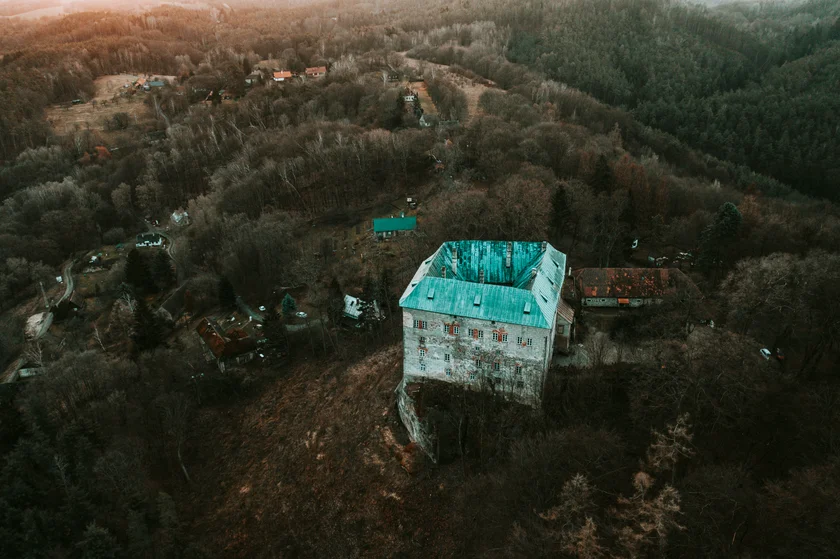
In the wooded landscape of Kokořínsko, Houska Castle has acquired a reputation that overshadows its medieval architecture. According to its best-known legend, the building stands above a chasm leading to hell, with the chapel sealing the opening.
Stories of a faceless black monk and an entrance to the underworld have helped make Houska a fixture of paranormal tourism. VisitCzechia repeats these tales as part of the castle’s appeal, but they remain folklore rather than evidence of its original purpose.
The building has a documented history beyond the demons. Industrialist Josef Šimonek bought it in 1924; it was subsequently confiscated during World War II and eventually returned to the family. The castle opened to the public in 1999.
History or legend? The medieval castle is real; the infernal gateway is a story. Its published October schedule lists weekend opening from 10 a.m. to 4 p.m., with guided visits on the hour and the last tour an hour before closing. Check directly before traveling beyond October.
Luková: The ghosts that helped save a church
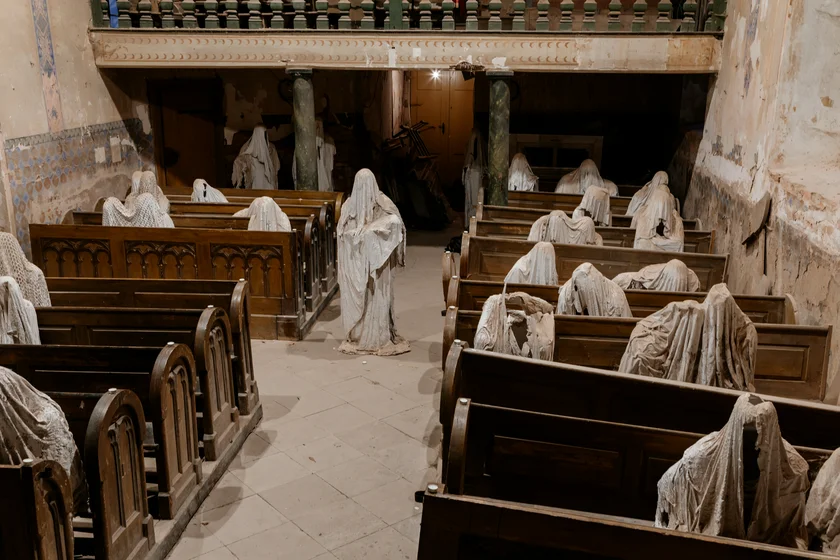
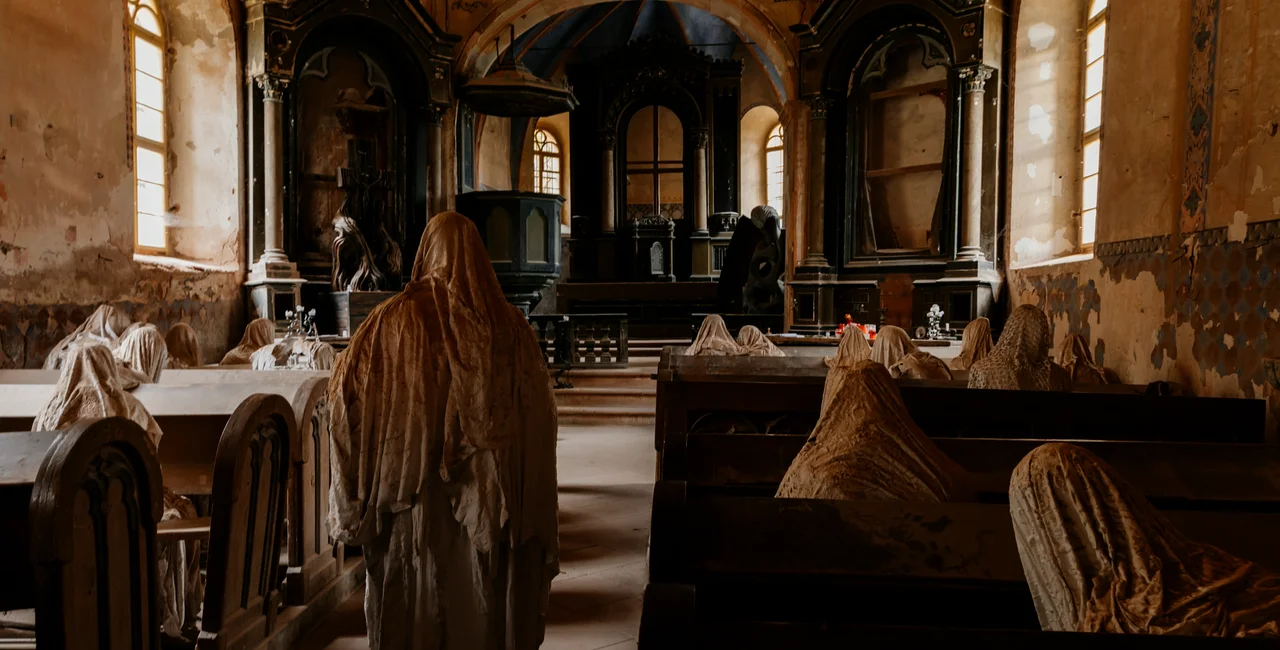
At St. George’s Church in Luková, near Manětín in the Plzeň region, white, shrouded figures occupy the pews. Their bowed heads suggest a service that has continued long after everyone else left.
The figures are plaster sculptures created by artist Jakub Hadrava in 2012. Made using living models, they evoke former worshippers and restored a human presence to a deteriorating building.
The church dates to the 14th century. Part of its ceiling collapsed during a funeral in 1968, contributing to its subsequent abandonment and decline. Decades later, Hadrava’s installation drew visitors whose donations helped support repairs. The apparent haunting became a means of preservation.
History or legend? These ghosts have a known creator. The church’s website lists Saturday visits from 1 to 4 p.m., April through October, with winter closure. That makes Halloween, which falls on a Saturday this year, a potential final seasonal opportunity.
Sedlec Ossuary: The meaning behind the bone chandelier
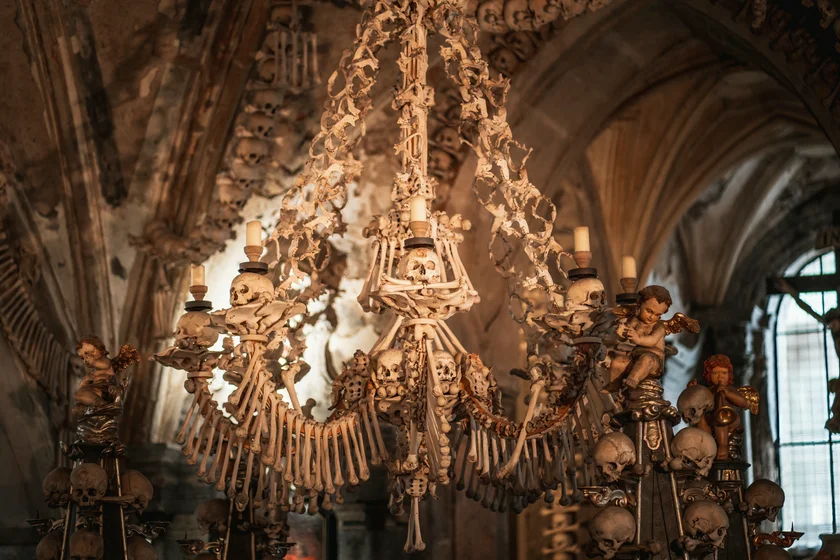
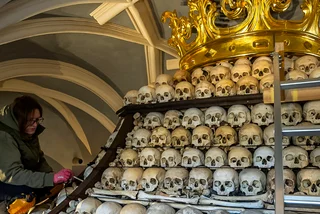
The unsettling detail at Sedlec Ossuary is that its decorations are made of real human remains. Beneath the Cemetery Church of All Saints in Kutná Hora, skulls and bones form pyramids, garlands and a chandelier.
The remains came from graves exhumed as the surrounding cemetery was reduced. Their arrangement developed over time: architect Jan Blažej Santini-Aichel is associated with the earlier Baroque concept, while woodcarver František Rint created prominent features, including the chandelier and Schwarzenberg coat of arms, during work completed in 1870.
Their purpose was religious. The decorations express memento mori (remember that you must die) and the Christian expectation of resurrection.
History or legend? No haunting is needed to explain the atmosphere. This remains a functioning church and burial place. It is open during ongoing restoration, although access currently involves a temporary staircase; tickets are available online or through the Sedlec information center.
Brno’s Capuchin Crypt: Mummies without the embalming
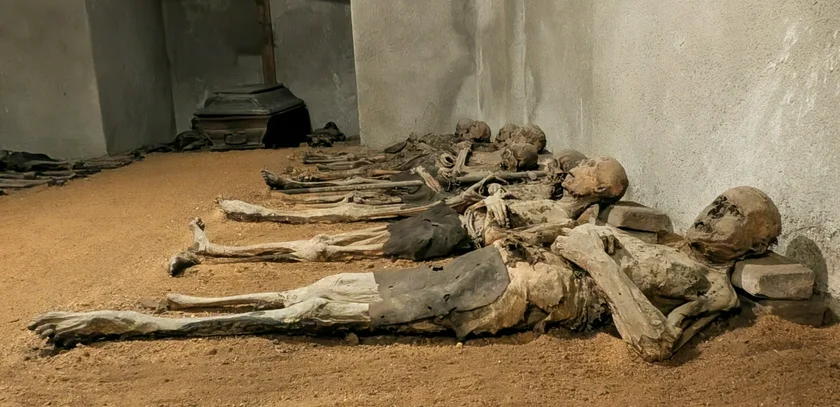
Beneath Brno’s Church of the Discovery of the Holy Cross, the Capuchin Crypt brings visitors face to face with people buried centuries ago.
The crypt served Capuchin friars and benefactors between 1656 and 1784. Air circulating through the underground chambers gradually dried some bodies, preserving them through natural mummification.
That preservation was unintended. The monastery’s visitor guide notes that other Capuchin monasteries followed the same architectural pattern, yet their burials did not produce the same result. Among those remembered here is military commander Franz Trenck.
History or legend? The explanation is physical, though the encounter remains striking. The crypt opens year-round except specified holiday closures and supplies printed English guides. Winter hours begin Nov. 1.
Jihlava’s underground: A glowing passage beneath the city
Below Jihlava’s streets lies a roughly 25-kilometer network of underground passages on three levels. The earliest cellars date to the 14th century, with deeper levels added in the 16th.
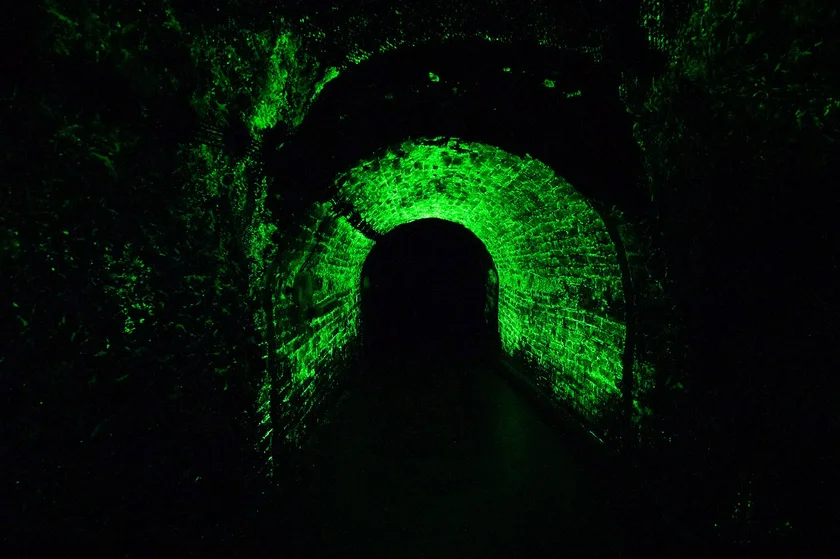
Its most mysterious-looking feature is a passage that glows green in darkness, approximately 11 meters below ground. Discovered by amateur cave explorers in 1978, it has helped fuel the underground’s eerie reputation.
The city’s tourism organization offers a material explanation: a special coating containing the minerals wurtzite, willemite and barite produces the striking glow.
History or legend? The luminous walls are real; their existence does not establish anything paranormal. Visitors can see the passage on the historical underground route. Check current operations through Jihlava’s tourism website, where the medieval passages, civil-defense shelter and utility tunnels are presented as individual tours.
Want to see more from us? Select Expats.cz as a
preferred source on Google.


 Reading time: 4 minutes
 Summary for: Czechia’s 5 creepiest places, and the real stories behind them