Reading time: 2 minutes
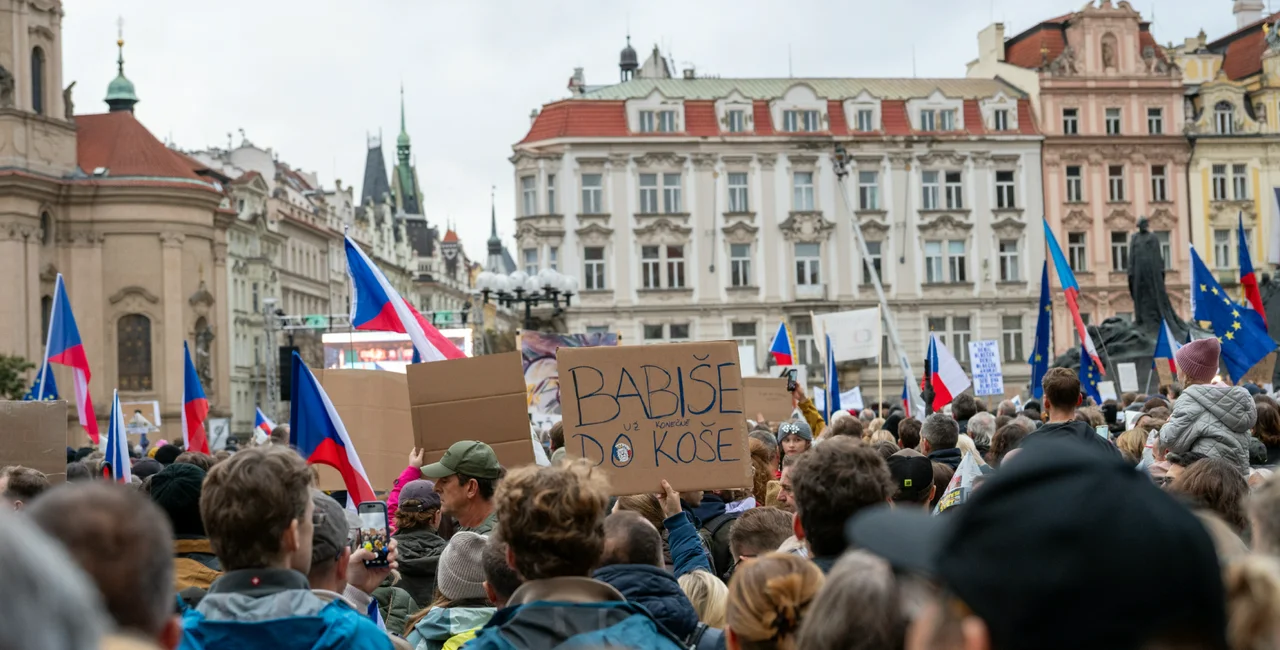

 Summary for: Protests across Czechia target media funding changes on independence day
Students and members of the public are gathering in several Czech cities Wednesday to support Czech Television and Czech Radio and oppose plans to replace their license-fee funding with money from the state budget.
University students organized the Brno demonstration, while Million Moments for Democracy called gatherings in Hradec Králové, Plzeň and Zlín. The events fall on the Oct. 28 public holiday marking Czechoslovakia’s founding.
They follow several days of protests against the government proposal, which cleared its first parliamentary reading early Saturday but still requires further approval.
Students support planned broadcaster strike
Brno’s gathering, organized by the Student Solidarity Committee, was scheduled to begin at 11:55 a.m. on náměstí Svobody.
The demonstration supports employees of Czech Television and Czech Radio, who have announced an all-day strike for Tuesday, Nov. 3.
Students at some universities have also declared strike readiness in response to the government’s plans. On Tuesday, students gathered in Prague, Brno, Ostrava and other cities to express support for public service broadcasting.
The opposition to the changes extends beyond universities. Rectors, churches, theaters and other cultural institutions have criticized the proposal, arguing that it threatens the broadcasters’ independence and financial stability.

Wednesday’s gatherings continue a wave of demonstrations that began outside the Chamber of Deputies on Prague’s Malostranské náměstí during the overnight parliamentary debate.
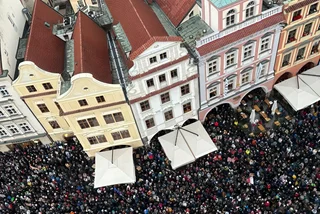
Thousands subsequently attended a Saturday rally in Brno, followed by a demonstration that filled Prague’s Old Town Square on Sunday. Million Moments has announced another Prague protest for Nov. 15 on Letná Plain.
Government says state funding would provide stability
The governing coalition of ANO, SPD and the Motorists advanced the proposal through its first reading in the early hours of Saturday.

The bill would abolish television and radio license fees and move funding for both broadcasters to the state budget. It would also reduce the money they receive compared with their current license-fee income.
Opposition parties describe the proposal as an attack on editorial independence and a move toward effective state control. Protest organizers want the government to abandon the changes.

Prime Minister Andrej Babiš rejects that interpretation. He says the proposed system would give Czech Television and Czech Radio greater certainty, stability and independence because their funding would be guaranteed by law as mandatory budget expenditure.
Culture Minister Oto Klempíř has likewise defended state-budget financing as a common European approach, saying it would neither threaten democracy nor end the broadcasters’ independence.
The dispute now continues both in Parliament, where the bill remains under consideration, and through demonstrations and preparations for the Nov. 3 employee strike.