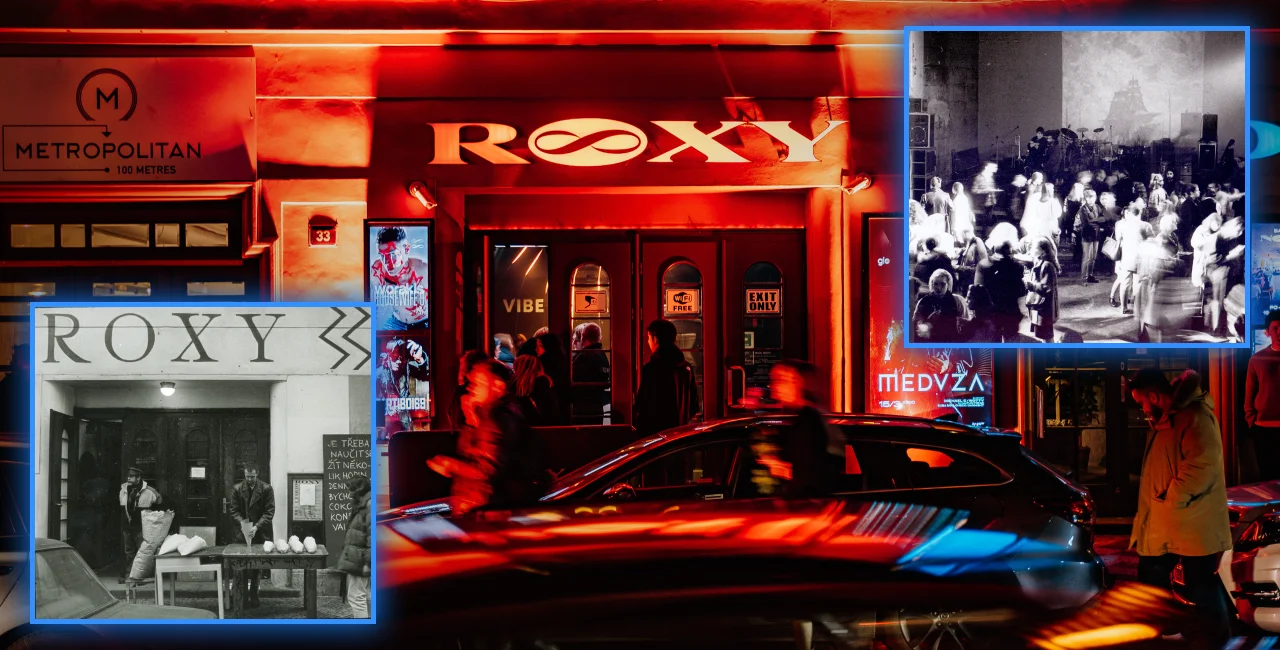
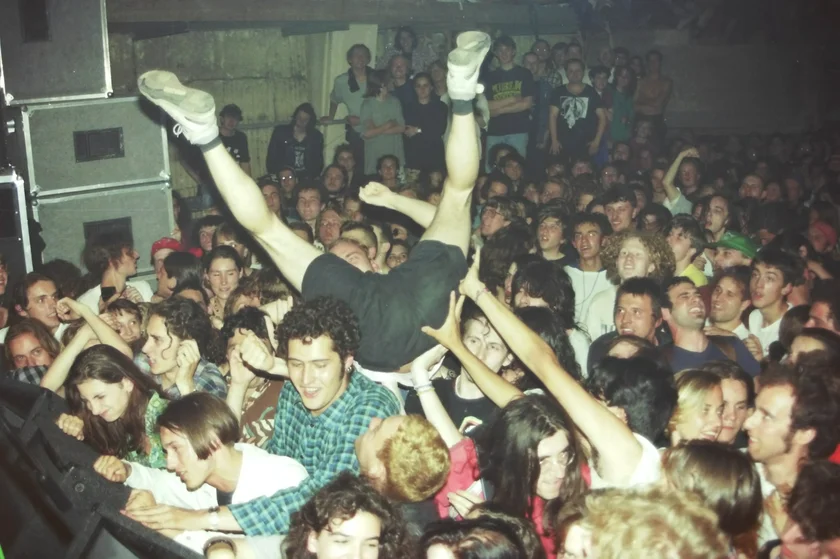
When American post-hardcore band Fugazi played Prague’s Roxy on June 13, 1992, the venue was a recently rescued basement rather than an established stop on the international concert circuit. Its organizers had drained a flooded hall and carried out essential repairs. More than 1,000 people came to the opening show.
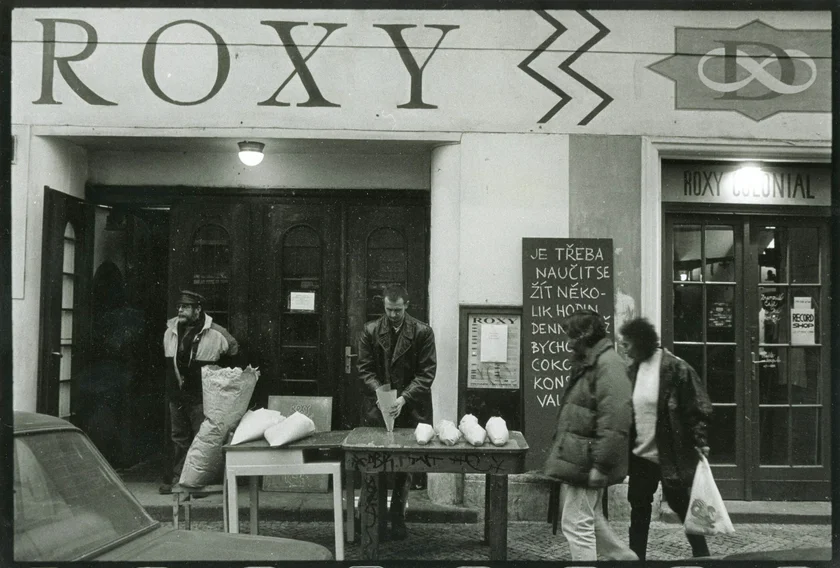
Thirty-four years later, Roxy remains at Dlouhá 33. Its history connects the city’s interwar cinemas with the cultural experiments of the early 1990s, the rise of electronic music and the international audiences that became part of Prague’s nightlife.
A forthcoming book brings those chapters together through hundreds of photographs, archival material and nearly 50 interviews. But the story behind it is also one of a space that helped people discover what they could do with their newly won freedom.
Before the dance floor: a cinema, a foundation and Fugazi
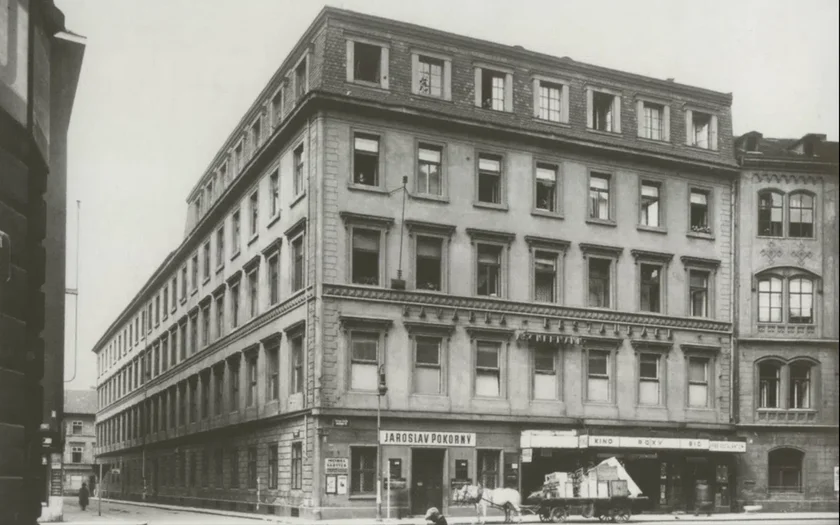
Roxy’s architectural character predates its club nights by decades. The balconies and art deco decoration belong to its earlier life as a cinema.
According to the Multicultural Center Prague’s historical account, the Jewish cultural association Beth Haam established the cinema in its community building, opening it in 1928. Its film program was comparable to those of other Prague cinemas rather than directed exclusively at Jewish audiences.
The building’s history also carries a darker chapter. During the Nazi occupation, it housed services for Jewish residents facing persecution, including meals, accommodation and assistance with packing for deportation transports.
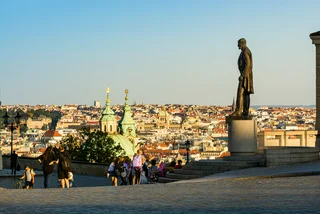
The cultural space that emerged after 1989 had different beginnings. The Linhart Foundation had organized events beneath the former Stalin monument at Letná before obtaining the deteriorating Dlouhá premises.
The contrast was characteristic of the period. Musicians associated with the pre-1989 underground shared the developing program with international acts and younger scenes whose reference points extended beyond communist-era opposition.
The book’s author, cultural journalist Ondřej Horák, places Roxy within a broader do-it-yourself culture. In the project’s press materials, he contrasts the foundation’s efforts to revive ventilation dating from 1928 with the expensive imported equipment being installed at another early Prague club, Bunkr.
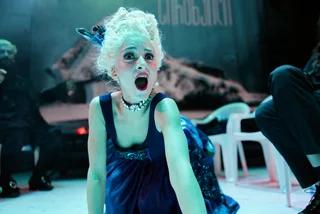
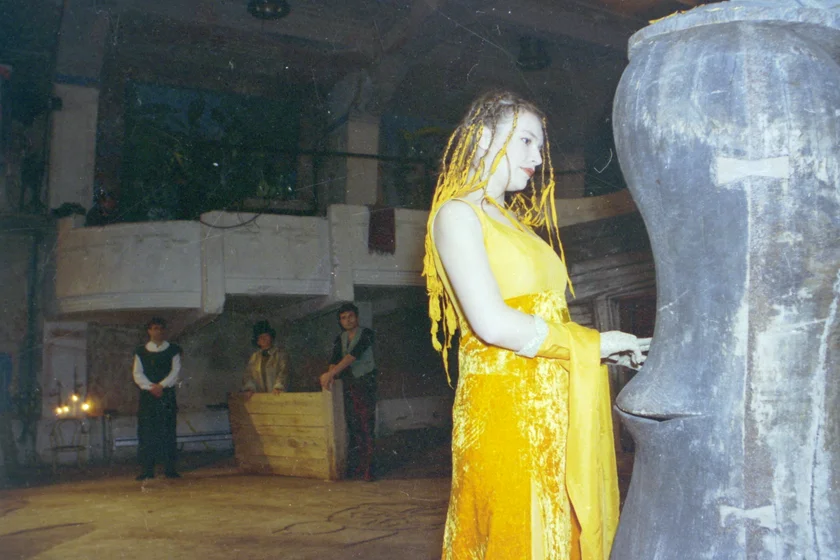
Roxy’s experiments were visible in the room itself. In 1992, artist Otto Placht and students from Prague’s Academy of Fine Arts carved a labyrinth into its concrete floor. Graffiti artists worked onstage, and exhibitions and performances appeared alongside concerts.
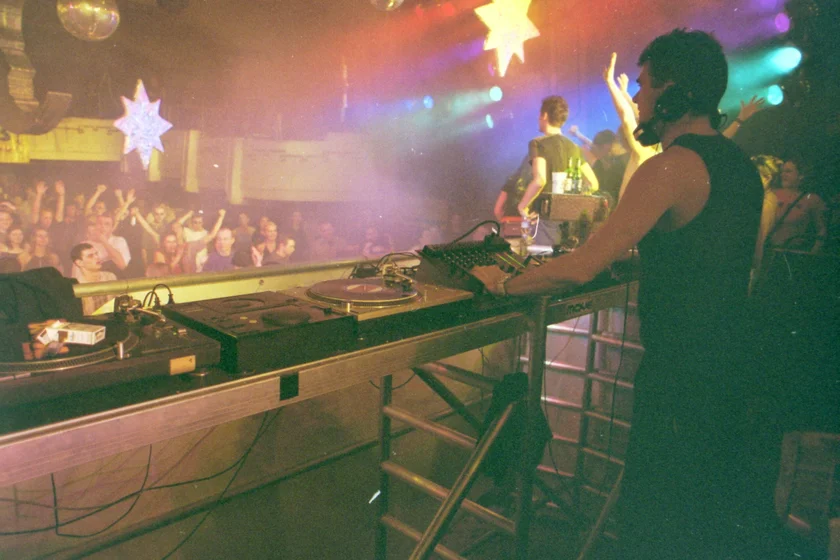
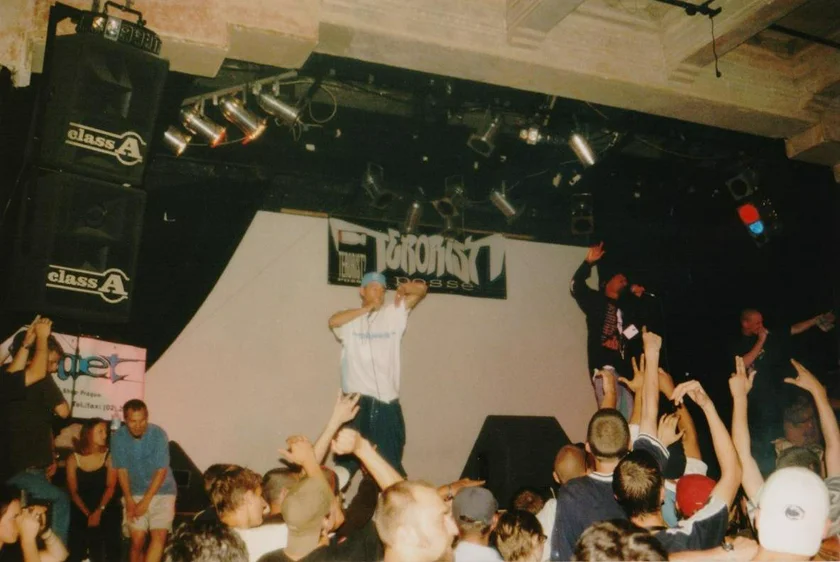
Its openness was not limited to one musical identity. Hardcore, metal, house, trip-hop, trance, techno, drum and bass and hip-hop all became part of the story. Different audiences could occupy the same space on successive nights.
A meeting place that survived—and kept changing
For the authors of the new book, Roxy’s importance lies partly in these encounters: between musical genres, artistic disciplines and people arriving in Prague from different countries.
Their account examines how British and American newcomers contributed to the city’s post-revolution cultural life. Roxy offered a place where those arrivals could meet Czech musicians, DJs, artists and audiences, while international sounds found local interpreters.
That exchange did not mean the venue stood apart from the city’s changing economy. Czech Television’s retrospective described how its growing reputation attracted tourists and brought higher prices.
The club also faced more immediate threats. The 2002 floods inundated its underground spaces. Complaints about nighttime noise brought restrictions, and a January 2011 closure following inspections ended only after deficiencies were addressed. Its survival involved rebuilding and negotiation as well as programming. Česká televize
The opening of NoD in 1998 gave the Dlouhá address another dimension. Its gallery and experimental performance spaces extended the original ambition beyond the dance floor. Today, NoD’s program continues to combine theater, visual art and other cultural events.
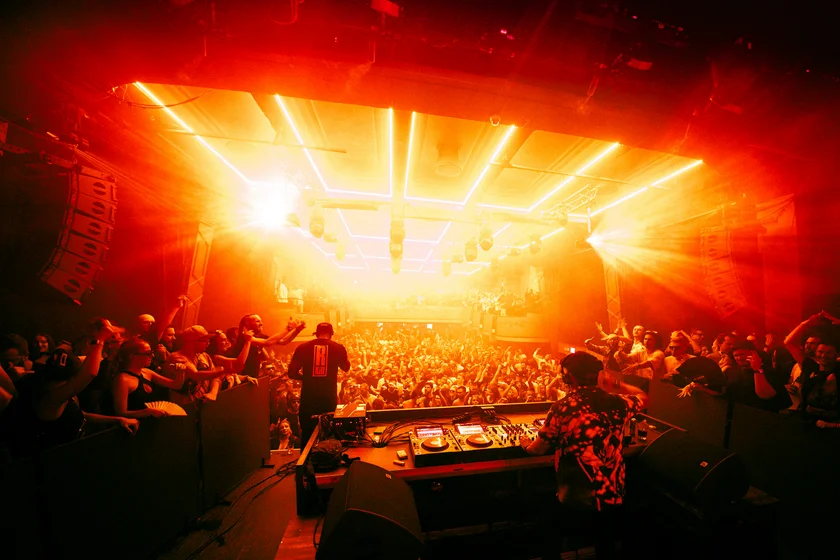
Roxy’s history therefore includes both continuity and change. The venue still hosts concerts and club nights, but the scenes it serves, the city surrounding it and the expectations of its visitors have evolved.
Director Jarda Stanko, who has led the club since 2009, said its 30th anniversary prompted him to consider how much of that history remained unrecorded—including occasions when Roxy came close to closing.
The resulting book, Kopneš do plechovky a dva dny se tančí—roughly, “You kick a can and people dance for two days”—is planned to run to more than 500 pages. Horák spent nearly five years researching it, with Michal Nanoru editing and consulting, Jozef Ondrík designing the publication and Karina Golisová photographing contemporary portraits.
The team is publishing independently in cooperation with Roxy. Its Donio campaign, scheduled to run through the end of October, offers the book alongside physical remnants of the club’s history: part of Placht’s labyrinth, the illuminated entrance sign used from 2010 to 2024 and backstage chairs.
Publication is planned for autumn 2026, with an exact date still to be announced. The photographs and recollections aim to preserve something less easily retained than a sign or a piece of flooring: the encounters that made an old cinema part of a new Prague.
Want to see more from us? Select Expats.cz as a
preferred source on Google.

 Summary for: PHOTOS: How Prague’s Roxy helped turn a new era of freedom into nightlife






 Reading time: 4 minutes