Christmas in Czechia has always made room for a little terror. Before the presents arrive, children face a visit from a devil, whose rattling chains provide an incentive to behave. But the horned figures gathering across the country this November and December belong to a more elaborate branch of winter folklore.
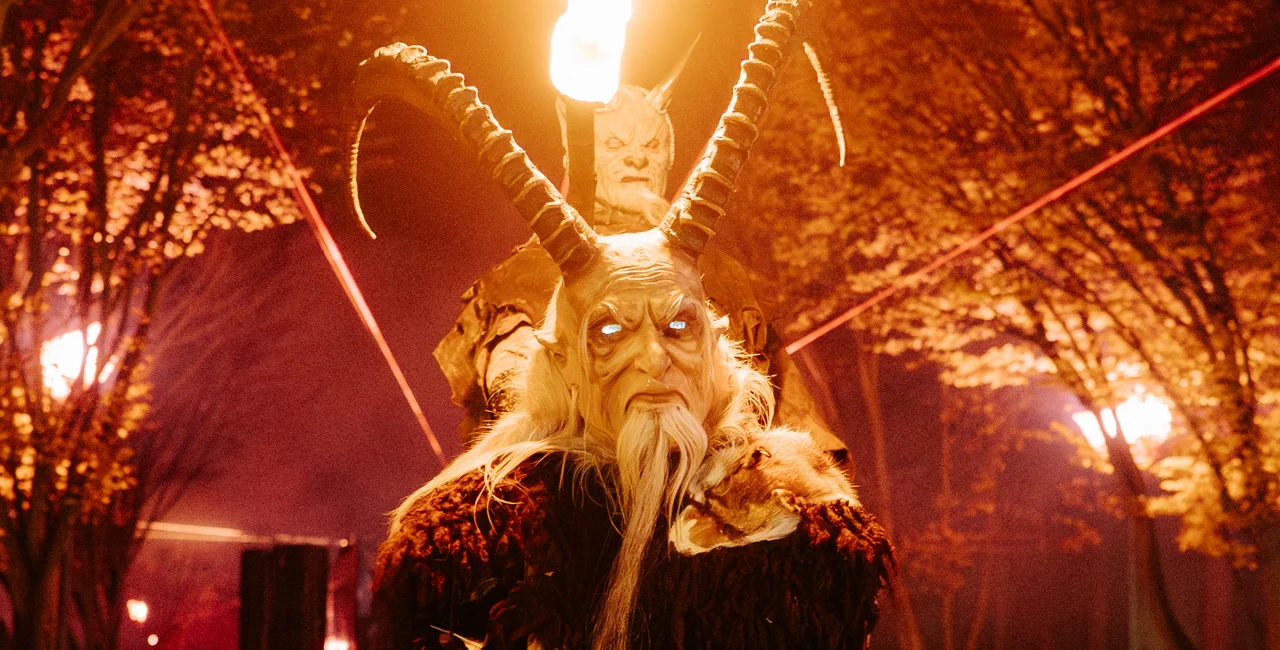
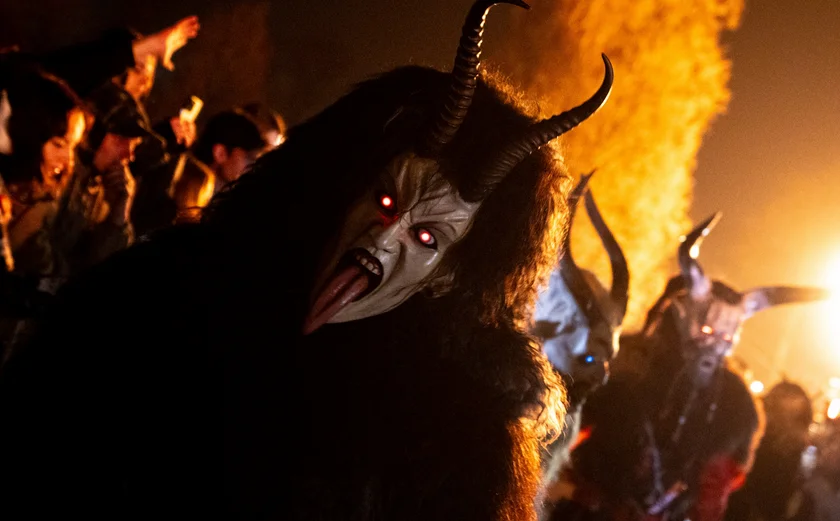
These are Krampus: shaggy, sharp-toothed creatures whose processions combine imposing masks, heavy bells and theatrical menace. Associated primarily with Alpine traditions, they have found an enthusiastic following in Czechia, where Czech and Austrian groups now perform together at large seasonal events.
This year, the options range from a procession through the castle park in Dětenice to a free appearance in Český Krumlov. Prague’s Výstaviště will welcome more than 200 performers on Nov. 21, with separate afternoon and evening shows offering different levels of fright.
How Krampus became part of Czech winter
For international residents familiar with the Czech Mikuláš tradition, the resemblance is easy to spot. On Dec. 5, St. Nicholas traditionally appears with an angel and a čert, or devil. Krampus also accompanies St. Nicholas in Alpine customs, providing the threatening counterpart to the saint’s rewards.
The connection extends beyond the costumes. As Christmas traditions expert Valburga Vavřinová explained to Czech Radio, today’s familiar Czech trio survives from larger processions held around St. Nicholas Day. Both customs belong to a broader Central European tradition of mixing generosity, judgment and fright at the beginning of December.
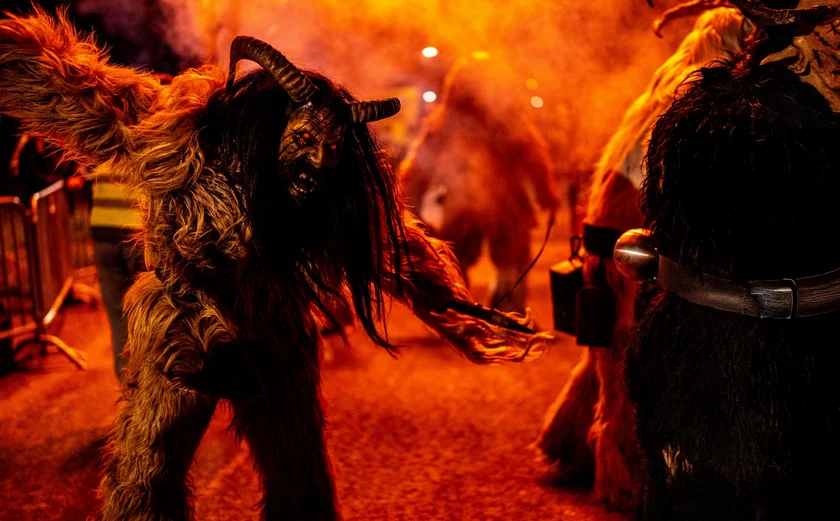
Krampus nevertheless has a distinctive visual identity: fur-covered bodies, prominent horns, distorted faces and bells that announce the wearers’ approach. A Krampuslauf—literally a Krampus run—brings groups of these figures together in a procession.
One frequently repeated explanation needs qualification, however. Krampus is often described as a pagan creature whose rituals have continued unchanged for thousands of years. The historical evidence is considerably less straightforward.
The Library of Congress’s American Folklife Center traces the figure’s clearest antecedents to medieval depictions of devils and religious drama. Plays about St. Nicholas featured frightening beings who threatened wrongdoers; later seasonal performances and processions developed those roles. The center cautions against confidently presenting Krampus as a surviving pagan deity.
The Czech festival circuit also has a relatively recent history. Kaplice, near the Austrian border, hosted its first Krampus procession in 2012, when the Diabolos group from nearby Sandl crossed over to perform. Growing interest subsequently helped inspire the town’s Krampus gallery.
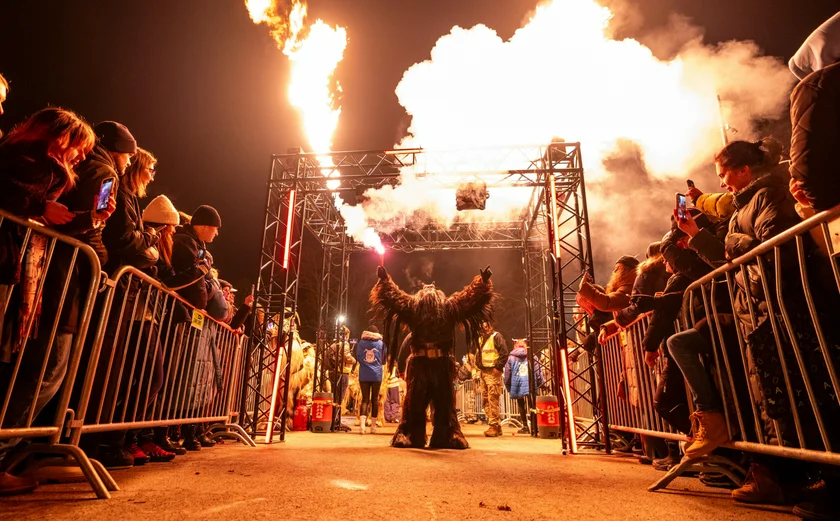
That exchange continues this year. Diabolos Sandl is among the Austrian participants announced for Prague, alongside Czech groups from Litoměřice, Kraslice and České Budějovice. What visitors encounter today combines regional folklore with contemporary outdoor entertainment: choreographed entrances, amplified music, smoke and fire effects.
Prague’s big show returns to the Industrial Palace
The capital’s Krampus show at Výstaviště takes place Saturday, Nov. 21, on the space in front of the Industrial Palace, returning the event to that setting after several years elsewhere within the grounds.
Organizers have announced more than 200 Krampus performers from Czechia and Austria across the event, with drummers, dancers and refreshments accompanying the processions. The supplied program also names percussion ensemble Groove Army.
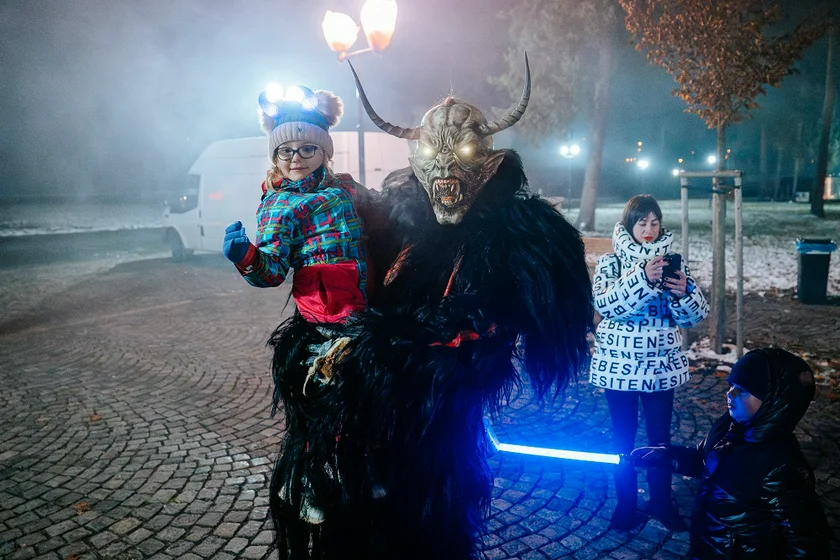
For families, the important distinction is between the two separately scheduled shows. The afternoon Family show opens at 3 p.m., with its procession running from 4 to 5:30 p.m. Organizers describe this version as gentler, with fewer devils, and encourage children to attend in their own costumes.
The Night show opens at 7 p.m., followed by the procession from 8 to 9:30 p.m. This is the more intense version, with stronger emphasis on fire, noise and frightening encounters. A new VIP section sits beside the entrance used by performers as they enter and leave.
“Family” remains a relative measure of scariness. Výstaviště explicitly asks parents to consider their children’s suitability for the event and requires pets to stay home because of the noise, fire and pyrotechnics.
Where else to see Krampus in 2026
Kaplice: Nov. 14
For a destination with a direct connection to the Czech Krampus revival, Kaplice’s annual show returns Nov. 14. The town’s information service lists the event from 4 to 8 p.m., organized by the municipality with the Großberg Teufel’s group.
It offers an opportunity to see the spectacle in the South Bohemian border town where Austrian performers helped establish an enduring Czech audience. Check the official listing for further admission and program details before traveling.
Český Krumlov: Dec. 4
The courtyard of Port 1560 hosts a free evening featuring groups from Czechia, Austria and Germany. A St. Nicholas gift-giving program for children is scheduled for 7 p.m., followed by the Krampus procession through a designated corridor at 8 p.m.
The venue and city listings currently differ on the opening time, but agree on those main events. For visitors combining the procession with a Krumlov stay, the distinction between the children’s program and the later parade is particularly useful.
České Budějovice: Dec. 12
The eighth České Budějovice Krampuslauf takes over the city’s exhibition grounds Dec. 12. Gates open at 4 p.m., with the main program beginning at 6 p.m.
Admission costs CZK 250 in advance, plus the ticketing fee, or CZK 300 at the venue. Children under 100 centimeters tall enter free. Organizers promise hundreds of Krampus and related Perchten figures from across Europe, accompanied by pyrotechnic effects.
For a first encounter, the most useful choice is between a gentler afternoon introduction and a full evening procession. These events share a seasonal tradition, but their scale, sound and approach to audience interaction can make for very different nights out.