


 Reading time: 2 minutes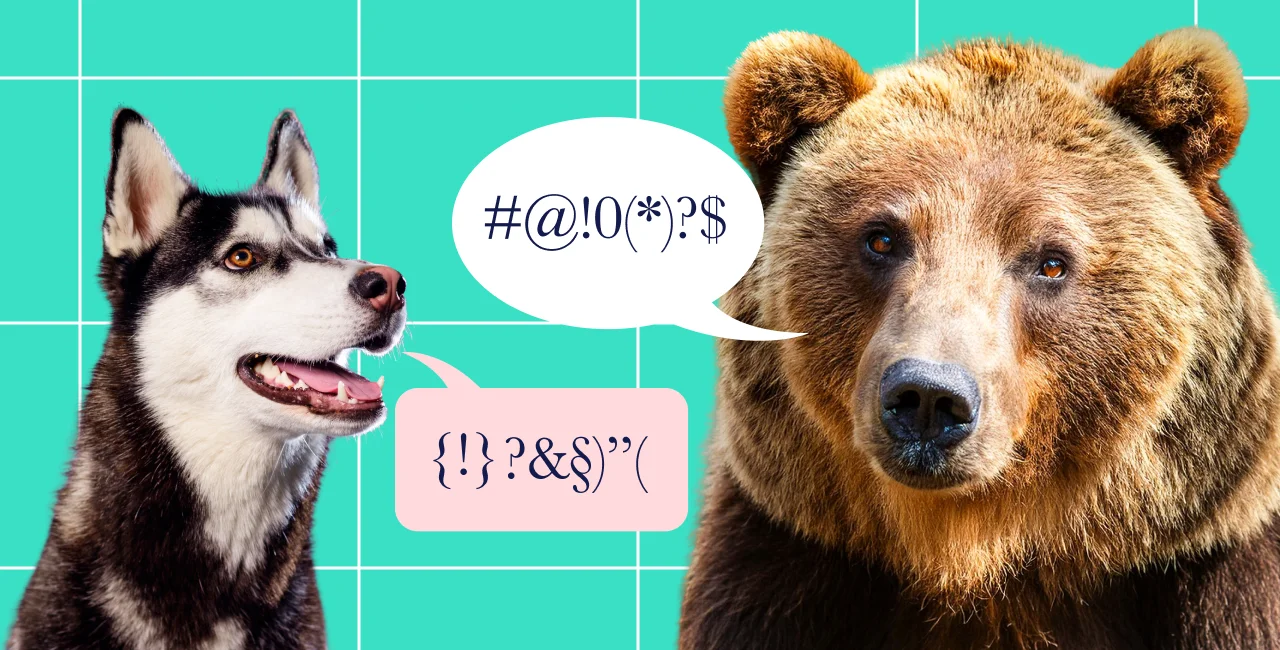

 Summary for: What does the bear say? From 'brum' to 'haf' how animals 'speak' Czech
With the arrival of spring, the world seems to find its voice again. Open windows carry the sound of barking dogs, frogs croaking from nearby ponds, and, somewhere in a yard, a rooster announcing the morning. Nature has its own orchestra, and every language renders its sounds a little differently.
In Czech, a rooster says kykyryký, a frog goes kvák, a dog haf, and a cat mňau. Cows moo búúú, donkeys bray íá, and a bear goes brum. These forms may feel perfectly natural to Czech ears, but they are not simple recordings of reality. Rather, they reflect how Czech organizes and interpret sound.
In linguistics, such words are known as onomatopoeia, expressions that imitate sounds. They are often seen as the most “natural” part of vocabulary, yet even they are far from universal.
Every language has its own phonological system: a limited set of sounds and patterns that shape how noises can be expressed.
3 facts about animals & language
1. Pets can “understand” more than one language
Dogs (and even cats) can learn commands in multiple languages—like “sit,” sedni, or sitz. They’re not learning language the way humans do, but they’re excellent at associating different sounds with the same action.
2. In Czech, even bears get a voice
While English sticks to vague descriptions like “growl” or “roar,” Czech gives even a bear a clear, child-friendly sound: brum. That’s partly because bears feature more prominently in Central European childhood stories, picture books, and toys—so their “voice” becomes just as familiar as a cow’s búúú or a dog’s haf.
3. Frogs and ducks sound suspiciously alike
In Czech, a frog says kvák and a duck says kva kva—close enough to be confusing, but cleverly distinguished. Languages often tweak sounds just enough to keep animals from “overlapping.”
Animal sounds are therefore not simply copied; they are filtered through the sound patterns available in a given language. Even seemingly small details matter such as the palatal nasal in mňau, a characteristic feature of Czech phonology.
Onomatopoeic words are also shaped by culture. Children learn them from parents, books, and fairy tales, and pass them on as part of the language itself. What feels like a spontaneous reaction to sound is, in fact, guided by shared linguistic convention.

Animals, of course, do not change their “language” at national borders. What changes is the way we perceive and represent their sounds. So the next time you hear a rooster or a frog in the Czech countryside, remember: they are not speaking Czech, we are.
Do you want to speak Czech like a native? Study at ÚJOP UK!