


 Reading time: 2 minutes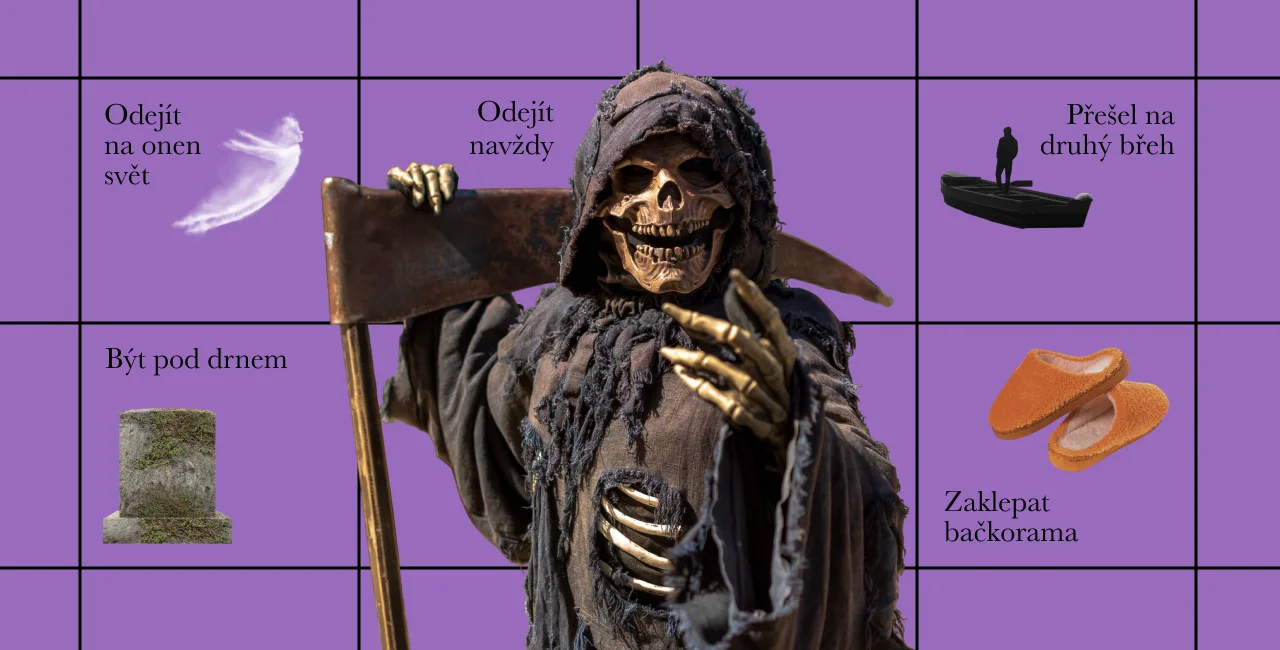

 Summary for: Learn how Czechs talk about death: With sensitivity and humor
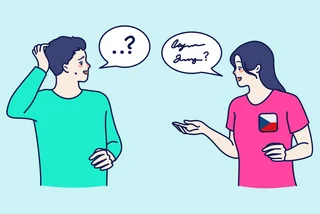
As Dušičky (All Souls’ Day) approaches in the Czech Republic, thousands of candles light up cemeteries. People clean gravestones, leave flowers, and remember loved ones. Death is a part of life; once we start talking about it, the Czech language reveals a fascinating variety of expressions.
From respectful euphemisms to darkly humorous phrases, Czechs have dozens of ways to speak about passing; embodying their typical dry, dark humor.
Leona Špetová from the Methodological Centre of the Institute for Language and Preparatory Studies of Charles University (UJOP CU) shared these sensitive terms with us: from respectful remarks to light-hearted ways to refer to a heavy topic. Now, you can explore some of the most common expressions, with notes on when and how to use them.
Quick Glossary of Expressions for Death
The following are euphemisms for speaking gently and respectfully about death.
- Odejít navždy (literally “to leave forever”) – A common phrase, often used in obituaries.
- Usnout navždy (lit. “to fall asleep forever”) – Figurative and gentle, often about older people or children.
- Odejít na onen svět (lit. “to leave for the other world”) – Traditional, slightly elevated, used by older generations.
- Odejít do věčných lovišť (lit. “to leave for the eternal hunting grounds”) – Slightly archaic, with a touch of pagan imagery; sometimes used humorously (“Grandpa left for the eternal hunting grounds”).
- Rozloučit se s tímto světem (lit. “to say goodbye to this world”) – More literary, often in writing or stylized contexts.
- Přešel na druhý břeh (lit. “to cross to the other bank”) – Symbolic, often linking death to the image of a river.
And here are more light-hearted, humorously-charged ways to talk about death.
- Natáhnout brka (literally “to stretch out feathers”) – Colloquial, exaggerated; often humorous.
- Zaklepat bačkorama (lit. “to knock with slippers”) – Very informal, used among friends or in a sarcastic tone.
- Chcípnout (lit. “to die like an animal”) – Originally for animals, now figuratively for disliked people.
- Zdechnout – Similar to chcípnout, but cruder and more emotionally charged.
- Být pod drnem (lit. “to be under the turf”) – Sarcastic, colloquial, based on the grave image.
Czech really does have a rich vocabulary for death. Now you know what zaklepat bačkorama means, and when it’s better to stick with odešel navždy.

Do you want to speak Czech like a native? Study at ÚJOP UK!