 Reading time: 4 minutes

 Summary for: All Souls' Day in Prague: Candlelit cemeteries and the Czech art of remembering
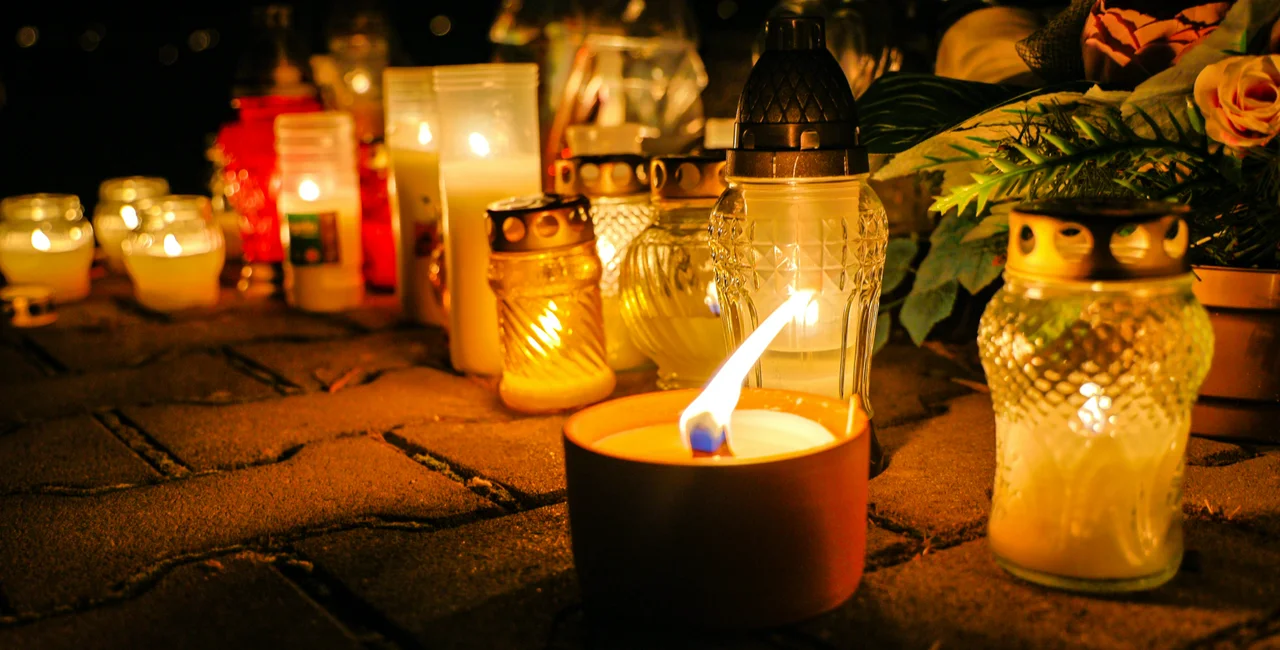
As October turns to November, Prague’s cemeteries become places of light. Candles gather around gravestones, families bring fresh flowers and wreaths, and people return to burial plots that connect them with earlier generations.
This is Dušičky, Czechia’s observance of All Souls’ Day on Nov. 2. Although it falls close to Halloween, its familiar rituals center on remembering people who have died: tending graves, lighting candles and making time for a visit.
In 2026, Dušičky falls on a Monday, with much of the visiting likely to take place over the preceding weekend. Prague’s cemetery operator has prepared special walks, discussions and opportunities to explore normally restricted spaces, while other venues offer ways to remember loved ones even if their graves are far away.
Why Czechia observes Dušičky
The formal Czech name is Památka zesnulých, the commemoration of the departed. The everyday name, Dušičky, translates roughly as “little souls.”
In the Catholic calendar, Nov. 2 is devoted to prayer for the faithful departed. It follows All Saints’ Day on Nov. 1, which honors the saints. Halloween, on Oct. 31, takes its name from the eve of All Saints’ Day; the three dates are connected through the Christian calendar but have developed different customs.

The establishment of the Nov. 2 observance is traditionally dated to 998, when Abbot Odilo of Cluny introduced a commemoration of the dead in monasteries under his authority. The practice subsequently spread across Europe.
In the Czech lands, religious observance became intertwined with household customs and folk beliefs about the souls of the dead.

Families prayed together and, in some places, left food from the evening meal for departed souls. Special breads and pastries known as dušičky or kosti svatých (“saints’ bones”) were made in different regional shapes, including rolls, wreaths and crossed bones.
These were eaten by families and also given to travelers, poor people and beggars. The Silesian Museum documents the variety of these baked offerings, which could be sweet or savory, plain or filled.
Some older customs are now chiefly encountered in museums. Prague’s National Museum, for example, uses its seasonal school program to introduce children to remembrance traditions practiced in the countryside around 150 years ago, including food offerings, visiting customs and candle-making.

Today, cemetery visits remain the most recognizable expression of the holiday, bringing together religious remembrance and personal family rituals.
For newcomers, visiting a cemetery during Dušičky can offer an insight into Czech life beyond the usual sightseeing circuit. It is also worth remembering that the illuminated graves are places of private mourning: keep voices low, leave decorations undisturbed and ask before photographing people.
Dušičky is not a statutory public holiday, so Monday, Nov. 2, is an ordinary working day.

Where to experience Dušičky in Prague this year
Most cemeteries managed by the City of Prague (Hřbitovy a pohřební služby hlavního města Prahy, or HPS) will extend their opening hours to 8 a.m.–7 p.m. from Oct. 31 through Nov. 2. From Nov. 3, the operator’s regular winter closing time becomes 5 p.m.
The HPS Dušičky program includes these highlights:
- Oct. 30, 2 p.m.: Ďáblice Cemetery. A walk connects its difficult history with contemporary natural burial practices.
- Oct. 31, 3 p.m.: Malvazinky Cemetery. Gravediggers Lea and Jiří Navrátil explain their work and answer visitors’ questions.
- Nov. 1, 10 a.m. and 4 p.m.: Malostranský Cemetery. Family walks explore symbols, stories and old graves.
- Nov. 1, 5 p.m.: Olšany Cemetery. A discussion considers how adults can talk with children about death.
- Nov. 2, 3 p.m.: Olšany Cemetery. A guided walk remembers soldiers and victims of war.
Booking is required for various activities. An Oct. 30 evening Olšany walk and Oct. 31 behind-the-scenes Strašnice crematorium tours were already marked sold out when checked.
There is also a separate, free remembrance gathering at Malostranský Cemetery on Nov. 1 from 2 p.m., with guided walks and material for independent exploration. Despite its name, the cemetery is in Smíchov. This year’s gathering commemorates Bishop Leopold Leonhard Thun-Hohenstein, who died 200 years ago. No reservation is required.
Away from the cemeteries, Dušičky beneath Prague Castle offers a setting particularly relevant to international residents who cannot visit family graves.

On Oct. 31, the Gardens beneath Prague Castle open from 10 a.m. to 9 p.m., with lamps, torches and candles providing an evening atmosphere for remembrance. Organizers explicitly welcome those unable to travel home who would like to light a candle for someone they have lost.
Guided garden tours are scheduled for 3, 5 and 7 p.m., with ticket sales ending at 8 p.m. Check weather conditions, which could affect access. The gardens close for winter the following day.
Religious services also continue across the city. Whether attending one, joining a walk or simply visiting quietly, there is no requirement to make Dušičky an elaborate occasion. A candle and a few minutes of remembrance are at the heart of the tradition.