 Reading time: 2 minutes

 Summary for: Czech students announce Nov. 3 strike over public media funding
A student platform connecting schools across Czechia has announced a warning strike for Tuesday, Nov. 3, against the government’s proposed changes to public media funding.
The Student Solidarity Committee announced the action Wednesday during a demonstration on Brno’s náměstí Svobody. It will coincide with an all-day strike already called by employees of Czech Television and Czech Radio.

The announcement moves the student campaign beyond the strike alerts declared at several universities in recent days. Organizers are calling on more schools and initiatives to participate.
Student strike will include public outreach
The warning strike will consist of activities intended to explain the importance of public service media and independent culture, according to the committee.
“We call on other universities, schools and initiatives to join the declaration of a strike,” organizers wrote on Instagram.
Eliška Kubečková of the committee told ČTK that participants would include the Média nedáme MUNI initiative at Masaryk University and students from other universities.
The announcement does not establish a nationwide suspension of classes. Participation and activities will depend on the groups and institutions joining the action.

Strike alerts have already been declared by the academic community at Prague’s Theatre Faculty, DAMU; students at Charles University’s Faculty of Social Sciences and the Film and TV School, FAMU; and unions at the Academy of Performing Arts.
Broadcaster employees, represented by the Veřejnoprávně initiative, have separately scheduled their all-day strike for Nov. 3. Representative Daniel Stach said it would be more visible than their June 22 warning strike, although broadcasting changes would remain within legal requirements.
Government refuses to withdraw the bill
The governing coalition of ANO, SPD and the Motorists advanced the funding proposal through its first parliamentary reading early Saturday. The bill remains under consideration and has not become law.
It would abolish television and radio license fees and replace them with state-budget financing, while reducing the broadcasters’ income compared with their expected fee revenue this year.
Czech Television would receive CZK 5.74 billion next year, approximately CZK 1 billion less than its planned license-fee collections. Czech Radio would receive CZK 2.065 billion, around CZK 400 million less.
Opposition parties and protest organizers argue that the changes would threaten editorial independence. Criticism has also come from university rectors, churches, theaters and other cultural institutions.
Government politicians reject that interpretation and maintain that the proposed financing would not undermine the broadcasters’ independence.

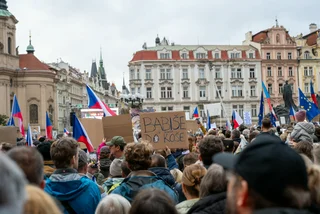
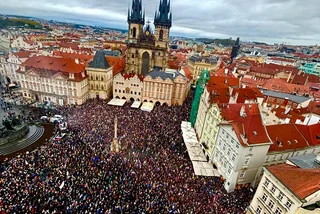
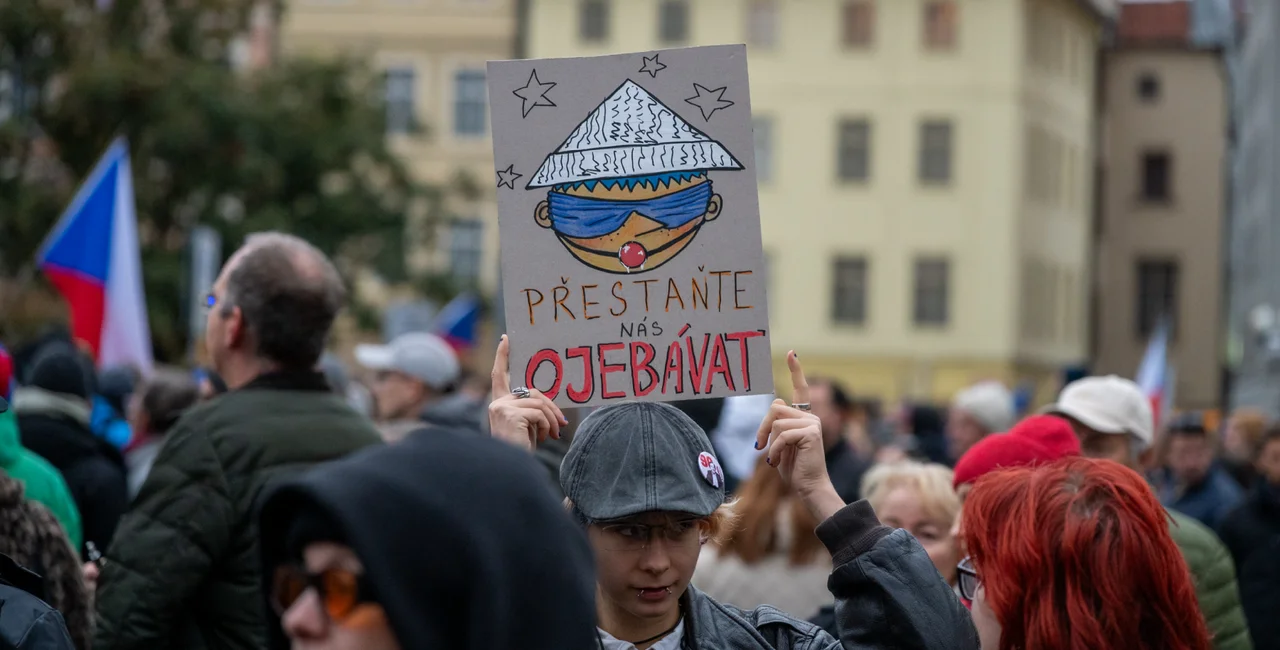
Thousands filled Prague’s Old Town Square on Sunday to demand withdrawal of the bill. Prime Minister Andrej Babiš said Monday that the coalition would not withdraw it, although negotiations over its final form would continue.