 Reading time: 2 minutes

 Summary for: Czech government says it will reject EU migration reform, calls for zero-tolerance policy
Prime Minister Andrej Babiš announced in his government’s first press conference on Monday that the new coalition will formally reject the European Union's New Pact on Migration and Asylum and instead commit to a “zero-tolerance policy for illegal migration.”
The rejection is scheduled as the first order of business for the new cabinet, with the item "Draft government resolution on the rejection of the EU Migration and Asylum Pact" appearing on the agenda for Tuesday's meeting, according to Novinky.cz.

The announcement follows the recent advancement of the sweeping EU migration reform, which introduces a mandatory but flexible solidarity mechanism for sharing the burden of asylum processing. This mechanism requires states to either relocate migrants or pay a financial contribution of EUR 20,000 (CZK 486,000) per person into a common fund.
Today, the Council reached an agreement on the 2026 annual solidarity pool, a key element of the EU Pact on Migration & Asylum.
— EU Council (@EUCouncil) December 8, 2025
It will support member states under migratory pressure and help ensure an effective asylum system.👇https://t.co/KuGEzPz5dR pic.twitter.com/662jGYtvOY
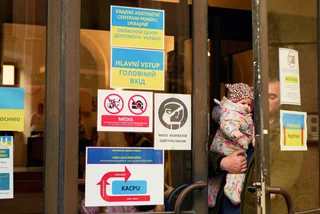
The Council of the EU had previously listed Czechia among six countries eligible to request reduced financial contributions under the Pact. This eligibility was granted due to the country's “significant migratory pressure,” specifically from having absorbed over 400,000 Ukrainian refugees under temporary protection since Russia's 2022 full-scale invasion (Ministry of the Interior data).
Despite the EU offer, the new government plans to prepare its own national asylum law. The government's draft program statement asserts that this law “will be clear and fair. Asylum will be granted only in exceptional, precisely defined cases.”
Ministers mixed on EU pact
Outgoing Interior Minister Vít Rakušan and others have warned against the move. Rakušan argued that rejecting the entire Pact, which includes provisions for tightening asylum procedures, strengthening police powers toward irregular migrants, and accelerating court processes, could paradoxically worsen the situation.
By rolling back these measures, critics argue, Czechia risks becoming a destination for migrants due to having more lenient rules than surrounding EU countries that adopt the Pact's stricter enforcement elements.

President Petr Pavel echoed those concerns earlier this month, urging the government to explain the domestic and international consequences of withdrawing from the rules the country has effectively adopted. New Interior Minister Lubomír Metnar acknowledged the pact tightens controls but said the government rejects the “principle of solidarity.”
The dispute places Czechia within a broader European debate as several governments push back against mandatory burden-sharing while the EU seeks a unified response to migration pressures intensified by wars and instability. For now, the Czech government plans further negotiations in Brussels while drafting a new national asylum law that would sharply limit eligibility.