 Reading time: 3 minutes
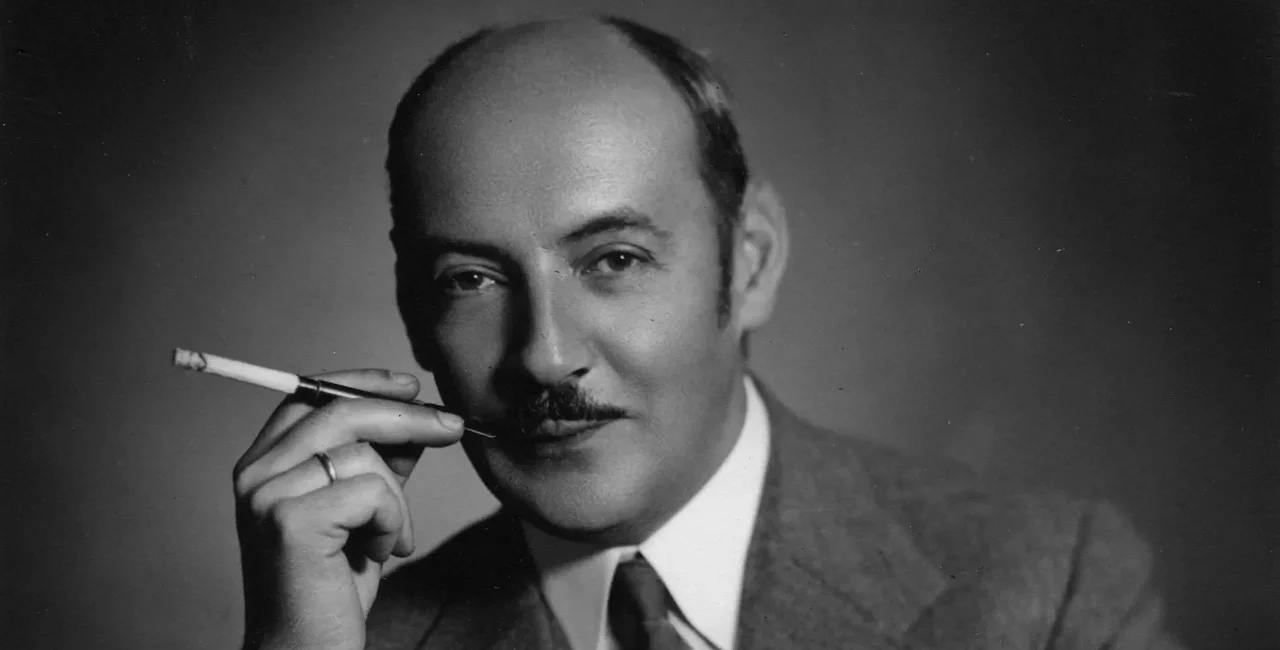

 Summary for: The other Göring: How a Nazi leader’s brother helped Czechs under occupation
For people living under Nazi occupation, the name Göring usually meant danger. Hermann Göring commanded the Luftwaffe, helped build the Nazi dictatorship and became one of the regime’s most powerful figures.
Yet in occupied Czechoslovakia, his younger brother Albert used the same surname to help people threatened by that regime.

Working as an export director for Škoda, Albert intervened for Czech colleagues and maintained contacts with people involved in the resistance. After the war, those connections helped establish that his actions deserved closer examination than his family name suggested.
His story is now the subject of The List of 34, a new play by British writer and actor Joe Staton currently being staged in New York City. But its central historical mystery leads back to Czech factories, personal relationships and testimony given in postwar Prague.
An unlikely ally inside Škoda
Albert joined the Škoda industrial business in 1939, following the German occupation of the Czech lands. This was the engineering and armaments concern centered on Plzeň, rather than simply the car brand familiar to today’s motorists.
According to biographer William Hastings Burke, former business associate Bruno Seletzky helped arrange the appointment. Czech managers hoped Albert’s connections could provide a buffer between them and the German authorities.
Burke’s account cites postwar testimony describing Albert’s hostility toward Hitler and interventions for colleagues, including Jan Morávek and František Zrno. It also identifies contacts with physician Josef Charvát and industrial executive Karel Staller, through whom information could reach the resistance.


The arrangement carried an uncomfortable contradiction. Albert held a well-paid position within an industrial system serving German interests, while using the access it provided to assist people endangered by Nazi rule.
Czech historical reporting describes his intervention for five executives of Omnipol, the export company connected with Škoda, following their arrest by the Gestapo. Postwar accounts also recalled his friendly treatment of Czech employees and refusal to use the Nazi greeting.
His Czech connections extended into his private life. In 1942, he married Milada “Mila” Klazarová. According to Burke, the couple married in Salzburg; Hermann did not attend the wedding.

The Czech doctor on his list
One of the most intriguing connections concerns Josef Charvát, the prominent Czech physician imprisoned in Buchenwald in 1939.
In a 2013 Czech Radio report, Charvát’s grandson Václav Rejholec described how his grandfather had believed that contacts around the Swedish king helped secure his release. Only decades later did the family learn that Albert Göring might have played a role.

The account attributes the release to a letter reportedly signed simply “Göring”—a name that could carry extraordinary weight. However, Czech Radio presented the precise intervention as an allegation, rather than an independently established sequence of events.
Charvát nevertheless appears as number six on Albert’s postwar list of people he said he had helped. That document supplies the title of Staton’s play.
The list was Albert’s own account of assistance, not a verified tally of 34 identical rescue operations. Czech Television’s description in the documentary Případ Albert Göring identifies it as a list of people whose lives or property he claimed to have saved at personal risk.

When the name became a liability
After Germany’s defeat, Albert entered American custody and faced repeated interrogation. His assertion that he had opposed the Nazis was difficult for investigators to reconcile with his surname and professional connections.
He was subsequently transferred to Czechoslovakia, where his wartime activities came under scrutiny.
Here, testimony from former Czech colleagues became crucial. Statements from Škoda and Zbrojovka executives—and support from the Škoda works council—helped secure his acquittal. He left for Austria in March 1947, and died at the age of 71 in 1966.
In 2016, Yad Vashem told The Times of Israel that there were indications he had helped Jews, but insufficient primary documentation demonstrating the extraordinary personal risks required for recognition as Righteous Among the Nations.

Staton’s The List of 34 returns to these questions through Albert’s postwar struggle to explain himself. Following an October reading, RiffRaff NYC plans another at Manhattan’s NuBox Theatre on Nov. 24, according to the production’s announcement. Staton says he developed the play with Burke’s blessing.
For Czech readers, its strongest connection lies closer to home: people who had lived through occupation were willing to speak for a man named Göring. Their testimony preserved a complicated account of influence, assistance and individual choices inside a murderous system.