


 Reading time: 5 minutes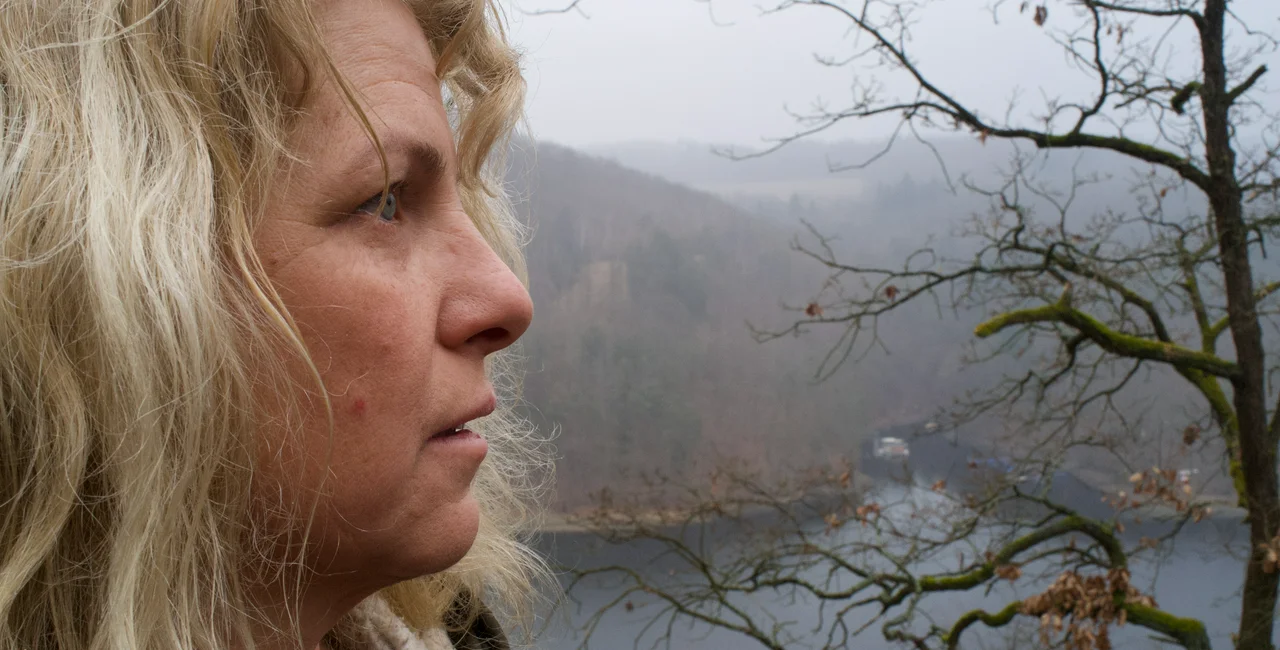

 Summary for: A Long Islander found her way to rural Bohemia. Decades later, she calls a Czech village home
Melinda Reidinger is Long Island-born, Williams College-University of Virginia educated, and has spent the last 23 years in a village in the Bohemian countryside, an hour outside Prague.
She has an orchard and vegetable garden; she makes her own jams; she used to keep bees, and she cleared out debris from an old barn on a property she owns. It took five years to move the rubble by hand and in the back of her station wagon. And when it was done, she called in the bulldozers. She is, in short, not someone who does things by halves.
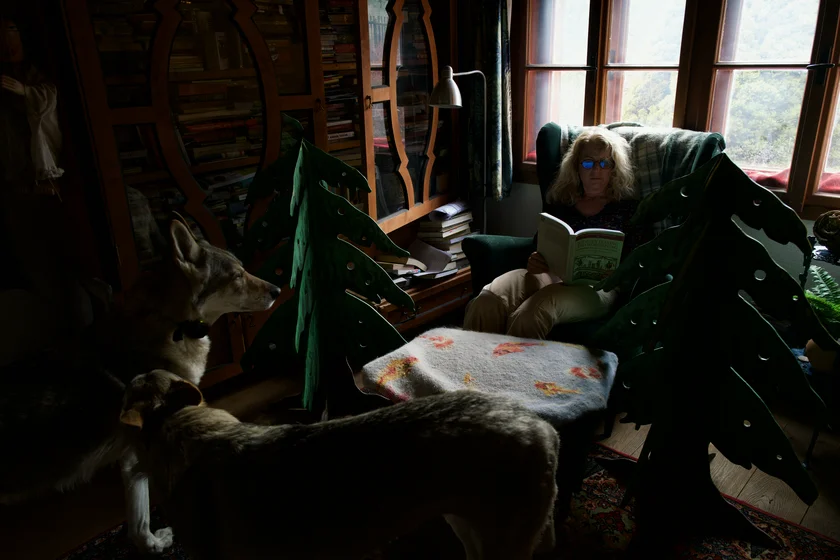
We meet on a grey February morning and set off across the misty fields surrounding her property, accompanied by her two large and enthusiastic Czechoslovakian wolf dogs. She is warm, funny, and it immediately becomes clear that she made the right call leaving the city behind in 2003.
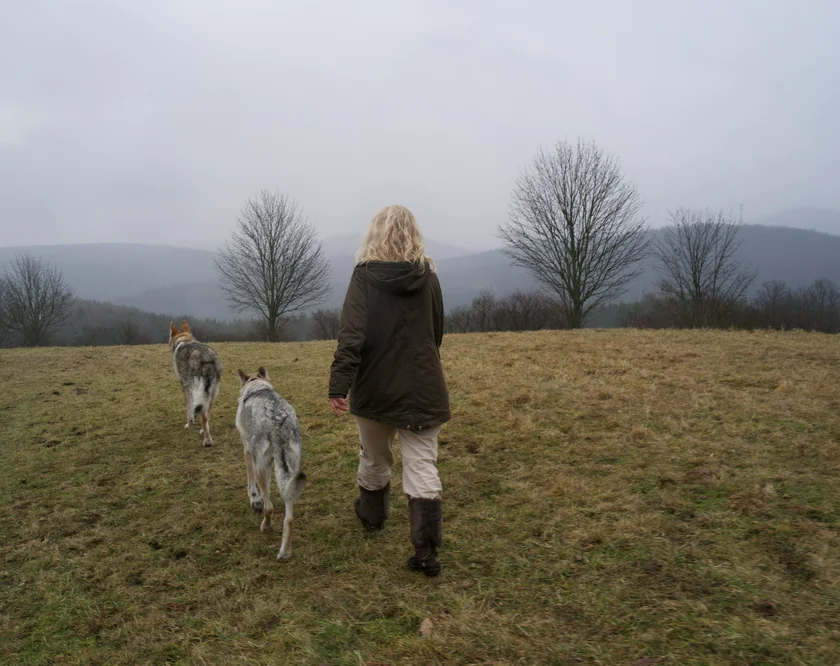
"You're never alone in Prague. People will always be there watching you. You can never truly relax. And every space boxes you in between four walls: art gallery, pub, apartment, all of them." Her path to the Czech countryside, like most great expat stories, is a heady cocktail of accident and destiny.
An extraordinary introduction to Czech culture
Melinda began learning Czech at Williams in the early 1990s, already fluent in German and Russian, looking for somewhere to study abroad that sat between her two linguistic worlds.
In 1992, she decided that Czechoslovakia might be the right place to discover something between them. She found a Czech teacher in her local community, who turned out to be Jan Wiener, a man whose wartime story is extraordinary enough to have been made into a well-regarded documentary, and she became the first student from her college to study in what had just become the Czech Republic.

Wiener escaped Nazi-occupied Czechoslovakia by clinging to the undersides of trains for two months to reach England, where he joined the RAF and flew bombing missions over Germany. He later became a history professor in America with the self-proclaimed mission "to build a bridge between the mind and the heart."
The documentary, The Fighter, was made with his close friend Arnošt Lustig, one of the most significant Czech Jewish writers of the 20th century, whose own survival of Theresienstadt, Auschwitz, and Buchenwald became the raw material for novels that are still read across the world.
'I was there, and it was glorious.'
Melinda arrived in Prague in the autumn of 1993, shortly after the Velvet Divorce, striding into what she describes as a city mid-exhale: "Pivo and absinthe flowed, jazz wailed, techno clubs thudded in musty cellars until the sun came up, funky old Trabants putted along the cobblestoned roads, writers and artists scribbled, peddlers hawked their wares on bridges."
She married here, had three children (now 23, 20, and 17), and taught anthropology and sociology at Anglo-American University for a number of years.
However, despite the early romance of Prague in the 90s, it was clear that the city would not be her home, so she bought a place in a tiny village surrounded by green hills.
"When I get irritated [driving an hour to get things done], I remember that if I lived closer, I'd either be surrounded by urban sprawl, or I'd have to be extremely wealthy to afford such beauty near civilization."

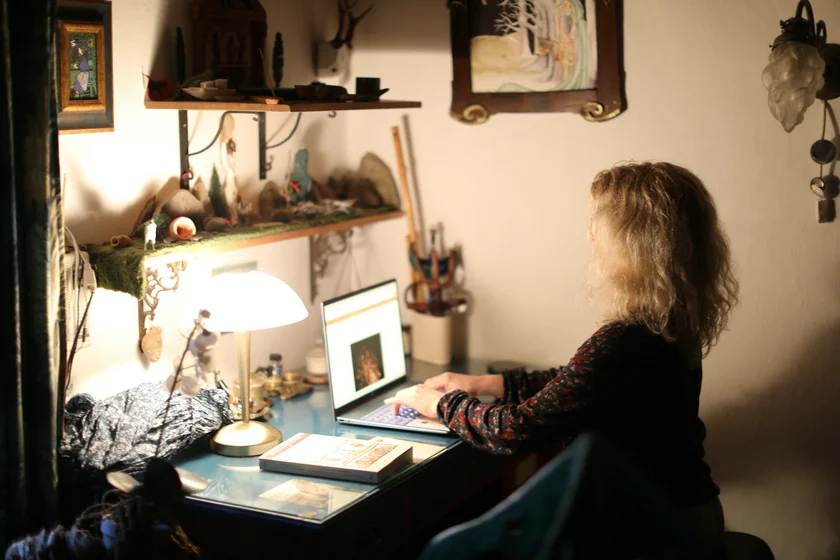
Alongside her anthropology work, she still teaches a weekly course on Food and Culture for CET, and she is steadily converting the ruined barn next to her house into a yoga studio and writers-in-residency space: the vision that guided her physical work, clearing ruins, rubble, and brush.
She has written and published a book-length study titled The White Deer: Ecospirituality and the Mythic; a dystopian novel, Swarm Box, is in the pipeline. She recently passed four exams (in Czech) to obtain licenses to drive a 17-seat minibus and gain a commercial driver's license, with the intention of leading tours through Bohemia in search of haunted places.
When I ask where she derives energy for all this, her answer is elemental, literally. "I draw physical and mental strength from the elements present in my surroundings," she says.
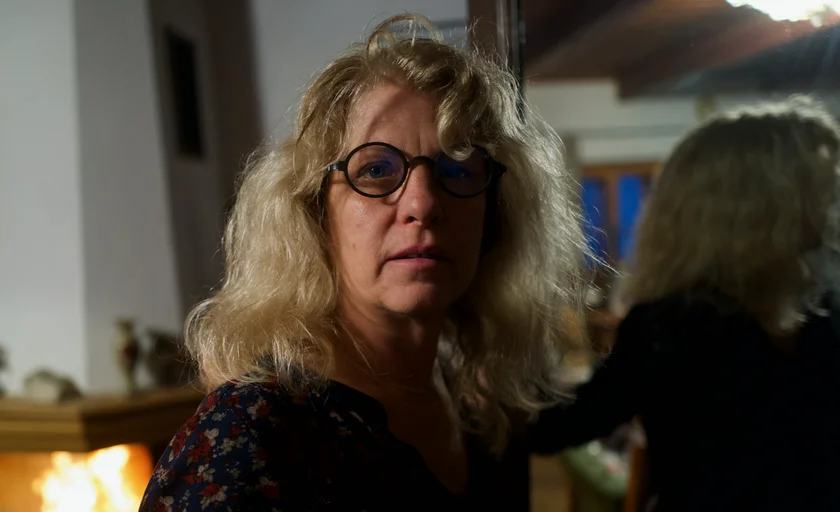
"When I feel dysregulated, I try to recover balance by bringing more of what's lacking into my life, making fire in the fireplace, lighting candles, cooking spicy foods, or reclining under a tanning bed to take in artificial sun."
Village life, she is quick to note, is not without friction. Gossip, triangulation, neighbors with narrow and intractable opinions, she acknowledges all of it.

But she argues these are human constants, present in any community, and that the countryside offers something in return that the city cannot: solitude, nature, the particular coherence of a small place where the fire brigade and the hunters' society are the only formal organizations anyone needs, and membership is entirely optional.
Her anthropological eye is always roving, even here. She is fascinated by folk traditions, herbal lore, dowsing for underground water, and the way a small community reveals what a large one obscures: that every family, every individual, is a world of their own.
Older generations carry knowledge that is disappearing fast: plant lore, building techniques, seasonal customs with pre-Christian roots. Find someone willing to talk, and listen carefully.
"In a small community you can't overlook the uniqueness of each individual," she says.
"The categories I use as an anthropologist, men and women, older generations and younger, start to break down when you actually get to know people."
She is, I think, exactly where she's supposed to be. Melinda bears the classic traits of a bohemian in the traditional sense of the word: vegetarian (though she makes very occasional exceptions for the wild boar hunted by her neighbors), flower-print shirts, a library filled with esoteric volumes.
In her Substack blog, Regina Dentata, she has written about bohemianism as a philosophy, the idea that human beings carry a powerful life force that, if properly nourished, produces gifts mainstream society can't yet imagine.

Strolling back across the fields toward her house, panting wolfdogs muddy-pawed and satisfied, I find it hard to dispute the theory. Melinda Reidinger dwells in a still place from which she can move the world.
The White Deer, Melinda's book-length anthropological study interwoven and psychological themes, is available now from Sul Books. Swarm Box, her dystopian novel, is forthcoming, and another nonfiction book on caryatids is forthcoming from the same publisher. Her Substack, Regina Dentata, explores myths, art, language, ritual, and ways we relate to the land.