



 Reading time: 6 minutes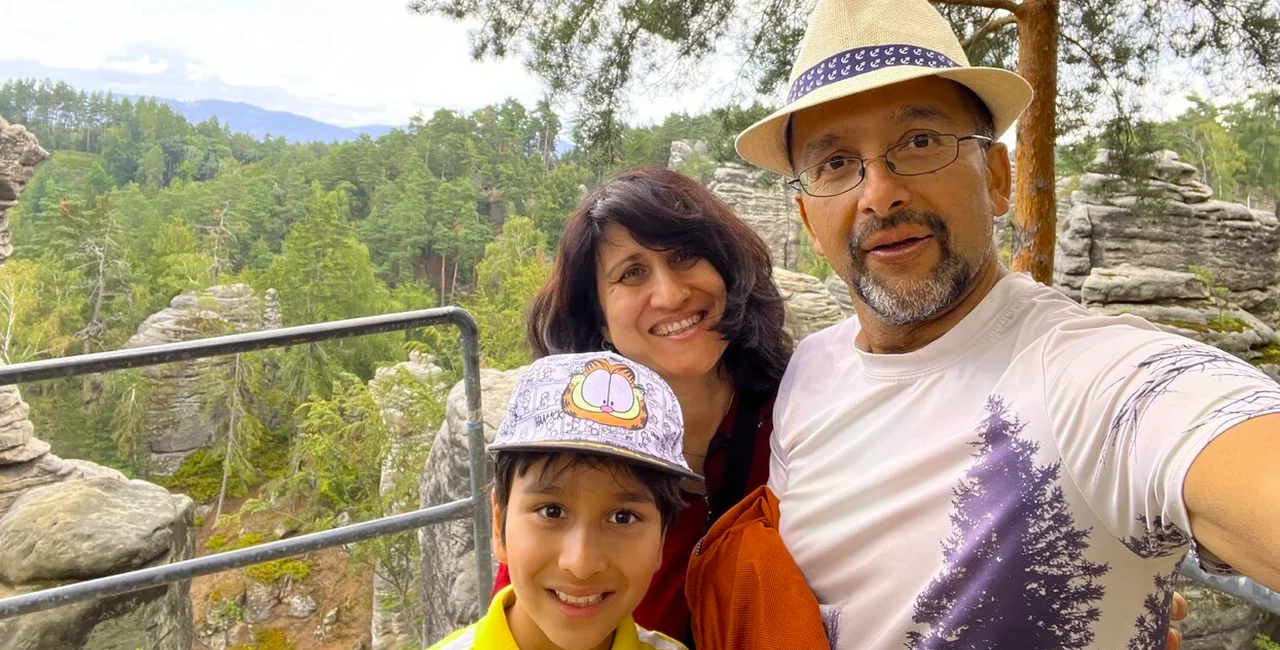

 Summary for: From Czechia and Nepal to Los Angeles: She learned to carry her homes with her
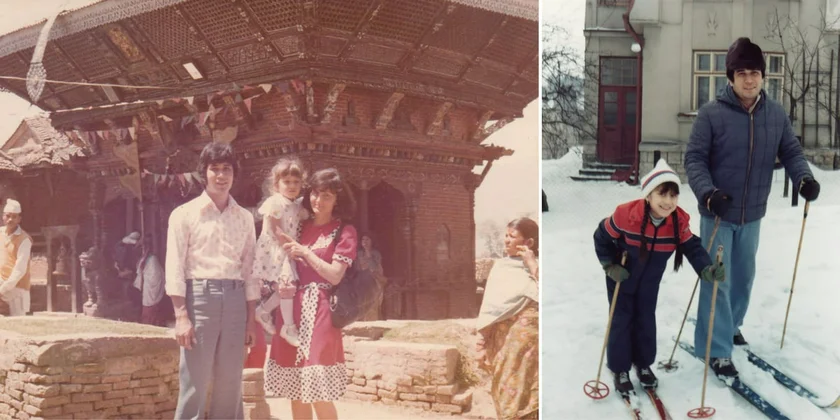
The first thing Sangita Shresthova remembers about crossing into Czechoslovakia as a child is fear, followed by warmth.
Her family's passports, letters of support, and permission documents would be examined carefully by immigration officials at every checkpoint.
“We were always pulled aside,” she remembers. “Phone calls were made, supervisors summoned. My mother would be so tense.”
She remembers how precarious their ability to continue the journey felt. The family – Czech mother, Nepali father, and young daughter – became accustomed to uncertainty. They often traveled on a tight budget, sometimes unable to afford food during long journeys.
During one overnight layover in Frankfurt, Sangita remembers staring at a brightly lit pastry display when a stranger bought one for her. While her mother says it didn't quite happen that way, the memory stayed with her.
“My memory, though perhaps constructed, is so clear that I have since made it a point to do the same for others when I can.”
Whether they arrived by plane or by train from Germany to save money, her relatives – aunts, uncles, and grandparents – were always waiting. The fear of the border was replaced by the comfort of family, and later, traditional Czech food.
“Thinking about it now, my grandmother must've spent weeks in the kitchen preparing for our arrival; there would be heaps of cookies, koláč, svíčková in the fridge, sekanina,” she recalls.

Prague is one of many homes
For Sangita, belonging has never meant choosing one place over another.
Born in the Czech capital, she grew up moving between Czechia and Nepal before eventually settling in Los Angeles, where she now teaches and researches cross-cultural communication at the University of Southern California.
But Prague kept calling her back. She returns regularly, often every summer.
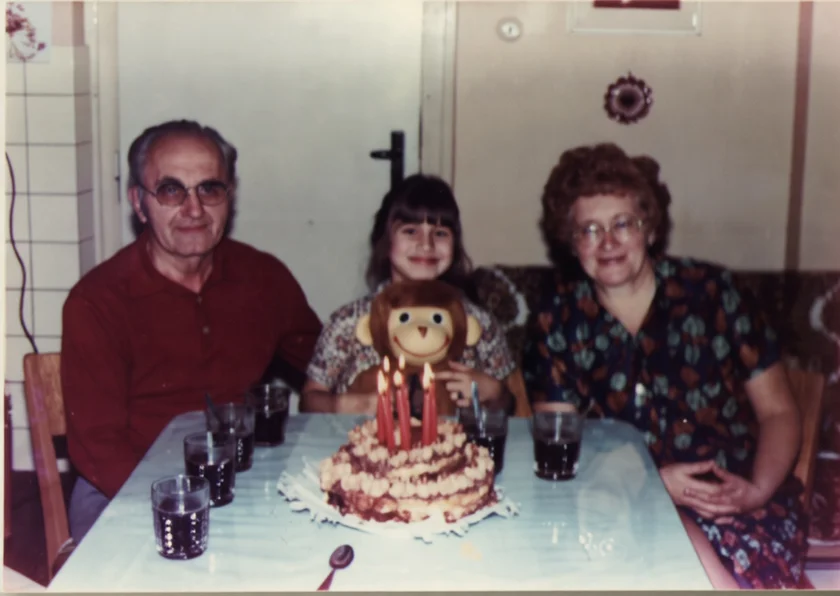
Arriving in the city still feels familiar. She knows how to get around. She has favorite places she returns to. She can follow conversations about current events and reconnect with people because she speaks Czech fluently.
“I may be physically located in Los Angeles,” she says, “but I always know what time it is in Kathmandu and Prague.”

Thirty families, four continents, one challenge
Growing up between cultures meant Sangita was asking questions about identity long before she began researching them professionally.
How do children understand where they belong? How do parents pass on a language and culture they no longer live inside every day?
Those questions became the focus of her book, The Cross-Cultural Parenting Playbook.
Throughout her research, she interviewed more than 30 families across four continents, including Afghan refugee families in Kentucky, serial expatriates, and economic migrants in Los Angeles.
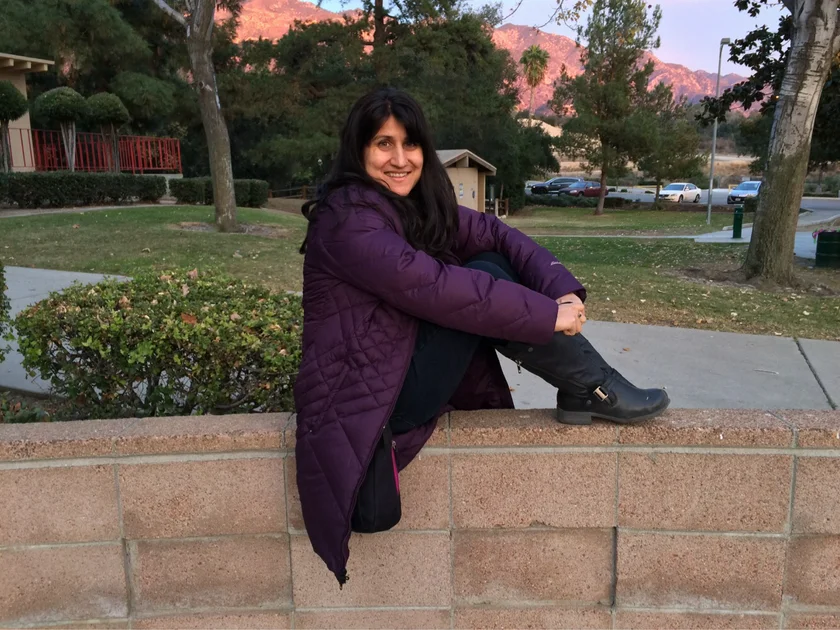
Their circumstances were very different. But the emotional challenges were often surprisingly similar.

“All of the parents I talked to thought about their own and their children’s changing cultural identities a lot,” she says.
Unlike parents raising children in a single cultural environment, cross-cultural parents often have to make deliberate choices about what they pass on, from language and traditions to food and family connections.
“They did not take them for granted,” she says. Many worried they were not doing enough; some even felt guilty about it.
Making a Czech life in Los Angeles
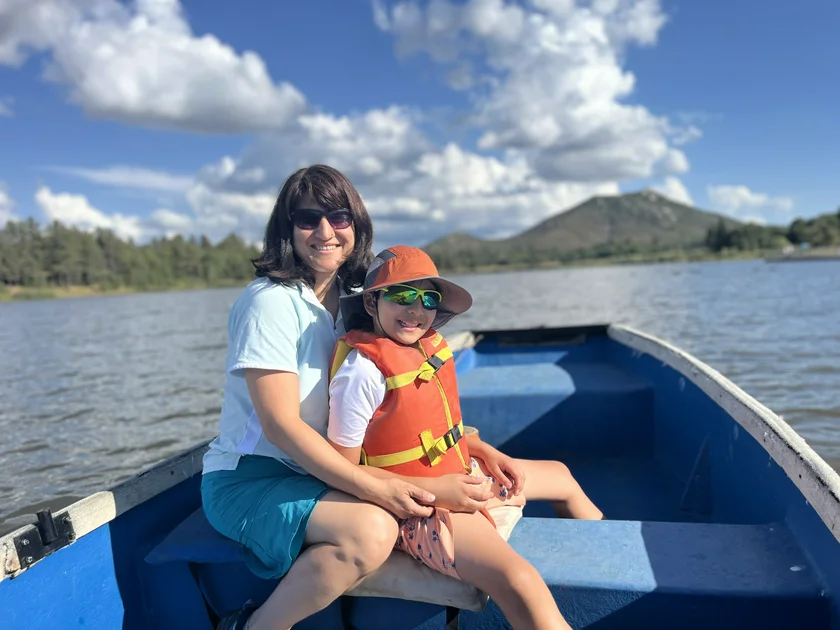
Sangita knows those feelings personally. Her son, Marek, is growing up in Los Angeles. He is Czech, but his everyday life is American. As she answers my questions about her book, she tells me she can hear him taking his weekly online Czech lesson.
The family began with Czech weekend classes in Los Angeles, which gave Marek both language instruction and a community of children with similar experiences.
“We were very lucky as there actually is a Czech school in Los Angeles that offers weekend classes to children,” she says. ”We found a community that helped us feel connected to other cross-cultural Czechs who were similar to us in many ways.”

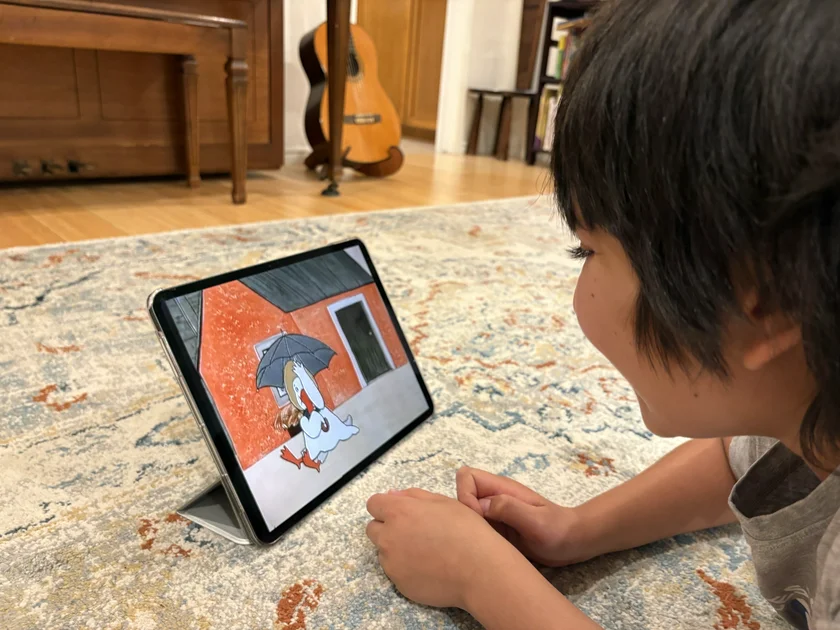
Later, they moved to online learning through Česká škola ve světě, where Marek studies Czech language, history, and geography and prepares for annual proficiency tests.
But the community continues to be important even though Marek no longer attends the school. “We still join them for their annual camping trip and their Mikuláš Christmas event,” she says.
She recognizes that his relationship with Czech culture will not be identical to hers. “I cannot take for granted that Marek will understand where I came from if I don't help him make those connections.”
Keeping the language door open
One of the biggest lessons from the families she interviewed was that heritage language does not have to be an all-or-nothing effort.
Sangita has seen parents give up when they realize their children may never reach native fluency. She believes that is a mistake.

“A friend just recently shared with me that her adult son, who shunned Czech for years, is now learning it on his own and that the foundations she was able to give him when he was little are a huge help.”
“She did exactly what I hope to do; she kept the door open.”

For families trying to maintain a heritage language, she suggests thinking broadly: community schools, online classes, books, streaming content, and conversations with relatives. Media, she argues, is often misunderstood.
Many cross-cultural parents she interviewed saw media as a lifeline. Video calls, language apps, and children’s programs in heritage languages were used not as a replacement for family connection, but as a way to maintain it.
She recalls one woman she interviewed, originally from Costa Rica and now living in the United States, who wished WhatsApp had existed when her parents were still alive.
“She was sure that her children would have been able to develop a much closer relationship to their grandparents if they had been just a click away on their phones.”

A changing world for cross-cultural families
When Sangita began writing the book in 2021, the world was emerging from the isolation of the pandemic.
By the time she finished it in 2025, she found herself questioning whether the moment was right for a book about the possibilities of cross-cultural life.
Rising nationalism and growing suspicion toward migration had changed the conversation.
Cross-cultural families offer something valuable at a time when identities that cross borders are increasingly being questioned: the ability to understand multiple perspectives and move between different ways of seeing.
“I even thought about walking away from this book,” she says. Instead, she decided the stories mattered more than ever. “Our stories deserve to be told.”
Nepal and Czechia are not obvious companions. Yet after a lifetime moving between them, she found that each place sharpened her understanding of the other.

The cross-cultural life was not simply something that happened to her. Over time, it became something she chose.
But she is careful not to romanticize the experience.
Cross-cultural parenting requires work. It requires intention. It also requires accepting that children will create their own relationship with the cultures they inherit.
A Czech connection, on his own terms
Marek already has his own connection to Czechia.
He has attended summer camps there and spends several weeks each June attending a local school in Prague. He knows Czech history and geography well enough to occasionally surprise his mother with lessons about the Habsburgs, the Protectorate, and the Velvet Revolution.
“You should ask him,” she says with a laugh.

She does not know what Czechia will mean to him when he is her age, but she knows what her homes have meant to her.
She knows there is no single answer for families living between cultures.
"Some parents really commit to rooting their families and encourage their children to claim where they are as their home. Others lean into a sense of transience. Speaking for myself, I have recently started to think more deeply about the importance of place and roots and how much these matter in how we define ourselves across cultures."
For Sangita, the goal is not to create a perfect connection. It is to make sure the choice remains possible.
"Each family figures this out for themselves," she says.
The Cross-Cultural Parenting Playbook (Multilingual Matters, 2026) by Sangita Shresthova is available to buy here.