 Reading time: 2 minutes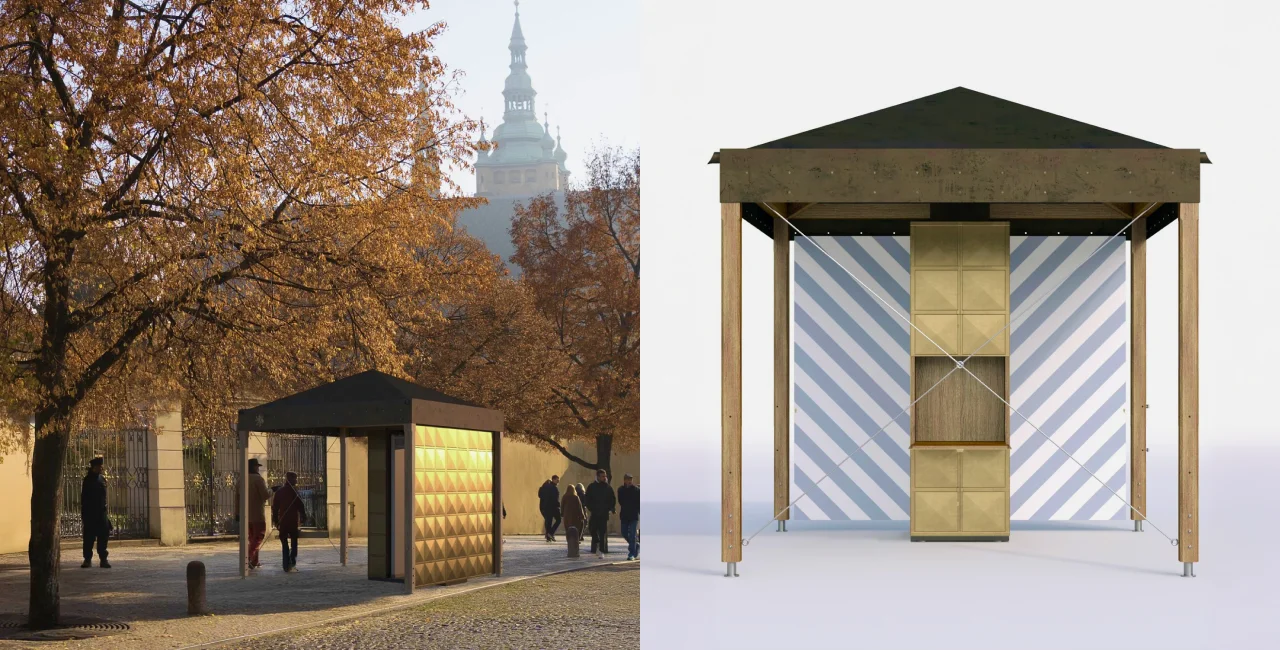

 Summary for: Prague Castle to get updated security checkpoints: Winning design selected
Plans are underway to redesign the security infrastructure at Prague Castle, one of Czechia’s most visited landmarks. After launching a public architectural competition last year, the Castle administration has selected a winning design for new entry checkpoints that will begin testing in 2026.
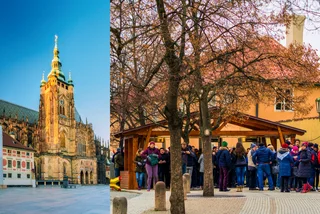
The winning proposal by Prague-based Atelier HRA was chosen from 28 submissions and emphasizes discreet aesthetics, high functionality, and adaptability. Officials say the new structures are expected to improve both the visual impression and technical performance of the current shelters, which were installed hastily in 2016 in response to increased security measures.
A competition to address outdated infrastructure
The existing security shelters at the entrances to Prague Castle have long been criticized as temporary, unsightly, and increasingly unfit for purpose. Built rapidly in 2016 in response to heightened security concerns, they have since shown signs of wear and technical shortcomings.
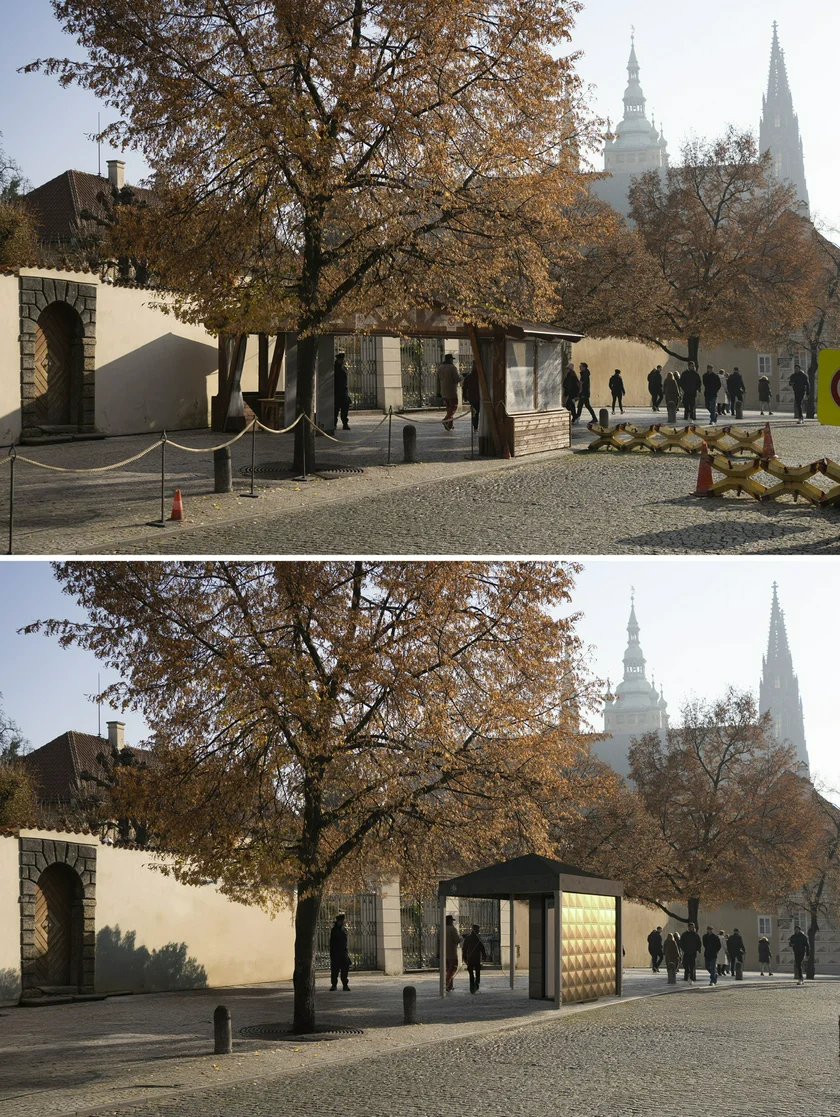
To address this, the Prague Castle Administration launched its first architectural and design competition in over 30 years in late 2024.
“The current structures are degrading and undignified,” said Pavel Vyhnánek, director of the Castle Administration. “We appealed for new designs that would be visually restrained and technically adequate. The winning concept cuts the structure size in half while still meeting all essential requirements.”
The competition was organized in cooperation with the Prague Institute of Planning and Development (IPR), which brought in expertise on public space design. An expert jury, including heritage conservationists, members of the Castle Guard, Czech Police, and technical researchers from CTU, reviewed the anonymous entries.

“Our aim is to ensure security without compromising the dignity of one of the country’s most symbolic spaces,” said Vyhnánek. Ultimately, Atelier HRA was awarded first place for its subtle, modular concept that balances security needs with respect for the Castle’s historical setting.
A modular and context-sensitive design
The winning design is based on a lightweight, modular structure that can be scaled and relocated as needed. It provides shelter from sun and rain while minimizing visual impact. According to the studio’s representative Vít Šimek, the team approached the task with humility toward the Castle’s layered architectural history.
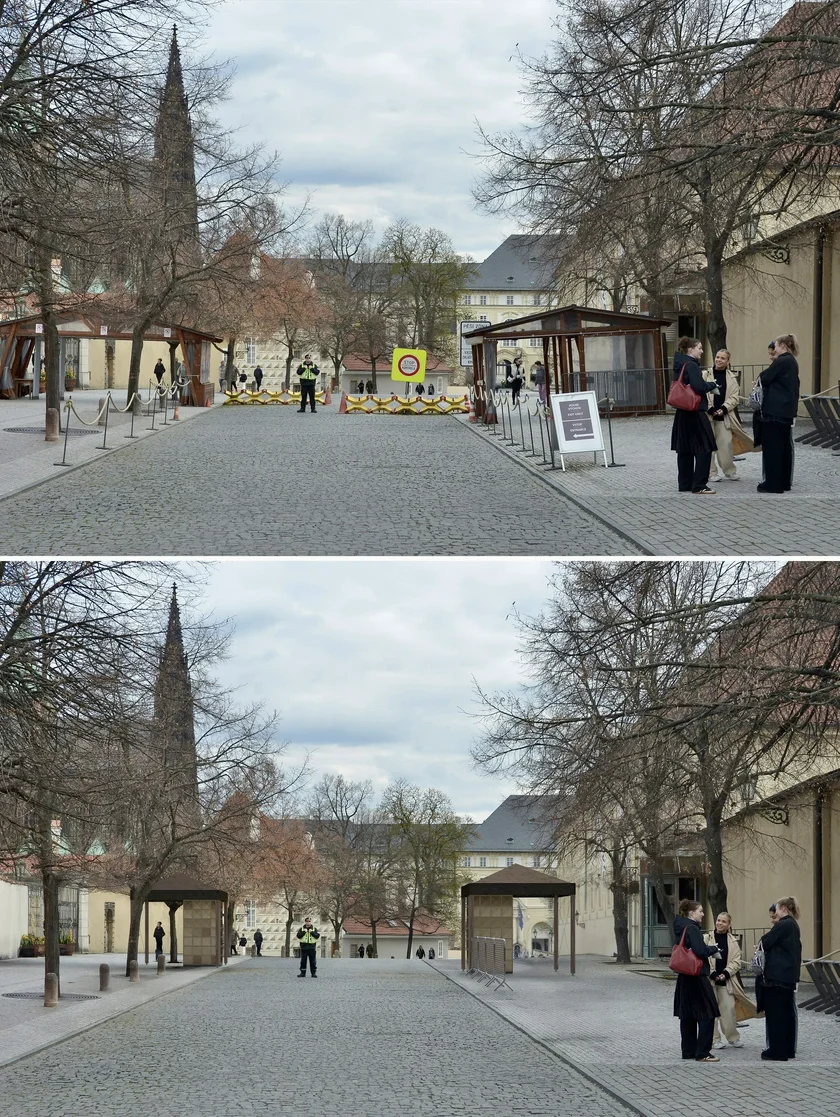
“Our goal was to introduce a design that acknowledges its temporary nature,” said Šimek. “It doesn’t compete with the centuries of architectural development at Prague Castle, nor does it behave like a festival installation. It’s modest, functional, and adaptable.”
The jury praised the project for its sensitive handling of the Castle’s visual landscape, describing it as both “playful” and “unobtrusive.” The ability to conceal technical components and the potential to expand or reduce the structure through add-on modules were cited as unique features.

Testing of the first prototype is scheduled for next year. Once finalized, the new checkpoints will gradually replace existing ones at all public entry points.
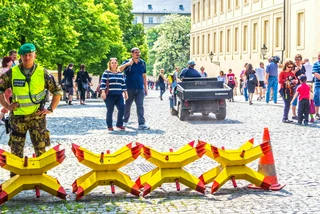
The implementation follows other ongoing upgrades around the Castle, including new retractable bollards on Prašný most (Powder Bridge), which are replacing the prominent yellow steel barriers currently in place. In August, work will shift to the Na Opyši entrance.