



 Reading time: 3 minutes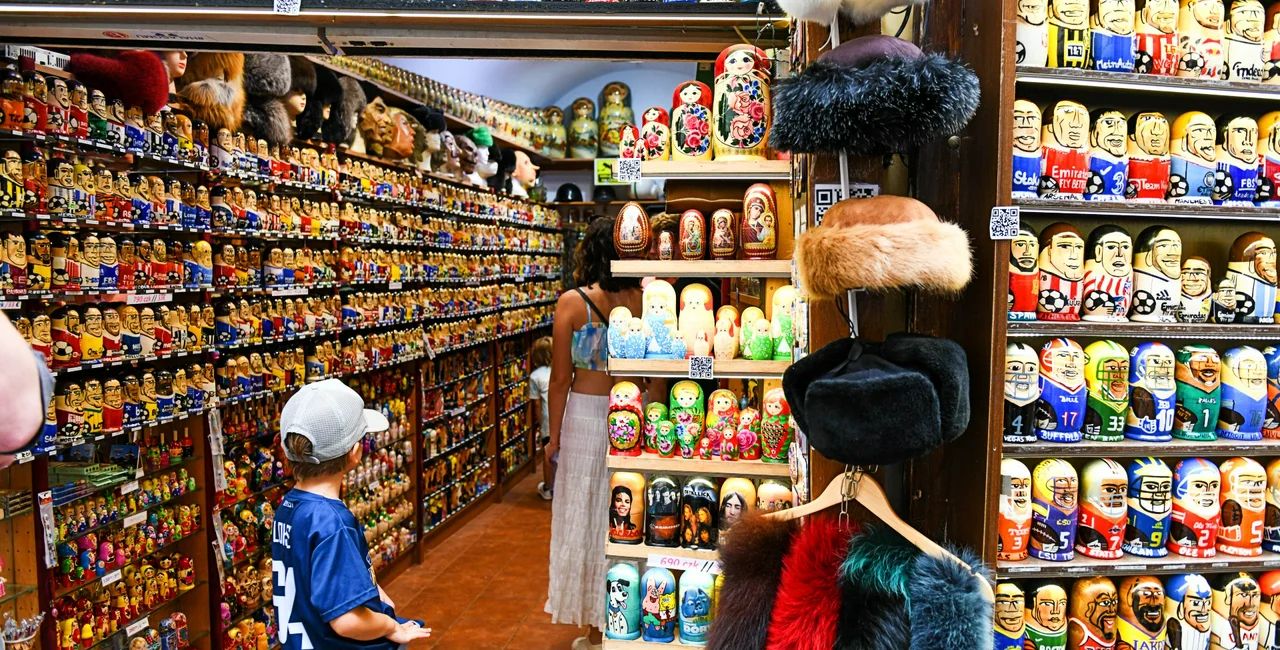

 Summary for: New Czech extremism law sparks protest – and could end Soviet souvenirs in Prague
A criminal law amendment taking effect on Jan. 1, 2026, explicitly names communism alongside Nazism, prompting protests, legal uncertainty, and fresh questions about symbols long visible in Prague’s tourist districts.
About 50 demonstrators gathered outside the Czech Justice Ministry on Wednesday to protest a change to the Criminal Code that critics say is vaguely worded and could criminalize legitimate left-wing political expression.

The rally, organized by the Young Social Democrats, takes place just days before the amendment comes into force. Under the revised law, anyone who establishes, supports, or promotes a Nazi, communist, or other movement that demonstrably aims to suppress human rights or promotes racial or class hatred may face up to five years in prison.
Protest organizers warned that the amendment does not clearly distinguish between totalitarian regimes and modern political ideas such as Marxism or democratic socialism. They described the wording as imprecise and potentially unconstitutional.
What changes on Jan. 1
Until now, Czech law targeted extremist movements without explicitly naming communism. The new wording places communism alongside Nazism, extending potential criminal liability to the public promotion of communist movements and symbols if they are deemed to support repression or hatred.
Legal experts say the amendment’s impact will depend heavily on how courts interpret the term “promotion.”
“The question is whether every reference to communism will be treated the same, or whether courts will focus only on violent and repressive forms such as Stalinism,” said attorney Ondřej Preuss, speaking to Czech outlet Aktualne.cz. “That line will be difficult to draw.”
From protest to street-level reality
According to extremism expert Miroslav Mareš of Masaryk University, the amendment is likely to be tested in higher courts if applied. European case law has previously ruled that not all forms of communism justify criminal intervention under human rights conventions.

The legal ambiguity is not limited to political debate. It also affects everyday items that remain widely visible in Prague’s tourist center.
In the streets of Old Town and near Charles Bridge, souvenir shops continue to sell hats, magnets, and faux “Red Army” ushankas featuring the hammer and sickle. While such items have long occupied a legal gray zone, the new law may push them into far riskier territory.
Preuss cautioned that selling or wearing such items would not automatically constitute a criminal offense, but noted that the context would matter.
“It will depend on whether it is interpreted as advertising an ideology or merely a curiosity,” he said, adding that the Constitutional Court may ultimately be asked to clarify the issue.
Some shop owners have already begun removing Soviet-themed merchandise from their displays ahead of expected inspections in 2026.

Legal experts clarify that the new amendment maintains existing protections for educational, scientific, or artistic purposes. This suggests that the Museum of Communism or historical Cold War tours, though often criticized as kitschy by locals, remain legally exempt.
Why are Soviet souvenirs in Prague anyway?
For many visitors, Soviet-era symbols appear to be part of Prague’s identity. For many locals, this is not the case.
The prevalence of matryoshka (nesting) dolls, hammer-and-sickle hats, and other Soviet imagery is largely the result of post-1989 tourism rather than Czech tradition.

When the Iron Curtain fell, Prague became one of the first “Eastern” cities easily accessible to Western tourists. Many visitors at the time viewed the former Eastern Bloc as a single cultural space and sought souvenirs from the “Communist East,” without distinguishing between Czech, Russian, or other histories.
Matryoshka dolls, which are Russian, not Czech, entered souvenir shops simply because tourists requested them. Over time, they evolved into mass-produced kitsch, often featuring painted images of political figures, pop stars, or footballers.



Most Czechs regard these items as misleading at best and offensive at worst. Soviet symbols are widely associated with the 1968 Warsaw Pact invasion of Czechoslovakia and the decades of Moscow-directed repression that followed, not with nostalgia or folk culture.
Since Russia’s 2022 invasion of Ukraine, Czechia, a strong supporter of Ukraine, increasingly views Soviet or pro-Russian symbols in city centers as offensive rather than harmless souvenirs, with police treating the pro-invasion “Z” symbol as evidence of criminal support for genocide.
The new Criminal Code amendment marks a shift from long-standing tolerance to potential criminal enforcement. While courts will determine how far the law reaches, its intent is clear: public promotion of communist ideology is now treated on the same legal footing as Nazism.