 Reading time: 6 minutes

 Summary for: 'I felt I had no choice but to pay': Prague ticket inspectors leave foreigners feeling intimidated
When Mateo* and his family visited Prague, they expected a routine journey through the city. Instead, a ticket inspection left them frightened and questioning whether they had been treated differently because they were foreign.
Mateo, who was visiting Prague with his partner and elderly parents-in-law, says his family was subjected to what he describes as “an intimidating ticket inspection.”

“The inspector was dressed in plain clothes and was not immediately identifiable as a transport official, which initially made me question whether he was genuinely authorized,” he told Expats.cz.
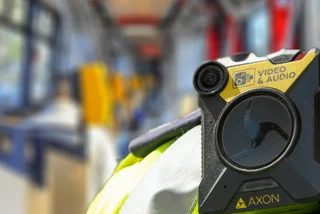
“He approached only our group, who were clearly foreign visitors, while no other passengers on the tram were inspected. This made us feel that we had been specifically singled out.”
The inspector told them that their tickets did not correspond to the individual passengers presenting them. Mateo says the group had bought their tickets together, but they became mixed up during the journey, resulting in the wrong tickets being presented.
A surcharge was imposed and, according to Mateo, the inspector kept hold of his identity document and made it clear that he would not get it back unless he paid immediately by bank card.
“Faced with that situation, I felt I had no realistic choice but to pay,” he said.
Mateo says his parents-in-law were frightened by the interaction. Afterwards, the family was unsure whether what had happened was official or whether they had somehow been scammed.

He complained to various official bodies after returning home, but they referred him back to Prague Public Transit Company (DPP), which investigated its own inspector and concluded that both DPP and the inspector had acted correctly.
Mateo says DPP “denied the conduct I describe and has not, in my view, provided any convincing independent evidence explaining how it reached that conclusion.”
The experience prompted him to look into whether others had experienced similar situations.
He says he was surprised by the number of reviews on TripAdvisor, Trustpilot, Reddit and other platforms describing inspectors behaving aggressively or intimidatingly, refusing to listen to explanations, insisting on immediate payment and leaving tourists with the feeling that they were treated differently from local passengers.
Those online accounts do not establish that Prague inspectors systematically target foreigners. But they do raise questions about how the city's strict ticket-enforcement system is experienced by visitors who may not understand the rules or speak Czech.
The ‘tourist hunters’ claim
Rules around carrying and validating public transport tickets in Czechia are strict. It is, perhaps, inevitable that a disproportionately high number of foreigners will fall foul of the system through a simple lack of understanding.

Yet complainants typically feel more upset by their treatment than by the fines themselves.
One passenger describes being “aggressively pressured” to pay a fine for having bought the wrong tickets “even though it was clearly an unintentional mistake,” concluding that inspectors “exploit tourists’ lack of knowledge and the complexity of the system.”
Another example was recounted by a group of travellers who, having bought tickets but failed to validate them, were immediately threatened with a call to the police upon entering the metro. The passengers claimed inspectors “treated us like criminals for making a completely honest mistake.”
A separate traveller recalls how, upon entering a tram, they immediately asked the nearest person where the contactless ticket machines were in order to buy tickets; the man turned out to be an inspector, who promptly demanded their ID and fined them.
Such stories are not mere fantasy. I have witnessed an argument between two English tourists and an inspector on a Prague tram which caused genuine panic when the inspector retained their passports and refused to hand them back until fines were paid.
But what are passengers actually required to do when confronted by an inspector?
What are my rights?
The Office for the Public Protection of Rights, Czechia’s Ombudsman, told Expats.cz that ticket inspectors have no legal right to confiscate passengers’ IDs and refuse to hand them back until they pay.
“Ticket inspectors cannot confiscate documents; they may only request proof of personal details by means of an identity card and copy these details from it,” the Ombudsman said.
Inspectors also have no legal right to insist that passengers pay a fine on the spot.
“Passengers do not have to pay their fine on the spot. However, they are obliged to provide their personal details. They will then be issued with a ‘Report on the Transport Inspection Carried Out’, which allows them to pay the fine at a later date.”
If passengers pay the fine within 15 calendar days of the date it was imposed, the fine is reduced from CZK 2,000 to CZK 1,500.
The Ombudsman warns that if passengers believe a fine is unjustified, they should not pay it on the spot, as this is regarded as acceptance of the fine.
“There is no right of appeal against a fine paid at the time of the inspection.”

Passengers who do not pay on the spot can contest a fine using a form on the DPP website, explaining why they disagree with the fine and providing evidence that it was imposed incorrectly.
A DPP spokesperson told Expats.cz that “72 percent of fines on Prague public transport are paid on the spot, and in these cases we are neither authorized nor required to collect or record passengers' personal data.”
DPP does not collect data on the proportion of fines levied on foreigners.
A spokesperson for ROPID, the Regional Organizer of Prague Integrated Transport, told Expats.cz that “inspectors do not target foreign nationals; they treat everyone equally, regardless of citizenship.”
There is, meanwhile, no rule requiring ticket inspectors to wear a uniform. The ROPID spokesperson said that in Central Bohemia, inspectors “work exclusively in plain clothes.” Inspectors prove their identity not through a uniform, but through the handheld badge which they display while carrying out inspections.
Making English skills a priority
While fines typically result from genuine mistakes, those of us who have witnessed disputes between tourists and inspectors can sympathize with the stress that foreigners feel.

The rules around ticket inspections are unlikely to change anytime soon. But with Prague attracting millions of tourists each year, and foreigners accounting for an ever greater share of the resident population, public transport authorities could make English-language skills more of a priority in recruitment.
A job advert for a ticket inspector position in Prague, live at the time of writing, listed “English language knowledge at a communicative level” as a requirement.
A DPP spokesperson told Expats.cz that “knowledge of English is a requirement when recruiting new employees.”
“At the same time, considering our long-serving inspectors who joined the company before this requirement was introduced, we provide in-person English language courses. In addition, we are currently finalizing an online English course specifically designed for the needs of ticket inspectors,” the spokesperson added.
Foreigners aren’t alone
Foreigners may think they’re unfairly treated, but the internet is awash with complaints from Czechs, too.
Earlier this year, a media storm was whipped up by the story of a student travelling from Prague to Central Bohemia on a bus, fined because he was caught out by an inspector while his Central Bohemia region pass was still validating in his transport app.

The “minute trap” for online tickets is well-known; Czechs allege that inspectors keep an eye out for travellers who buy tickets on their phone just before starting their journey and pounce before their tickets have loaded.
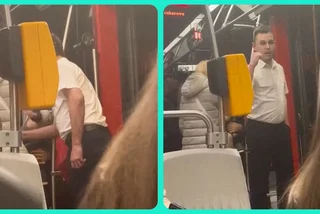
Another Czech reader reports witnessing a group of foreigners being openly targeted by two inspectors in Prague. While the group had “money in their hands and were looking for a place to pay,” the witness alleged that one of the inspectors whispered “they don’t understand Czech, that’s good,” before proceeding to fine them and “insult them in Czech.”
It should also be remembered that ticket inspectors themselves experience stress and potential danger from confrontational situations.
Prague public transport authorities noted 56 injuries caused by violence against inspectors from passengers in 2025, a quarter more than the previous year.
The rules are the rules. Still, many foreigners, as well as Czechs, feel there could be more understanding in how those rules are applied.
For Mateo, the issue is not simply the cost of a fine. It is the impression visitors take away from an encounter that can last only a few minutes.

“Prague is one of Europe's finest cities and the rest of my visit was excellent,” he said. “That is precisely why it is disappointing that so many visitors leave with a negative final impression because of their interaction with ticket inspectors.”
*Name withheld.