



 Reading time: 3 minutes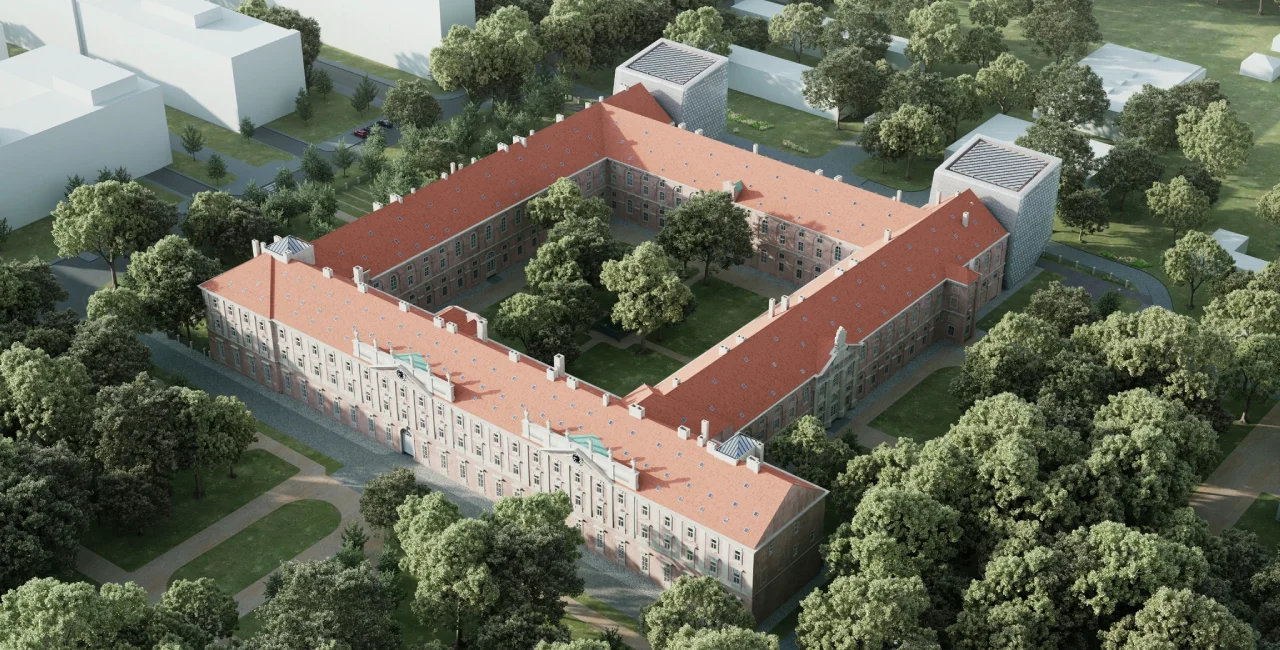

 Summary for: EXPLAINED: The legacy and future of Prague’s historic Invalidovna complex
Prague’s Invalidovna complex, an iconic 18th-century baroque landmark in Karlín, is entering a new chapter in its centuries-long history. Once home to disabled war veterans, the site has suffered decades of neglect, flood damage, and changing uses.
Now, the Czech National Heritage Institute (NPÚ) is preparing a CZK 2.15 billion restoration and expansion project, the largest in its history, which aims to preserve the building’s historic essence while adapting it for modern cultural and public use.
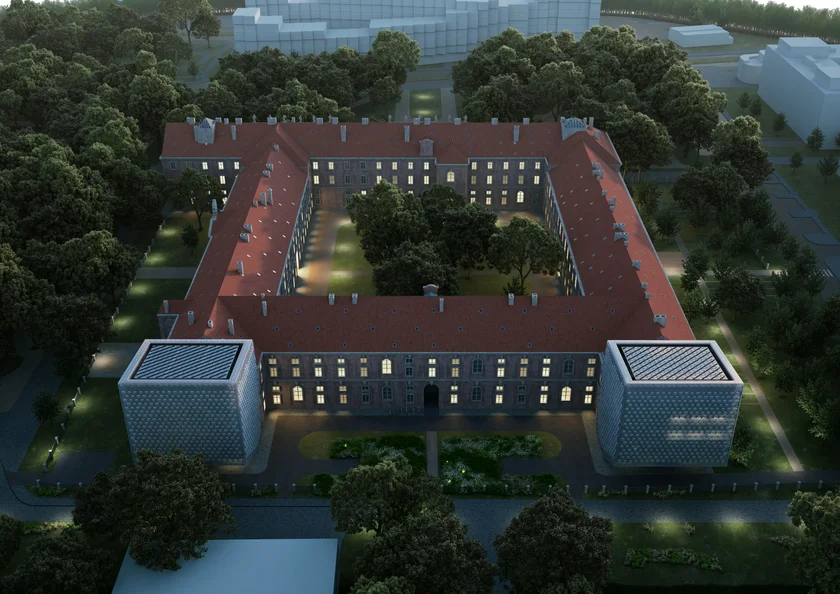
Construction is expected to take three years, with the complex reopening around 2029–2030. The project will include reconstruction of the historical wings, revitalization of the surrounding gardens, and the addition of two new modern buildings designed to support educational, cultural, and administrative functions.
History rooted in care and architecture
Invalidovna was conceived in the 1730s by the renowned architect Kilián Ignác Dientzenhofer, inspired by Paris’s Hôtel des Invalides, to house up to 4,000 war veterans and their families. The foundation stone was laid in 1732 in the presence of Emperor Charles VI, though only one-ninth of the planned complex was ever completed.
It functioned as a residence for invalid soldiers until 1935 and later accommodated the Military Central Archive. The surrounding site has long been connected to Prague’s charitable and military history, hosting hospitals, cemeteries, and religious orders dating back to the 13th century.
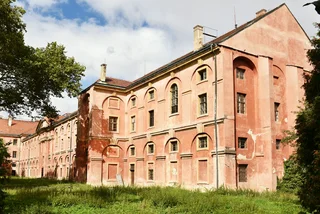
Over the centuries, the complex has witnessed floods, social change, and wartime disruption, yet its baroque architecture and historical significance have endured.

Following severe flood damage in 2002, the building fell into disrepair. Plans to sell it in a public auction were met with strong public opposition, and in 2018, ownership was transferred to the NPÚ. That same year, the complex reopened to the public for a brief period, allowing visitors to experience its historical spaces.
Since then, it has occasionally served as a filming location for major international film productions, including Miloš Forman’s Amadeus, Guillermo del Toro's Hellboy, and most recently Robert Eggers' Nosferatu, while also drawing attention for its architectural and cultural heritage.
In 2017, Invalidovna was designated a national cultural monument, cementing its importance in Czech heritage and securing its protection for future generations. The surrounding park, now named Sudkovy sady after photographer Josef Sudek who once lived and worked in the building, adds to the site’s public appeal and historic context.
A complete overhaul for the 21st century
The NPÚ’s plans for Invalidovna balance preservation with modernization. The historical sections will house permanent and temporary exhibitions, two visitor centers, and multifunctional spaces, including a 170-seat auditorium and gallery. Facilities for children’s groups, a café, and NPÚ research laboratories will also be integrated.
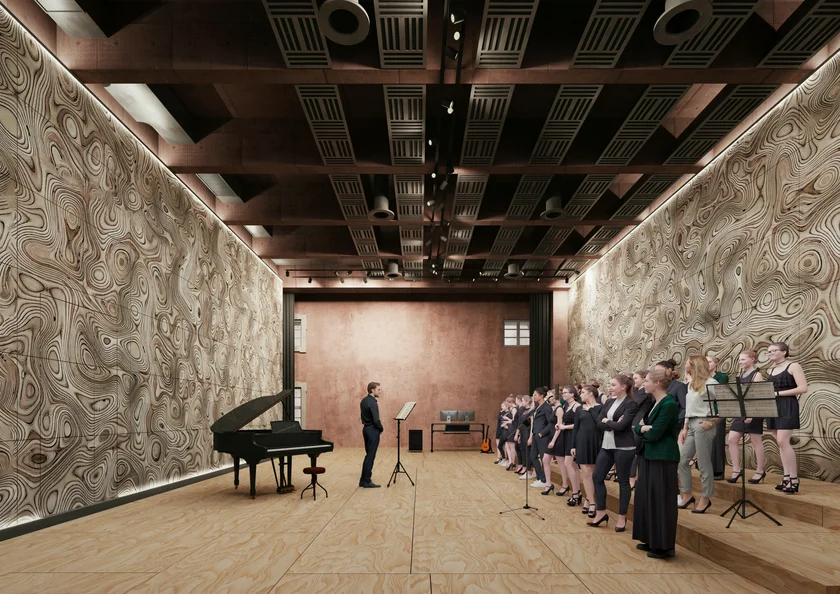
Meanwhile, new construction on the southern side of the complex will host the Prague Philharmonic Choir, providing rehearsal and concert spaces with state-of-the-art acoustics.

These additions are designed to concentrate technical infrastructure outside the historical core, protecting the building’s authenticity while supporting its modern functions. An underground parking facility for 50 vehicles is also planned, ensuring accessibility for staff and visitors.
Once completed, Invalidovna will serve as a cultural and social hub for Prague’s Karlín district, linking historical value with everyday public life. Residents and tourists alike will be able to explore its gardens and courtyards, attend exhibitions and performances, and participate in educational programs.
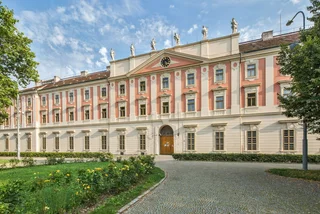
NPÚ Director General Naděžda Goryczková emphasized that the restoration is “an extraordinary event” in Czech heritage management, highlighting its potential to integrate history, culture, and community engagement.
By drawing together architecture, history, and contemporary cultural use, the project represents a model for preserving historical landmarks while giving them new life. The Invalidovna’s transformation promises to secure its place in Prague’s urban and cultural landscape for decades to come.
With construction set to begin in 2026, the Invalidovna renovation will be among the largest heritage projects in Czechia in recent years. NPÚ expects it to open around 2030, offering a renewed baroque landmark that honors the city’s past while meeting the needs of modern Prague.