


 Reading time: 3 minutes

 Summary for: Dismissed and stereotyped: Foreign patients 'have to fight' for care in Czechia
Czech healthcare professionals are struggling to serve patients from different cultural and linguistic backgrounds, according to a new study by the National Institute SYRI.
The research synthesizes multiple studies conducted by the Institute of Public Health and Medical Law (1st Faculty of Medicine, Charles University) focusing on the experiences of Ukrainian refugees.
While the SYRI study focused specifically on Ukrainians, these challenges resonate across the broader international community.
Refugees face discrimination
Findings show that Ukrainian patients are two to three times more likely than Czech patients to struggle with describing symptoms, asking questions, or remembering medical instructions.
The friction runs deeper than language. “Situations have been described where refugees are spoken of in a derogatory manner in their presence,” the study notes.
This environment leads many Ukrainian patients to feel they “have to fight” for care the moment they enter a hospital. Those with the greatest communication difficulties are the least likely to register with a GP, leading to delayed treatments and deepening health inequalities.
A European problem, but worse in Czechia
While language barriers affect healthcare across Europe, the consequences in Czechia have proven tragic.

In March 2024, a pregnant woman at Bulovka University Hospital was mistaken for another patient and underwent an unwanted abortion. Despite multiple checkpoints involving nurses, doctors, and an anesthesiologist, the error was not caught.
Jan Přáda, vice-chairman of the Czech Medical Chamber, told local media that the language barrier was likely a key factor: “A Czech-speaking patient would probably actively resist a procedure she does not understand.” The Ministry of Health labeled the incident an “inexcusable human error.”
While countries like the UK, Sweden, and Germany have formal interpreter policies or guidelines, in Czechia, patients are often left to rely heavily on NGO volunteers, informal family interpreters, or translation apps, practices that are increasingly viewed as inadequate and dangerous in clinical settings.
Cultural clashes and stereotyping
The SYRI study found that "protocol clashes" also create friction. Ukrainian patients are often accustomed to direct payments for service, easier access to antibiotics, or a preference for injectable treatments, which can conflict with Czech medical standards
Medical staff sometimes view Ukrainian refugees as “overly demanding” or system “abusers,” with reports of derogatory remarks made in patients’ presence. Such attitudes compound misunderstandings and discourage patients from seeking care.


Systemic pressure adds to these cultural frictions. Czechia currently faces a widespread shortage of doctors and nurses, with some regions facing acute gaps. This leads to a staff that is rushed, overworked, and burned out, creating a climate where patient communication and empathy suffer.
Despite these pressures, discrimination is strictly prohibited by the Czech Medical Chamber’s Code of Ethics.
Formal avenues for reporting complaints (hospital management, medical chamber, or Ombudsman) remain largely underutilized by foreigners who are unfamiliar with the specific hierarchy of the Czech reporting system.
A growing crisis for all foreigners
The result of ongoing microaggressions in the Czech healthcare system is that foreigners represent 65 percent of the half a million people in Czechia who are not registered with a general practitioner, according to Czech Health Ministry data.
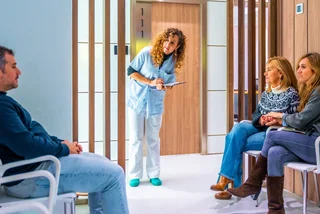
This means many rely on emergency rooms, specialists, or ad hoc care rather than regular primary care.

In online forums and expat groups, foreign residents from various backgrounds share persistent stories of feeling dismissed when explaining symptoms or spending years searching for respectful, English-speaking caregivers in Czechia.
Experts say intercultural mediators could help. “Where they already exist, they improve communication and trust between patients and healthcare professionals and prevent conflict situations,” says SYRI researcher Elena Tulupova.
With over 1.1 million foreign residents now living in Czechia, the barriers identified by SYRI are likely far more widespread and acute across all immigrant communities than is currently documented.