



 Reading time: 2 minutes

 Summary for: Czechia remains one of Europe’s most budget-friendly dining destinations
Despite recent price surges, Czechia continues to rank among Europe’s most affordable countries for a mid-range three-course dinner, according to a new study by FerryGoGo. The study found that a meal for two in Czech restaurants averages £35.73 (CZK 1,000), placing the country alongside Serbia, Bulgaria, and Romania in the low-cost bracket.
The findings offer a snapshot of living costs across Europe, highlighting destinations where visitors and residents alike can enjoy dining without high expenses. With restaurant prices serving as a rough indicator of wider cost-of-living trends, the results underscore the relative affordability of Czechia compared with Western and Northern Europe.
Dining prices in Europe: a clear divide
The study surveyed average prices for a three-course meal for two in mid-range restaurants, excluding drinks, across European countries and key cities. North-West Europe remains the priciest region: Switzerland tops the list at CZK 2,605, followed by Denmark (CZK 2,275), Luxembourg (CZK 2,185), and Norway (CZK 2,180).
Cities such as Zurich, Geneva, Oslo, and Copenhagen push those averages even higher, with meals often exceeding CZK 3,360.
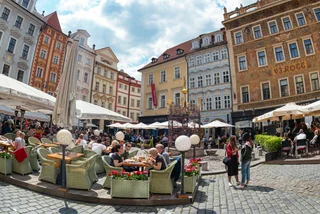
In contrast, Southern and Central Europe offer more accessible prices. Portugal, Spain, and France strike a balance between tourist appeal and affordability, with dinners for two averaging CZK 1,260–1,680.
Central and South-Eastern European countries, including Czechia, Romania, and Serbia, provide meals for roughly CZK 1,065–1,150, offering “standout value” for those looking to enjoy restaurant dining without overspending.
Within Czechia, Prague’s dining scene largely mirrors the national average at an average cost of CZK 1,205 for a dinner for two, making the capital competitive with other European cities in its price tier.

Comparable city-level value can be found in Krakow and Gdańsk in Poland (CZK 1,315), Skopje in North Macedonia (CZK 810), and Sarajevo in Bosnia & Herzegovina (CZK 925). While these cities are popular with tourists, the survey notes that local pricing remains accessible for regular meals, not just occasional splurges.
Experts say restaurant pricing provides insight into broader cost patterns. “Dining out is often a bellwether for living costs,” FerryGoGo researcher JW van Tilburg explained. “If meals are cheap, other essentials like groceries, public transport, and daily services tend to be more affordable as well.”

European dining trends
The study reinforces a growing divide in Europe between high-cost Northern and Western countries and more budget-conscious Central and South-Eastern regions.
Southern Europe—Portugal, Spain, Greece—provides moderate prices while maintaining tourist appeal, making it a preferred choice for holiday dining. Conversely, urban hubs in the North remain accessible primarily to those prepared for higher costs.
The findings also highlight the resilience of Czechia’s affordability despite inflationary pressures seen elsewhere in Europe. For both travelers and residents, these metrics offer guidance for budgeting meals, vacations, and everyday expenses.
As restaurant prices evolve, tracking mid-range meal costs can help households and visitors make informed decisions. Prague’s dining sector remains competitive compared to elsewhere in Europe, but current trends could influence future affordability. The full results of the study can be found here.