Czech TV and radio fees could end by summer 2027, Okamura says

The coalition says it has agreed on a replacement funding model but is withholding details, as opposition parties call for the bill to be withdrawn.

Expats.cz Staff

Written by Expats.cz Staff Published on 23.11.2026 08:25:00 (updated on 23.11.2026) Reading time: 2 minutes
Television and radio license fees should be abolished by summer 2027 at the latest, Chamber of Deputies Speaker Tomio Okamura said Sunday, despite continuing uncertainty over how public broadcasters would be funded afterward.

Speaking on CNN Prima News, the SPD leader said the governing coalition had agreed on the broad outline of a replacement mechanism. However, its details will not yet be published.

The bill currently before parliament would replace license-fee funding for Czech Television and Czech Radio with allocations from the state budget. Okamura’s comments indicated that the proposed mechanism could change.

Coalition keeps replacement model under wraps

Okamura said the bill could receive its second reading in January, followed by a final vote in the lower house.

He expects the Senate to reject it and President Petr Pavel to veto it, requiring further parliamentary votes. Accounting for those steps, he suggested the legislative process could run into April, followed by a transition period for the broadcasters.

“In my opinion, we will certainly abolish the fees by summer at the latest,” he said.

Filip Turek, honorary president of the Motorists party, said technical work on the replacement funding mechanism was underway. Keeping the details private for now was the coalition council’s position, he added.

Former Culture Minister Martin Baxa of the opposition ODS argued that earlier coalition references to Nordic funding models suggested a move toward a dedicated media tax rather than direct state-budget financing.

Okamura rejected that interpretation, saying the coalition council had never discussed such a tax.

“It will be a mechanism that should not increase taxes for Czech citizens,” he said, without explaining how it would operate.

Opposition urges government to withdraw the bill

Baxa and STAN parliamentary group leader Michaela Šebelová called on the government to withdraw the current proposal.

Šebelová described the approach as chaotic and lacking a coherent plan, arguing that coalition parties had not resolved how to proceed.

The bill passed its first reading after a contentious overnight parliamentary session in late October. Opposition attempts to reject it were defeated by the governing majority.

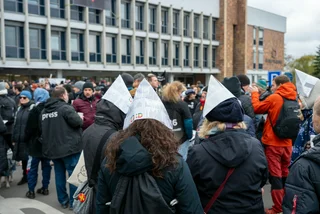
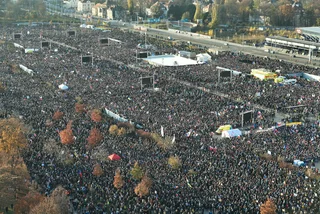
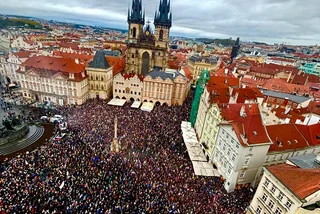
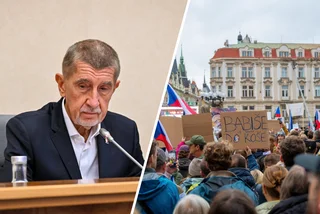
The proposal subsequently prompted a strike by Czech Television and Czech Radio employees and demonstrations around the country, culminating in the Nov. 15 rally on Prague’s Letná plain. Opponents fear the changes would weaken the broadcasters’ independence; the government has rejected those concerns.

Alongside abolishing fees, the current bill would reduce funding. Czech Television would receive CZK 5.7 billion from the state budget, roughly CZK 1 billion less than its expected license-fee revenue this year.

Czech Radio expects CZK 2.065 billion from fees this year; its proposed state allocation would be approximately CZK 400 million lower.

The fees have not yet been abolished. Okamura’s summer deadline remains the coalition politician’s projected timetable for legislation still before parliament.

Did you like this article?

Czechia’s latest news

Read all the headlines
Want to see more from us? Select Expats.cz as a preferred source on Google.