



 Reading time: 5 minutes

 Summary for: Freelancers in Czechia could save up to CZK 10,000 – but who qualifies?
Freelancers and self-employed individuals (OSVČ) across the Czech Republic could see an unexpected financial boost starting this July.
A newly approved amendment has rolled back a planned increase in monthly social insurance contributions, retroactively saving local entrepreneurs nearly CZK 10,000.

The change specifically cancels this year's planned spike in the monthly assessment base, which was set to rise to 40 percent of the average gross wage. Instead, the rate will return to last year’s 35 percent, retroactive to January 2026.
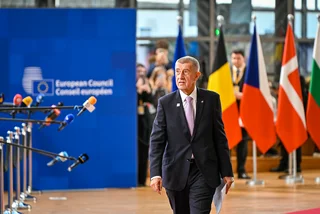
"You will receive the overpayments for the first six months of this year back either when settling your reports next year, or you can ask the social security administration for a refund now," Finance Minister Alena Schillerová announced via the X network.
For freelancers outside the flat-rate system, the change translates to a monthly saving of CZK 715, or CZK 8,580 for the year. Those in the first flat-rate band will save CZK 822 per month, CZK 9,864 annually, and can deduct the overpayment directly from their July payment.
Not all freelancers qualify for a refund. To clarify exactly what changes and who is entitled to a refund, we spoke to Rustam Yarkulov founder of Pexpats, a certified Prague-based tax agency.
What actually changes?
The change applies mainly to freelancers who are paying the minimum deposit.
"Not all freelancers pay the minimum deposit. Deposits are usually set by the Social Security Administration (ČSSZ) based on the previous year’s declared income and the period during which the trade licence was active," Yarkulov says.


For example, a freelancer with a gross annual income of CZK 1,200,000 and a full year of activity may have a final annual social insurance liability of approximately CZK 77,088.
When calculating monthly advances for the following year, ČSSZ takes into account prior income, total annual liability, and months of activity. This results in a monthly deposit of roughly CZK 6,424 (77,088 ÷ 12), which is already above the minimum threshold of CZK 5,720. For such freelancers, the reduction in the minimum deposit has no practical impact.
By contrast, he says, freelancers with low income or limited activity may be assigned the statutory minimum deposit. These are the individuals most likely to benefit from the reduction and, in some cases, qualify for a refund of overpayments.
"Eligibility depends on multiple factors, including income level, activity period, and calculation method, and is not uniform across all freelancers," says Yarkulov.
As a result, income thresholds should be treated as indicative; at higher levels, such as approximately CZK 1,000,000–1,100,000 in gross annual freelance income, contributions are typically already above the minimum.
Refunds and overpayments
Yarkulov notes that he has seen confusion arise around refunds, with some freelancers assuming they must actively apply for up to CZK 10,000 in overpayments.

In practice, freelancers may either request a refund or leave the overpayment to be carried forward into the annual social insurance settlement.
In the latter case, nothing is lost: all payments are accounted for in the final calculation and either reduce the final liability or are refunded after reconciliation.
Who benefits?
The social insurance rate itself remains unchanged at 29.2 percent of the assessment base. What has changed is the floor used to calculate the minimum monthly deposit.
Previously set at 40 percent of the average gross wage, it has been reduced to 35 percent, retroactive to January 2026. In practical terms, that shifts the minimum monthly deposit from CZK 5,720 to approximately CZK 5,005.
The reduction is directly relevant for two groups, according to Yarkulov:

Freelancers paying the statutory minimum deposit will see their monthly payments fall and are entitled to a refund for the overpayment made between January and June 2026.
Freelancers enrolled in the first flat-rate tax band will also benefit. Their monthly payment drops from CZK 9,984 to CZK 9,162, a savings of CZK 822 per month, or CZK 9,864 for the full year. They can deduct the overpayment directly from their July payment as advised by the government.
Who doesn't benefit?
Freelancers whose deposits are already calculated individually by ČSSZ based on prior-year income are generally unaffected.
If your income in the previous year was high enough, ČSSZ will have calculated a deposit based on your actual earnings, and that figure is already above the new minimum.
"As a rough guide, freelancers using the standard 60/40 expense deduction method and earning around CZK 650,000 to CZK 700,000 or more annually are likely already in this position. For them, the change to the minimum deposit has no practical effect on their monthly payments."
Deposit vs. the final calculation
The monthly payments freelancers make throughout the year are advances, not the final figure, says Yarkulov.

"Once a year, after filing, ČSSZ calculates what you actually owe based on your real income for that year. The deposits are reconciled against that figure, and you either pay the difference or receive a credit."
This means the minimum deposit change affects your cash flow during the year, but your total annual social insurance liability is determined by your actual income, not by what the minimum deposit happened to be.
Should you request a refund?
If you are paying the minimum deposit, you are generally entitled to claim back overpayments made between January and June, or they will be settled automatically in the annual reconciliation.
If your monthly deposit is already above CZK 5,005 and was calculated by ČSSZ based on your previous year's income, you are not entitled to a refund for the difference. Your deposit was set correctly under the rules that applied at the time, and your annual settlement will reflect your actual liability regardless.
If you are unsure which category applies to you, Yarkulov advises checking your current monthly deposit amount. "If it is above CZK 5,005 and was assigned by ČSSZ rather than set by you, speak to your accountant or contact ČSSZ directly before submitting any refund request."

Not all good news
The government says its primary objective is to halt the rapid growth of mandatory contributions and support small businesses, allowing people to reinvest in the local economy.

But economists have warned that the measure, which reverses a key pillar of the previous Fiala government's 2023 consolidation package, will drain roughly CZK 3.5 billion annually from the state pension fund.
Self-employed individuals paying lower contributions now face state pensions around CZK 1,600 lower per month in retirement.