


 Reading time: 7 minutes
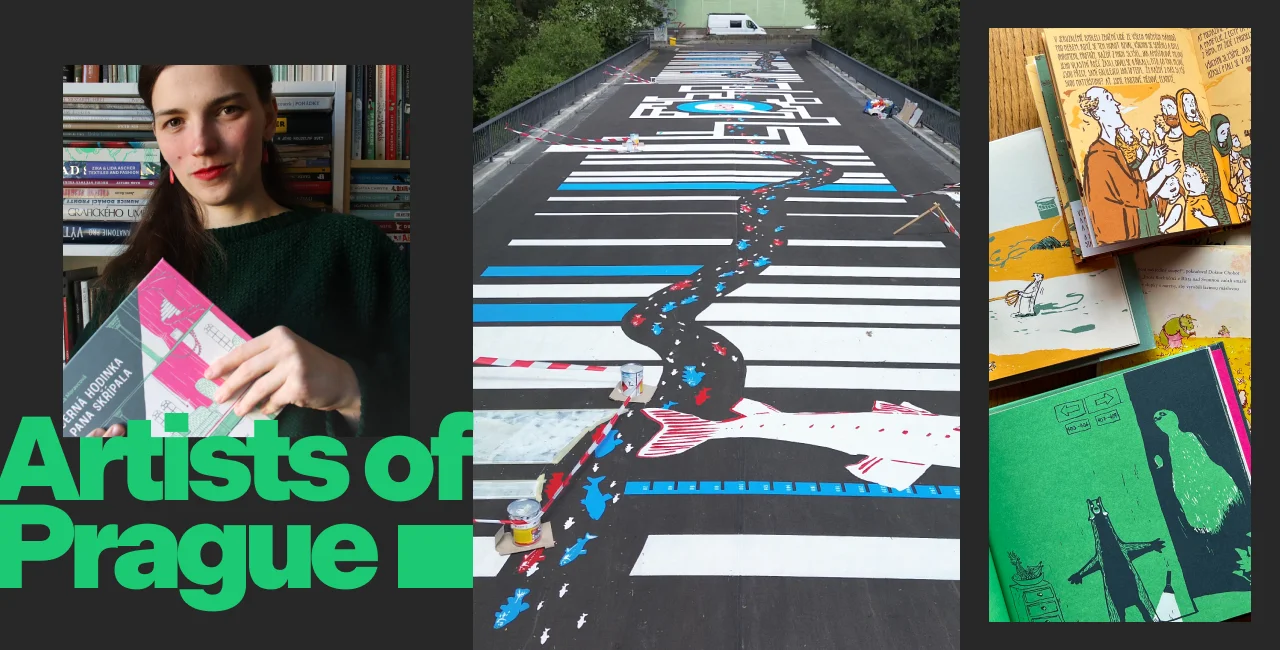

 Summary for: From children’s books to city murals, Alžběta’s craft ranges from the diminutive to the monumental
In our new ‘Artists of Prague’ series, Expats.cz sits down with the creative souls of Prague to understand – from painters and illustrators to musicians and writers – what it takes to make it as an artist in Prague and bring one's aesthetic dreams to life.
Originally from Northern Moravia, Alžběta attended a grammar school before studying illustration and graphics at the Ladislav Sutnar Faculty of Design and Art in Pilsen.
PARTNER ARTICLE

“It’s a bit unusual, I guess. Most people in art universities come from specialized art high schools,” the now Prague-based 31-year-old tells us as we chat in Café Husovka. “I felt a bit like an imposter for most of my time there,” she confides.
But this didn’t keep her from making the most of her time at this highly selective university made up of a series of small, specialized studios that only accept a few people every year.
Carving, etching, learning
Semester after semester, she honed her skills in a wide range of printmaking techniques, from woodcuts and linocuts to etching, screenprinting and lithography, her personal favorite.
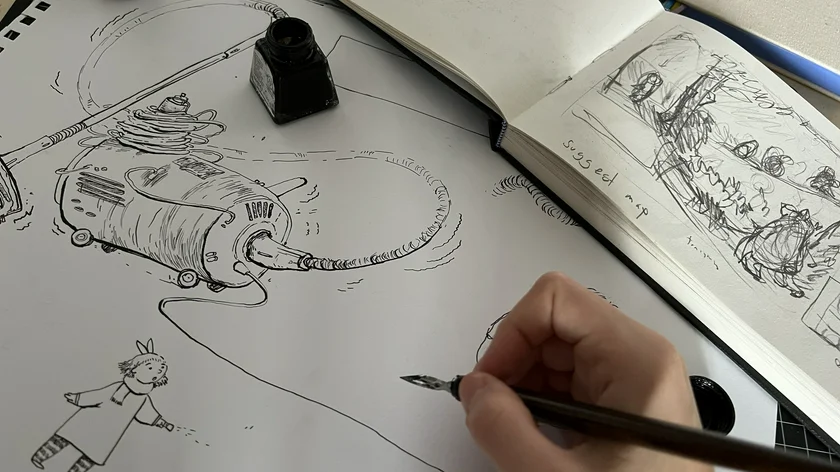
“These techniques are often very laborious and time consuming, requiring precision and patience with the processes. I think I found out that I don't possess much of that to be honest. I always loved the liveliness and immediacy of drawing,” she says, describing the joy of applying the drawing to stories and making illustrations.
“At first, they were mostly for adults, very moody, black-and-white illustrations. I was young and thought I was one of those misunderstood artists, a bit like a less talented Czech Van Gogh,” she laughs as she remembers her early works.

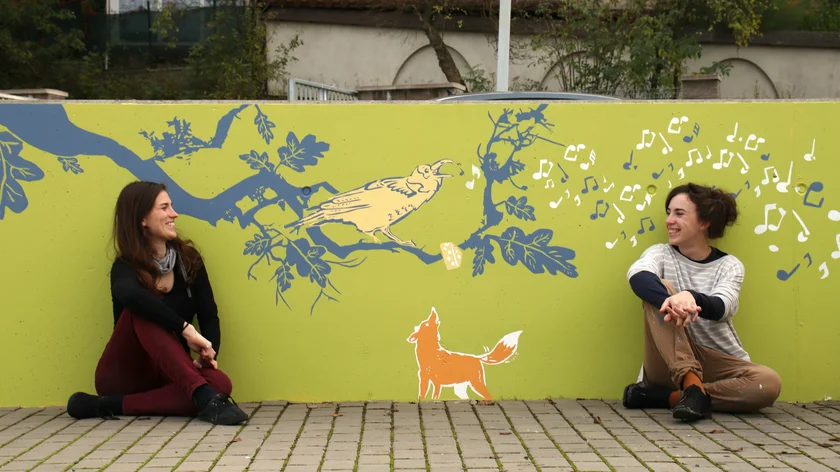
But chance would push her in another direction. Through her close university friend Markéta, she soon got her first opportunity to create a large mural for a kindergarten in the town of Zdiby, a Prague suburb town close to where Markéta was living at the time.
While they did create large format drawings at university, “I never really thought of doing murals all that much before,” Alžběta says.
But after the success and experience of the first one, she and Markéta got an inkling for the craft and a taste for the challenges of creating such large and public works of art.
Urban art
Over the next several years, they would go on to create several murals across the country, either by answering open calls launched by local municipalities or benefiting from word of mouth that spread from their past work.
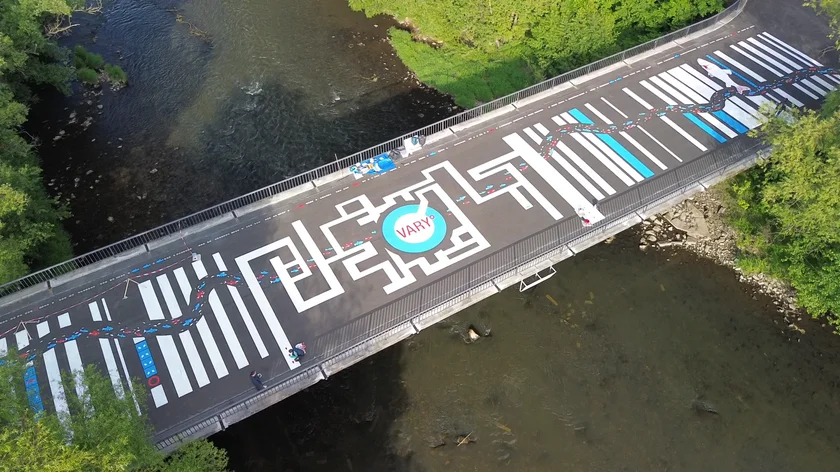
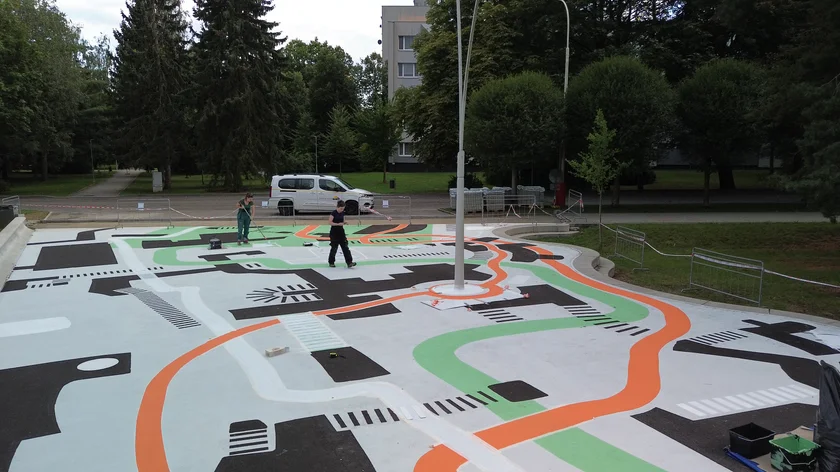
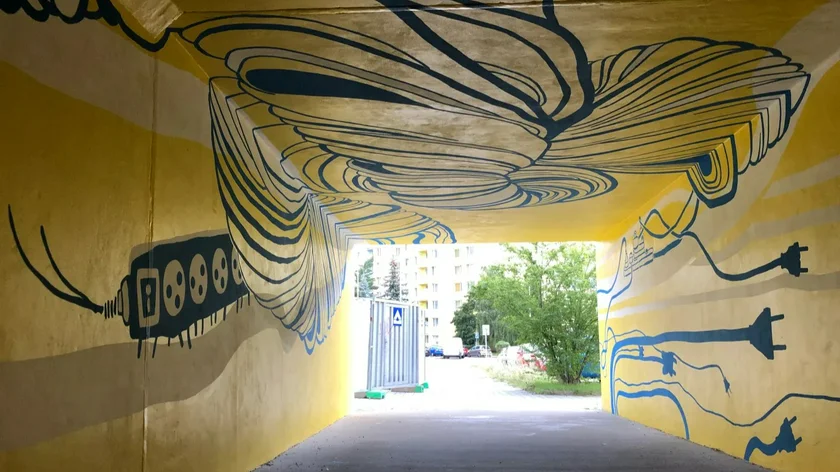
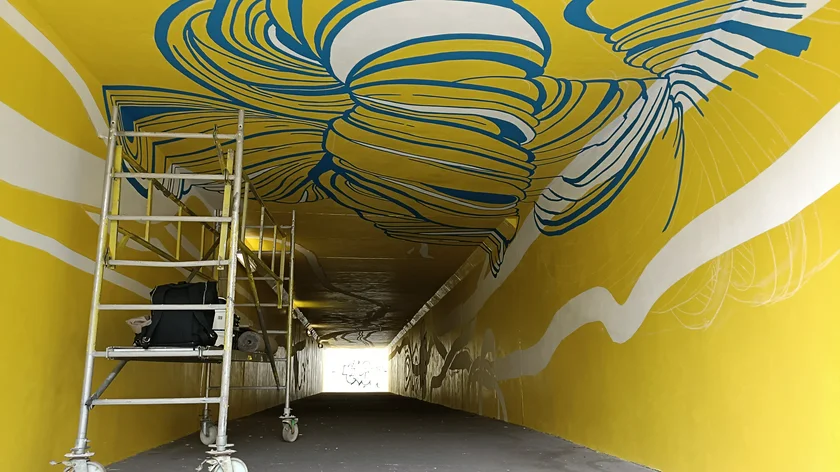
These include an underpass close to the metro Rajská Zahrada in Prague, a mural painted on the ground of a bridge in Karlovy Vary (Drahovický most), and the latest one in front of the Zborovská school in Tábor earlier this year.
“We usually want the public murals to be site-specific. We always do research about the area where the mural is to be and come up with a basic concept. And from that we start working on the actual design,” she explains.

In Rajská zahrada, for instance, they based the design on electricity and electrical wiring, because of the former nearby factory. The idea was that electrical wiring connects the two parts of the city on either side of the underpass, similarly to the passageway.
For the last mural they worked on, they originally made a stylized reimagining of the Tábor Hussite underground cellar system. The final product ended up being a bit more unspecific and geometrical, based on the wishes of the schoolteachers, she tells us, but it started once again with a focus on a local aspect of the place.
“Creating art in public spaces is a bit tricky,” Alžběta says. “On the one hand, it’s satisfying that people just naturally see it without having to go to a gallery or buy a ticket, it’s part of the natural life and landscape of the city.”
But on the other hand, dealing with the reaction and feedback from the public can bring an added source of difficulty.
“I would say that a third of the feedback is complementary, a third is just confused about what’s happening. The last third can be critical, not overly so, but some people can tend to be quite conservative about changes to places where they live, work or pass through every day.”
With time, however, Alžběta learned how to deal with the public’s scrutiny, which also tends to improve over time. “Whether we’re talking about murals, statues or other forms of public art, many people later get protective of the same thing they didn’t like in the first place,” she muses.


Why pay attention in math class
The reason why creating murals is a bit of a niche craft is linked to all the extra skills needed to turn an A3-sized design into a massive work of art of hundreds of square meters exposed to public scrutiny and the elements of nature.
“Making a nice design is one thing,” Alžběta explains. “It’s a whole other business to scale it up, determine how much material we’ll need, invoice it fairly and accurately, work with hundreds of kilograms of industrial paint on surfaces that react differently to heat or rain.”
Although initially a source of anxiety, her background as a grammar school student – including basic knowledge in math and physics – eventually turned out handy for her art.
“We now usually work on murals on the ground, not on walls. Unless you have a drone, you can’t really get a bird’s view of the work that needs to be done, so you have to calculate every distance and size at home, basically using accurately placed points to plan, measure and upscale the original design,” she says.
Physics classes, too, turned out useful, for example to determine how to properly mix kilograms of paint with liters of chemical solutions needed in some murals.

Exposed to tight deadlines, rigorous contracts and painstaking invoicing processes while having to take time off from their day-jobs to get the work done, “we sometimes wonder if the stress is worth it,” Alžběta admits, saying her friend Markéta and herself are quite happy with doing about one mural a year considering the workload involved.
“But when the mural is all done and finished and you’re standing in front or on top of it, that’s a really nice feeling,” she admits with a smile.
The kids are alright
Alžběta rarely sits idle. When she’s not doing murals or at her day-job working part-time in an administrative position at Charles University, she dedicates her time and energy to her one and true passion: making children’s books.
“This is what I enjoy the most, writing and illustrating books for children,” she says. “I spend lots of time working on them and then I offer them to publishing houses. They usually say no, but they have been known to say yes on some occasions,” she says playfully.
Four of Alžběta’s books have already been published by Czech publishing houses, all of which she illustrated and the last of which she also wrote – a first for her. One of her trademarks is to avoid the pitfalls of writing childish books, she tells us.
“Honestly, I mostly write the books for myself, and the texts tend to appeal to both adults and kids alike. I don’t like 'childish' stuff; I think it’s important not to talk down to children,” she explains.

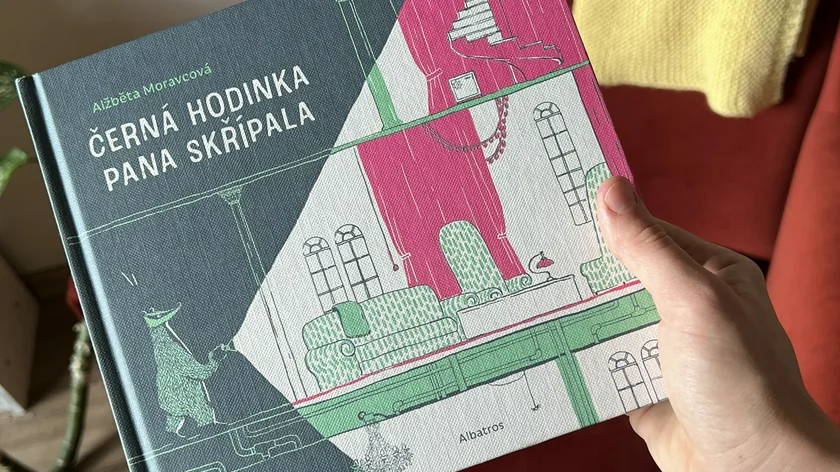
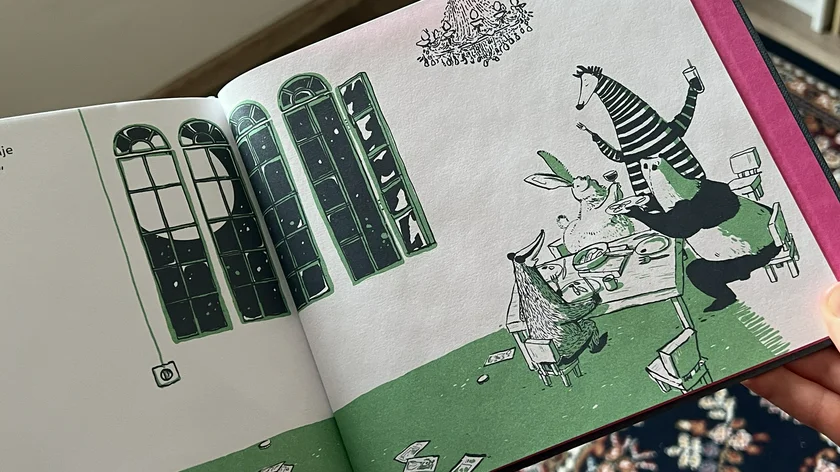
“I sometimes use words they might not know, but that’s ok. Often, I think, only adults need explanations,” she argues.
An insight she’s also taken away from her mural work, especially the one in Karlovy Vary that featured some interactive elements.
“Children just came and naturally started playing with the shapes on the ground, jumping, etc.,” she says. “The adults came to us and asked for explanations on ‘how to play’ or how it was ‘supposed to work’ - children often don’t need that.”
Silencing the imposter
Alžběta isn’t big on self-promotion, Instagram posting or networking, and prefers to spend what time she has to work on her own on her various projects. She always, for instance, has at least three or four books going at the same time.
“Maybe I’m stupid, but things turned out alright for me so far without doing these things,” she reflects.

Telling of her experience at an award ceremony where one of her books was nominated, she admits dreading the event where she would have to hobnob with other peers whom she considered more accomplished or successful than her.
“I ended up slinking off from the ceremony in secret and just went to the pub with my boyfriend instead,” she laughs.
With hindsight, however, she knows that this imposter’s syndrome is largely self-inflicted and “in [her] mind”.
“When all is said and done, I’m quite confident with my style and my ability to draw,” she says, and illustrators are in general “nice and humble people, who do not often judge other people's work harshly.”
“Maybe at the next event, I’ll stay a bit longer. At least if I win,” she smiles.