



 Reading time: 2 minutes

 Summary for: AI race must not escape human control, Czech president tells UN
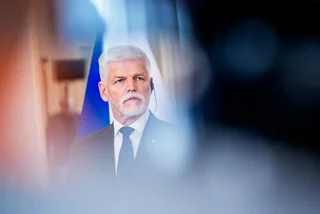
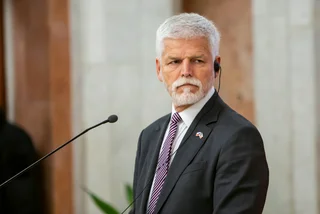
Czech President Petr Pavel has called for firm international rules governing artificial intelligence, warning world leaders that humanity must retain control over rapidly developing technology.
Addressing the UN General Assembly in New York on Wednesday, Pavel said AI could deliver enormous benefits but also cause serious harm if innovation advances without adequate oversight, safeguards and accountability.

His speech placed AI alongside climate change as a global challenge that individual governments and technology companies cannot manage alone.
‘The logic of the race’
“The future of artificial intelligence must not be determined by an unchecked race for technological dominance,” Pavel said. He warned that pressure to be first could push safety and responsibility into the background.
“If AI is to serve humanity, it must develop within a framework of international rules,” he told the assembly. “No country, and no company, can meet this challenge alone.”
Pavel rejected the idea that governments must choose between regulating AI and encouraging innovation. Instead, he said the real choice was between innovation governed by rules and development dictated by competitive pressure.
His remarks came one day after U.S. President Donald Trump used his own UN address to emphasize the technology’s economic potential. Trump said AI could have a greater impact than the Industrial Revolution and dismissed many warnings surrounding it as a hoax.
Trump said the United States intended to seize the opportunity created by AI and suggested renaming it “super intelligence.” He added that the U.S. Department of Justice was monitoring possible concerns related to the technology.

Global problems require joint action
Pavel used the wider speech to argue for greater international cooperation at a time when many of the world’s most pressing problems cross national borders.
“No nation can meet them alone,” the Czech president said. “That is why we need more dialogue, more cooperation and more collective action.”
He drew a parallel between artificial intelligence and climate change, saying both require coordinated measures rather than isolated national responses.
“We need concerted global action — both to limit further damage and to adapt to changes that are already affecting our lives and will shape the lives of future generations,” Pavel said.


The comments formed part of Pavel’s visit to New York for the opening of the UN General Assembly. During the trip, the president has also been promoting Czechia’s campaign for a nonpermanent seat on the UN Security Council for the 2032–33 term.
His message on AI reflected a central theme of his address: that technological progress should remain subject to human decisions and shared rules. Without those limits, Pavel warned, the contest for global leadership could determine how the technology develops before governments and the public have established effective protections.