


 Reading time: 2 minutes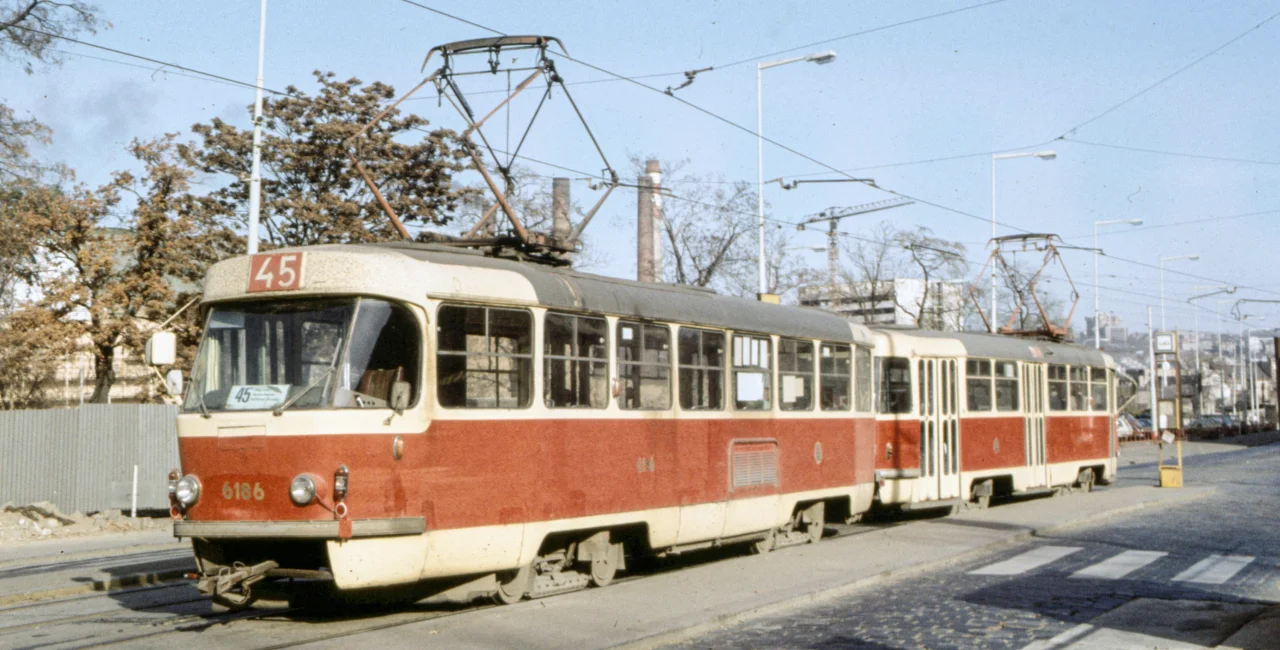

 Summary for: Prague tram changes ahead: Museum line and ’80s oddity return
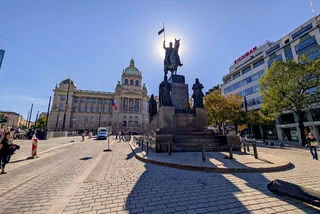
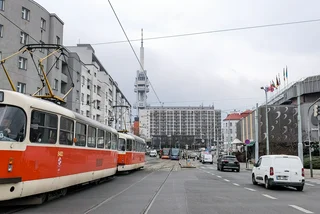
After more than a year, tram service will return to the section between Muzeum and I. P. Pavlova next week as construction on the new tram line through the upper part of Wenceslas Square reaches another milestone. The current suspension is scheduled to end on Sept. 5.
The reopening of Škrétova Street will bring changes to lines 11 and 13. Line 11 will return to its previous route between Spořilov and Spojovací via I. P. Pavlova, Muzeum and Vinohradská Street.

Line 13, meanwhile, will be shortened to Zvonařka. That means passengers in Vršovice will temporarily lose their direct tram connection to Vinohrady and the Museum area. The change is expected to remain in place until the new Wenceslas Square tram line opens, currently scheduled for 2027.
The return of trams to Škrétova comes after the section was closed in June 2025 as part of the construction project.
A very unusual tram is also back this weekend
Prague's streets will see a much more unusual tram sight on Saturday and Sunday. Two T3R.PLF trams will operate on line 19 in a rare PX formation, coupled back-to-back.
The configuration was last used for regular passenger service in Prague in 1983, when it allowed trams to operate on routes without a traditional turning loop.
The unusual pairing isn't just a historical curiosity. After this weekend, the two sets will be kept as operational backup during September, when several simultaneous tram closures are expected to create a shortage of bidirectional KT8D5 trams.

Those closures include work at Spojovací, where the tram loop will be closed through Sept. 12, and the construction of the future Olšanská–Habrová tram line, which will shut the section between Olšanské náměstí and Nákladové nádraží Žižkov from Aug. 29 to Oct. 10. Lines 9, 26 and 95 will be diverted, while line 34 will be suspended.
T3: A history
The PX formation pairs two T3 trams back-to-back, giving the set a driver's cab at each end. Prague last used the configuration for passengers in 1983, on temporary line 45 between Holešovice and Troja. The line crossed the temporary Rámusák bridge and ended at Trojská, where there was no turning loop. Coupling two trams back-to-back allowed drivers to simply switch ends and head back in the opposite direction.
The T3, first introduced in Prague in 1961, became one of the world's most-produced tram types, with more than 14,000 built.
So if you've ever wanted to see a Prague tram that looks like it has two fronts and no obvious back, this weekend is your chance to take a ride.
And if you're travelling through the Museum/Vinohrady area next week, check your route before heading out: line 11 is changing back, while line 13 is changing again.