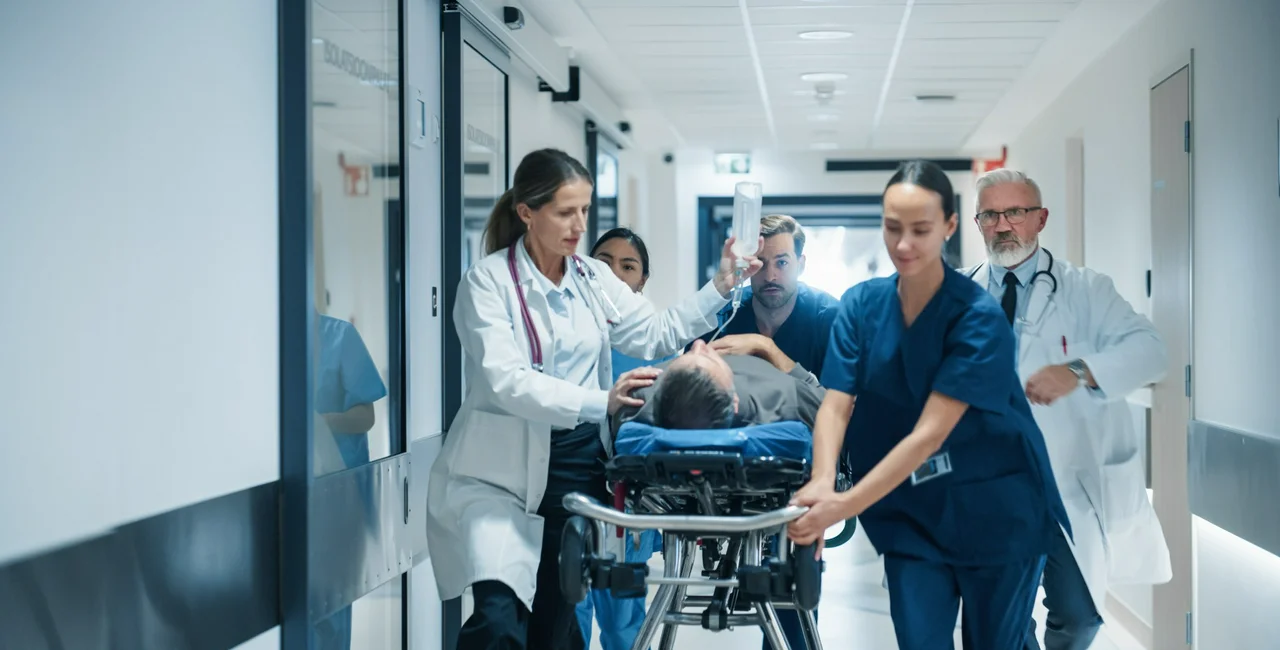
Doctors at a Czech university hospital are reporting a growing number of patients poisoned by synthetic drugs, with unpredictable symptoms and constantly changing chemical formulas putting additional pressure on emergency services.
At Hradec Králové University Hospital, patients suffering from synthetic drug poisoning are arriving several times a week, according to Czech Radio. Medical staff say the cases are becoming increasingly difficult to manage, with some patients occupying emergency beds for 15 to 20 hours.
PARTNER ARTICLE
The problem is not limited to one age group, with doctors treating patients ranging from teenagers to people in their 50s.
Unpredictable substances complicate treatment
Over the past year, many of the poisonings have involved synthetic cannabinoids, laboratory-made substances that can produce effects very different from those of conventional cannabis.
Symptoms can range from extreme sedation and impaired consciousness to aggressive behavior. In some cases, patients experience dramatically different reactions during the same episode.
Doctors face an additional challenge because manufacturers frequently alter the chemical composition of these substances, sometimes making small molecular changes to circumvent restrictions on banned drugs.
As a result, users may have little idea what they are consuming or how potent it is.
Identifying the substances also places pressure on hospital laboratories, where complicated testing requires additional staff time and equipment that would otherwise be available for other medical examinations.
Obchodní zástupce – SmartTables | Gastronomie
Czech
Prague • CZK 70,000 - 110,000
Associate Account Manager -Hotels- German Markets
German
Prague • CZK 685,000

Hospitals and police work together
To respond more effectively, Hradec Králové University Hospital has strengthened cooperation with regional police investigators.
The two sides exchange information about newly detected substances and share reference samples, helping laboratories identify unfamiliar drugs more quickly.
The issue extends beyond eastern Bohemia. In October, Czech Radio reported that Prague emergency responders were also seeing an increase in patients affected by synthetic cannabinoids, with rescuers pointing to their easy availability.
A growing challenge for Czech healthcare
Unlike established drugs with more predictable effects, rapidly changing synthetic substances can make it harder for medical professionals to determine what a patient has taken and how their condition might develop.
The problem also extends beyond individual patients. Lengthy emergency stays and demanding laboratory investigations consume hospital resources and reduce capacity for other cases.
For Czech healthcare providers, the challenge is increasingly about keeping pace with a drug market in which new chemical formulas can appear faster than they can be identified.