



 Reading time: 5 minutes

 Summary for: Mental health in Czechia: Why access is still hard – and what’s finally improving
On Oct. 10, Prague Castle glowed green in solidarity with World Mental Health Day. For the first time, the city illuminated the historic Matthias Gate with mobile lighting, a vivid gesture meant to highlight that caring for our minds deserves the same attention as caring for our bodies.
“The green light on Matthias Gate will symbolically remind us that we should take care of mental health with the same attention as our physical health,” said Alexandra Udženija, Prague’s Deputy Mayor for Social Affairs and Healthcare. “Even a small light can bring hope, just like the first step when someone asks for help.”

Yet hope alone is not enough. For many in Czechia, finding mental health support remains a long and frustrating process. Wait times for therapy can stretch for months, and access is particularly difficult for those seeking help in English or other foreign languages. The demand for affordable, multilingual care still far outweighs the supply, a gap that technology is slowly helping to fill.
Teletherapy: Bridging the gap in mental health support?
Teletherapy, online counseling with licensed therapists, has grown from a pandemic-era convenience into a vital resource for people unable to access in-person help. Through secure video sessions, messaging, or hybrid setups, it connects clients to mental health professionals fluent in their preferred language, sometimes across borders.
Magdalena Njegic, a clinical psychologist at expat-friendly mental-health organization Prague Integration, gave Expats.cz her view on teletherapy.
"Online therapy has been a growing trend ever since Covid-19. It is extremely popular with younger and Gen Z clients, but lately, even older generations are starting to join the trend. I have come to realize that teletherapy can actually be even more useful at times. For expats who travel frequently, for example, it allows continuity in therapy even when they are away from their therapist’s location," she tells us.
Clinical psychologist at Prague Integration Magdalena Njegic"Teletherapy allows clients to feel safe from the first session, as they are comfortable in their own space. It's also an excellent way to stay connected and engaged in the therapy process without sacrificing progress by taking longer breaks in case someone goes abroad."

Kristyna Vavrova, another Prague Integration therapist who is also working with the National Institute of Mental Health, told Expats.cz:
"As expats, we can navigate foreign supermarkets, transport, and social scenes—but emotions don’t come with a map. Teletherapy acts like GPS for your mental health: easy to access and guiding you when you feel lost."
Czech platforms such as Terap.io, MindsetCare, and Hedepy are expanding bilingual offerings, while international services like BetterHelp and TherapyRoute allow users to find licensed professionals elsewhere in Europe. Hedepy, in particular, has seen growing demand since its 2020 launch, facilitating over 100,000 therapy sessions and expanding into ten European markets.
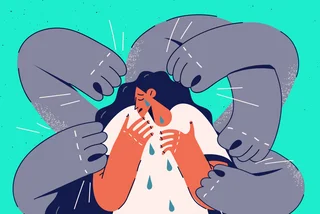
Research from Charles University notes that advances in mobile and wearable technologies have made remote therapy even more accessible, helping integrate mental health care into everyday life.
However, experts warn that not all nuances of therapy translate online, especially for foreigners.
“Effective therapy depends on nuance: tone, rhythm, body language,” explains Kristýna Hoidekrová of the Rehabilitační ústav Kladruby. “For foreigners, that subtle communication can be lost if the therapist does not speak their language well. Online therapy helps bridge that gap.”

And not all online platforms offer the same level of protection. Clients are urged to verify their therapist’s credentials, confirm that sessions use GDPR-compliant encrypted platforms, and understand that most teletherapy remains self-paid under Czech insurance schemes.
Bringing people together
Beyond remote connections, a British expat who moved to Prague in April 2024 recognized the importance of human relationships. Alex Wilkinson, who runs the fast-growing Prague Men's Connect group, set up a men's meetup group to help make new friends: ultimately, benefiting mental health.
"It's essential for men to connect with other men, as that sense of brotherhood is a powerful form of natural therapy that's harder to come by now more than ever. That's why I made it my mission to build a men's community in Prague," says Wilkinson.
Wilkinson's group has thus far organized several meetups, each of which has seen large numbers of men turning out to make new connections.
New city initiative lets you chat with a professional
Technology has widened access to therapy, but it cannot replace a coordinated public system that connects people to the right kind of help. To close that gap, Prague this week launched Help Is Within Reach (Pomoc na dosah), an initiative linking residents with verified organizations and encouraging early intervention and open dialogue about mental health.
Among those organizations is Blue Line (Linka modré pomoci, z. s.), which provides both in-person counseling and rapid online assistance through its helpline, chat, e-mail, and anonymous helpbox. This blended model ensures that people in distress can access immediate support while remaining connected to long-term care.

“Our goal is that no one should be afraid or ashamed to ask for help,” said Deputy Mayor Udženija. “We want help to be available to everyone who needs it, quickly, with respect, and without prejudice.”
The campaign includes collaboration with the city’s charitable organization Garden for the Soul, which coordinates mental health services across Prague and recently launched the country’s first Center for Perinatal Mental Health. It focuses on supporting new mothers, young people, adults facing burnout, and seniors coping with isolation.
Czechia in a European context
While Czechia is improving access to mental health services, it still faces challenges compared with other EU countries, particularly in the area of workforce shortages and the need for increased funding.
In an EU-wide comparison, Belgium has 141 psychiatric care beds per 100,000 inhabitants, the highest in the EU, reflecting strong institutional support. Italy has only eight beds per 100,000, relying largely on community-based care.

As of the most recent Ministry of Health data, Czechia has approximately 22.7 psychiatric care beds per 100,000 inhabitants, placing the country below the EU average of 25.6 per 100,000.
Peer specialist Kamil Rain from Garden for the Soul emphasized how vital public awareness and integrated care are:
“Without the support of family, friends, and an open society, people with mental illness can end up isolated. Destigmatization and peer support help people find the courage to ask for help and rebuild their lives.”
Prague residents can find a complete list of verified mental health resources, including English-language services at the Help is Within Reach website.