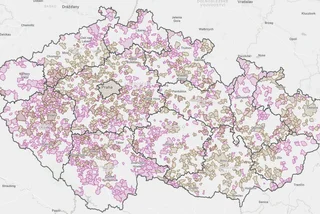
Doctors in Czechia are detecting more flu cases than usual for early November, the State Health Institute (SZÚ) reported Monday, although overall respiratory virus activity remains low.
Influenza accounted for 7 percent of samples tested last week, with influenza A predominating. The findings point to an earlier start to flu circulation rather than an epidemic.
PARTNER ARTICLE
The broader rate of acute respiratory infections—which includes flu, Covid-19 and common cold viruses—stood at 1,081 cases per 100,000 residents. SZÚ said that level was consistent with this stage of autumn.
Cold viruses still dominate tested samples
The earlier appearance of influenza is part of a wider pattern, according to the institute’s weekly surveillance report.
“Early detections of influenza can be explained by the earlier onset of influenza circulation across practically the entire Northern Hemisphere,” SZÚ said.
No European country had declared a flu epidemic, the institute added.
Rhinoviruses, which commonly cause colds, remained the most frequently identified viruses in tested samples, accounting for 43 percent. Parainfluenza represented 18 percent and Covid-19 14 percent.
These laboratory proportions describe the samples tested, rather than the share of the entire population infected with each virus.
The overall respiratory illness rate was higher than the 932 cases per 100,000 residents recorded in the corresponding week of the previous season. However, SZÚ continued to characterize respiratory virus activity nationwide as low.
Around 1,000 people were hospitalized with various respiratory illnesses at the end of October, according to Health Ministry data. That figure covers multiple illnesses, rather than flu alone.
Flu vaccinations continue as the season develops
Approximately 568,000 people have received a flu vaccination so far this season, compared with more than 825,000 over the whole of last season.
The figures cover different stages of the vaccination campaign, so they do not yet establish whether total uptake will be lower this year.
Flu vaccination is repeated each autumn because the virus changes and vaccines are updated. Protection develops approximately two weeks after a dose.
Public health insurance covers flu vaccination for people over 65. Younger people may be able to obtain a contribution from their health insurer or employer.
For now, the surveillance findings show flu circulating earlier than expected while other respiratory viruses remain more common. The institute’s assessment does not indicate a nationwide flu epidemic.