 Reading time: 5 minutes
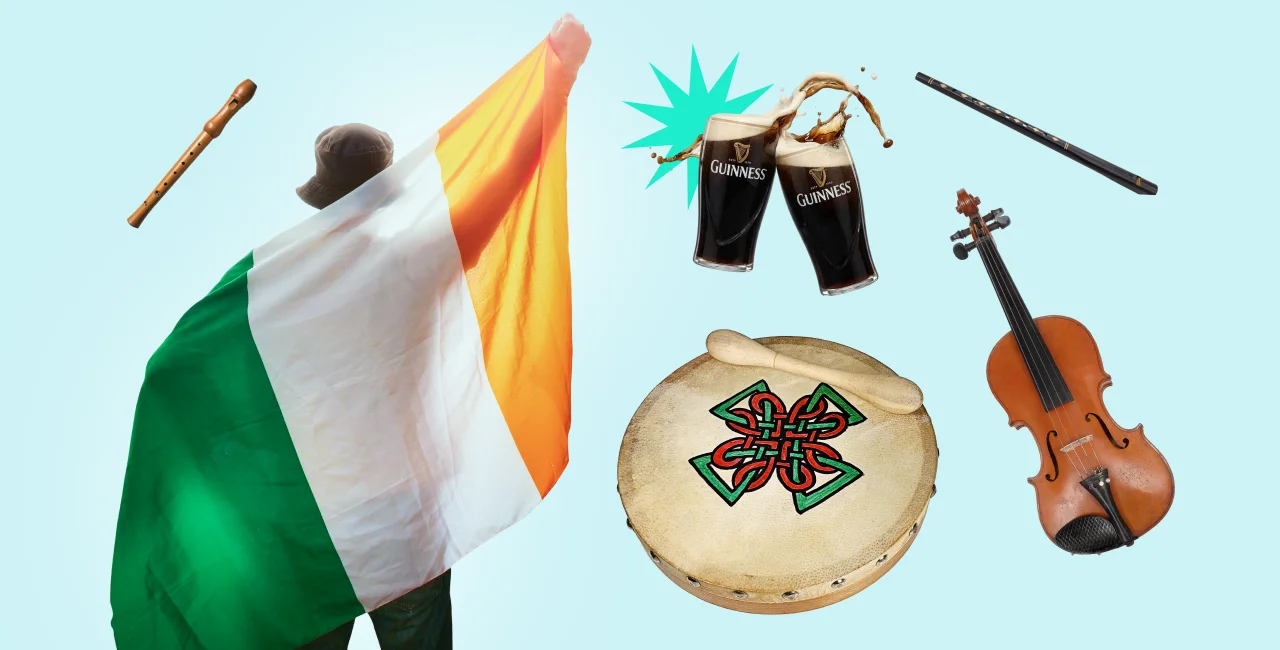

 Summary for: More than music: How Prague's Irish sessions bring strangers together
Sometime during the Irish Potato Famine of the 1840s, my ancestor left the Emerald Isle to seek his fortune in the New World. His descendant, my grandfather, came to log the Green Mountains of Vermont, where I was born and raised.
The primary Irish traditions passed down were steady diets of boiled meat, potato, and Catholic guilt, while the music merely murmured in the background. That all changed the day I discovered the trad-punk legends, The Pogues, during my ’90s tenure at the local, indie record store in Burlington. They awakened a deep genetic coding and turned traditional Irish music into a passion, so much so that every working day begins with two hours of reels, jigs, slides, ballads, and airs.
Irish sessions have also become a regular part of my life. These semi-informal, musical meet-ups of Irish trad players take place around the world, including in Prague.
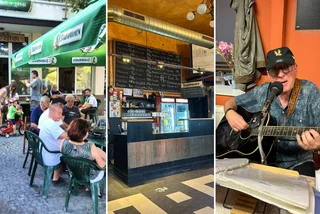
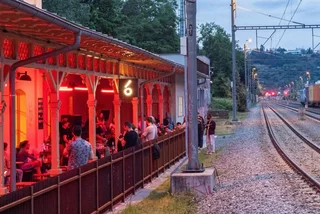
In fact, at least four Irish sessions take place in the Czech capital each month — a “slow” session for beginners at Boothill Bar in Nusle, a “mid” session at Hospůdka U Bohemky in Vršovice, an “advanced” session at Whisky&Kilt, and a “roundabout” version at Skotský klub Šedý pes in Smíchov.
All provide hours of fun and music, but their most valuable aspect may be community. For expats and locals, musicians and audience members, the gatherings offer one of the warmest welcomes in Prague.
That’s the experience of Max Lieber, an American fiddle player and English teacher, who’s lived here for a year and a half.
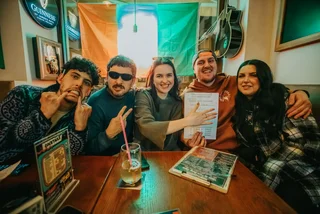
“It’s really nice to be part of a community because for a lot of my life I've been an outsider and not involved in any strong community at all,” he explains. “Once I started going to these sessions, I felt welcomed and loved by the people there.”
That’s echoed by Emil Riumkin, who moved to Prague during COVID from St. Petersburg, Russia. “I definitely started visiting sessions because it was a very nice way to meet new people and socialize,” he explains. “This tradition is very unique. You may find friends in any town.”

I would extend that welcome to audience members like myself, who still lack the courage and skills to join the players, but are content to steep in the swirl of fiddles, whistles, flutes, pipes, guitars, bouzoukis, and bodhráns. In fact, I’d not been at the Whisky&Kilt more than five minutes when I was approached by Matúš Smolko, one of the organizers of Prague’s Irish sessions and a player of traditional Irish flute and tin whistle. He set the tone of welcome that typifies Irish sessions.
“I like whenever I can speak or talk to someone in English and use that opportunity,” he explains. “That was the same with you.”
This spirit of inclusivity has been highlighted by all I’ve spoken to.
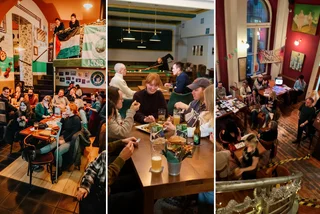
“We will be inclusive and open,” emphasizes Malá Strana native and slow session leader Kryštof Vanča. “That’s the basic rule of Irish sessions.”
It’s a great coaxer, too, alleviating the timidness many people feel when stepping into a session the first time.
“When I moved, I had zero Czech language with me,” Riumkin remembers. “So, I was very nervous about being accepted. But they’re totally fine talking to you in English and being open-minded. That was very cool, and I really appreciated it.”

So did Lieber.
“At first I was feeling shy and nervous because I really didn’t know what to expect. I thought nobody at the session spoke English,” he explains. “But I started to come to more and interact with people and initiate some conversations.”
All that said, taking part in an Irish session and connecting to this community does take an understanding of how they work and the etiquette involved. While there’s some variation from session to session — including acceptable instruments — some universals apply.
The first is that this is not a jam session for individuals to highlight their skills; it’s a collective effort to play established songs.
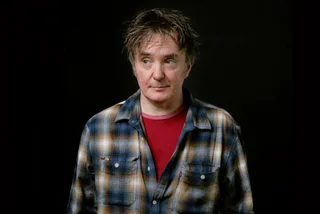
“Irish sessions tend to be quite conservative about what you can play because you don't really improvise there,” explains Smolko. “You don’t start blurting out weird sounds to prove your virtuosity. You're playing traditional songs that have a set pattern.”
For Vanča, that’s part of what makes Irish sessions so attractive. “You have to calm your ego and give yourself to the common cause.”

Another “rule” of Irish sessions is that melody takes the spotlight. That means people joining with backing instruments — guitar, bouzouki and bodhrán — need to reserve center stage for melody instruments like fiddles, pipes and whistles. As such, volume control is important.
Nor should a player join a tune until they can do so with confidence. In the precise nature of Irish traditional songs, a single player not keeping the melody, rhythm, and time signature can throw off the players around them. In other words, Irish sessions are not the place to “fake it until you make it.”
Lastly, respect the structure of the individual session. Many have a leader, who kicks off the sets, keeps the players together, balances the melody and backing instruments, and ensures a smooth flow. That’s no small feat for session leaders like Vanča, especially as the beers start flowing and spectators get chatty, a common feature at the Friday night sessions.

“From time to time, I have to say, ‘Okay, guys, let's stop talking and play some tunes.’ I try to bring some discipline to ensure we all play collectively, not just two people here and two people there.”
As a regular audience member, I’d also encourage anyone joining me to respect the music, players and sessions. Keep chatter to a minimum in the immediate vicinity of the playing, as too much can drown out the music and throw the players off.
For the same reasons, it’s also a bad idea to clap loudly along, as Irish rhythms are often complex and require concentration. Lastly, do not shout out requests. Irish sessions are not a performance, and song selection comes organically from the players themselves or established setlists determined ahead of time.

Giving this respect opens the community’s arms and warms the welcome.
Indeed, at the last slow session I attended, that open arm transformed into an extended one from a player I’d never met at the table next to me. It held an egg shaker, and for the first time, I graduated from an Irish session lover to a player.