 Reading time: 3 minutes

 Summary for: Local host or pseudo hotel? Larger operators dominate Prague Airbnb listings
Prague’s Airbnb market is dominated by host accounts advertising multiple properties, according to a new analysis that challenges the image of the platform as a marketplace primarily supplied by independent, individual hosts.
The Prague by the Night project found that accounts advertising at least five listings supplied 61.9 percent of Prague’s 11,804 Airbnb offers in September 2026, despite representing just 14.2 percent of host accounts. The 10 largest accounts alone advertised 938 listings, nearly 100 properties per account.

Published by Mostly Right, a data platform whose founders work between Prague and New York, the analysis points to a market increasingly concentrated among larger operators. However, it does not verify whether those accounts represent companies, property managers or owners.
While Airbnb was founded as a home-sharing platform, guests in Prague are overwhelmingly offered an entire property: Homes and apartments accounted for 83.6 percent of listings.
A small share of accounts supplies most listings
Mostly Right analyzed 29 snapshots from Inside Airbnb, an independent project collecting publicly available Airbnb listing data, between May 27, 2024, and Sept. 20, 2026.
Across that period, Prague’s listing count increased by 33.5 percent, from 8,840 to 11,804. Entire homes and apartments accounted for 87.9 percent of the net increase.
The concentration among larger accounts also grew. Hosts advertising at least five listings supplied 57.9 percent of listings in May 2024, rising to 61.9 percent in September 2026. In the latest snapshot, that meant 7,308 offers across 518 accounts.

At the largest end, 24 accounts advertised at least 50 places each. Together, they represented just 0.7 percent of accounts but supplied 1,795 listings, or 15.2 percent of the total. The 10 largest accounts advertised 938 listings.
Single-listing hosts remained the majority: They represented 62.6 percent of accounts but supplied only 19.3 percent of listings. Even within that group, 91.8 percent of offers were for an entire home or apartment.
The researchers explicitly caution that an account is not a verified company or property owner. Separate accounts may belong to the same operator, while multiple listings do not necessarily represent distinct dwellings.
The records also cannot establish whether hosts live in the properties between bookings, how frequently they are occupied or whether they comply with local rules.
Geographically, the market remains concentrated in the center. Prague 1 had 4,200 listings and Prague 2 had 2,307, together accounting for 55.1 percent of the citywide total.
Prague’s regulation debate has a European parallel
That concentration overlaps with the neighborhoods where short-term accommodation has become a recurring political issue.

Prague 1 has sought stronger powers to identify operators, check whether apartments are approved for accommodation use and enforce visitor fees. Officials cite complaints about noise and unregistered rentals.
Ahead of the Oct. 9–10 municipal elections, the Prague Pirates’ campaign had similarly distinguished residents occasionally sharing their homes from apartments continuously operated as tourist accommodation. Proposed measures include greater platform transparency and stronger enforcement, but Prague’s ability to introduce its own restrictions remains dependent on national legislation.
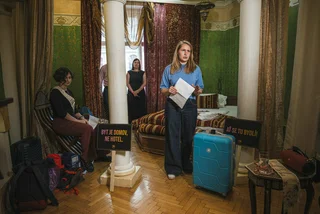
Other European cities have taken different approaches. Paris limits tourist rentals of a principal residence to 90 days annually, down from 120 since January 2025. Barcelona has announced plans to end its roughly 10,000 licensed tourist apartments by 2028, a policy that remains contested by accommodation operators.
Meanwhile, EU rules on short-term accommodation address registration and platform data-sharing where countries require them. Better identification can help authorities distinguish occasional hosts from larger operations.
For Prague residents, the new analysis offers a clearer picture of what is being advertised. It shows that whole-home listings and accounts managing multiple offers dominate the capital’s Airbnb supply, an important distinction when policymakers discuss protecting home-sharing while regulating commercial accommodation.